Federal Court to Hear Lawsuit Against KRG and U.S. Firms Over $110 Billion Oil and Gas Contracts
Peregraf
The Iraqi Federal Supreme Court has scheduled July 20 as the date for a high-stakes hearing in a lawsuit filed against the Kurdistan Regional Government (KRG) and several U.S.-based energy firms over newly signed oil and gas contracts worth more than $110 billion.
The lawsuit, submitted on May 28 by Iraqi lawmakers Raid al-Maliki and Bassem Ghribawi, demands the cancellation and suspension of two massive production-sharing contracts (PSCs) the KRG signed just ten days earlier with HKN/Onex Group (under Miran Energy) and Western Zagros. The deals, struck without Baghdad’s involvement, have reignited a longstanding constitutional and political dispute over the management of Iraq’s natural resources.
"We have asked the court to issue a decision declaring the contracts of the Kurdistan Regional Government invalid," MP Maliki said in a press conference announcing the legal move.
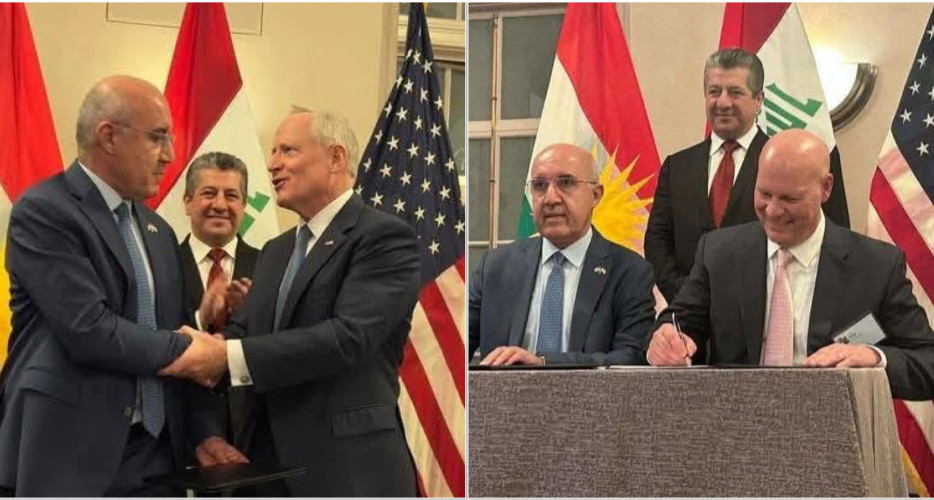
The contracts were signed in Washington on May 19 under the supervision of KRG Prime Minister Masrour Barzani, who described the deals as a transformative step toward energy security and regional development. "These billion-dollar agreements prove the Kurdistan Region’s commitment to peace and economic development," Barzani said at the signing ceremony.
The agreements aim to develop the Miran and Topkhana fields, which hold an estimated 13 trillion cubic feet of gas and 9 million barrels of oil. KRG officials say the projects could start producing 50 to 70 million cubic feet of gas per day within 18 to 20 months, enabling the Region to supply 24-hour electricity domestically and export over 1,000 MW of surplus power to Baghdad and other provinces.
However, the federal government has condemned the deals as unconstitutional. The Oil Ministry referenced a 2022 Supreme Court ruling that nullified the KRG’s 2007 Oil and Gas Law and required all energy contracts to be coordinated with Baghdad. Acting KRG Minister of Natural Resources Kamal Mohammed dismissed Baghdad’s objections, saying: "We have not consulted the Iraqi Oil Ministry, and we are not waiting for Baghdad to agree or not."
The lawsuit comes amid a continued failure to pass a federal oil and gas law that could resolve disputes between Baghdad and Erbil. President Abdul Latif Rashid, speaking at the Delphi Forum in Sulaymaniyah on the same day the contracts were signed, called for a long-overdue legal framework to govern Iraq’s energy sector.
Adding to the controversy, the U.S. State Department praised the agreements, calling them a positive development in U.S.–Kurdistan Region economic relations. "We are pleased to announce the signing of contracts with U.S. companies and the expansion of trade relations between the United States and the Kurdistan Region," the Department’s Middle East Office said in a statement on X.
Yet the Iraqi federal government now faces a dilemma: While it opposes the contracts legally and constitutionally, it may soon rely on the very gas they will produce. Accepting the electricity generated under these deals may offer urgent relief to Iraq’s power grid—but could be seen as de facto recognition of Kurdish energy autonomy. Refusing it could uphold federal authority but deepen the country’s power crisis and public discontent.
As the July 20 court date approaches, the outcome could reshape Iraq’s energy future—and redefine the power dynamic between Baghdad and Erbil.