Peregraf
Two Iraqi lawmakers have filed a lawsuit in the Federal Court against the Kurdistan Regional Government (KRG), seeking to suspend the implementation of newly signed oil and gas contracts worth over $110 billion with U.S. energy companies. The move has reignited longstanding disputes over control of Iraq’s natural resources.
MPs Raid al-Maliki and Bassem Ghribawi formally submitted the complaint, requesting the court to suspend the contracts and declare them invalid. "We have asked the court to issue a decision declaring the contracts of the Kurdistan Regional Government 'invalid'," Maliki stated during a press conference today.
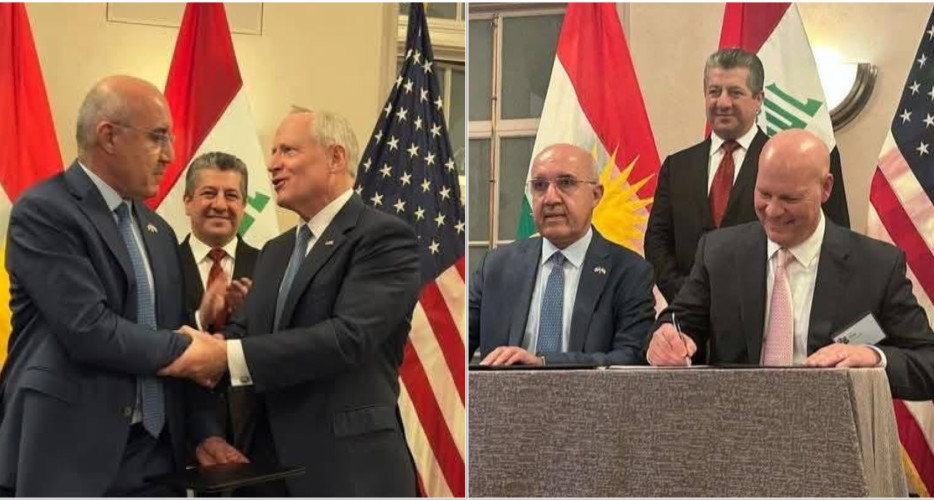
On May 19, 2025, in Washington, the KRG signed two massive production-sharing contracts (PSCs) with U.S.-based companies HKN/Onex Group (operating under Miran Energy) and Western Zagros. The deals—announced and signed under the supervision of KRG Prime Minister Masrour Barzani—bypass Baghdad entirely, a move the Iraqi federal government sees as a direct violation of its constitutional authority.
“These billion-dollar agreements prove the Kurdistan Region’s commitment to peace and economic development,” Barzani declared during the ceremony, positioning the deals as a strategic answer to power shortages in Kurdistan and a contribution to Iraq’s energy stability. He pledged that the project would bring 24-hour electricity to the Region and allow export of surplus power to other provinces in Iraq.
The contracts aim to develop the Miran and Topkhana gas and oil fields, which together hold an estimated 13 trillion cubic feet of gas and 9 million barrels of oil. According to KRG officials, the projects could deliver 50 to 70 million cubic feet of gas daily within 18 to 20 months. This gas would bridge the current gap in electricity production, which stands at only 4,500 MW despite an installed capacity of 8,189 MW.
Acting KRG Minister of Natural Resources Kamal Mohammed underscored the Region’s unilateral approach: “We have not consulted the Iraqi Oil Ministry, and we are not waiting for Baghdad to agree or not.”
The Iraqi Oil Ministry has condemned the contracts as illegal, citing the 2022 ruling by the Federal Supreme Court that deemed the KRG's 2007 Oil and Gas Law unconstitutional. That ruling demanded the transfer of oil operations to federal oversight and invalidated the KRG’s authority to make independent deals.
Despite this legal backdrop, efforts to pass a unified federal oil and gas law have failed. President Abdul Latif Rashid, speaking at the Delphi Forum in Sulaymaniyah on the same day the KRG signed its new contracts, acknowledged the deadlock. “My priority is to find a solution to the oil and gas law in Iraq that will resolve the sources of conflict so that revenue sources benefit all Iraqis,” he said.
The controversy is more than legal—it’s deeply geopolitical. The U.S. State Department has publicly backed the KRG’s initiative, hailing it as a step forward in economic cooperation. “We are pleased to announce the signing of contracts with U.S. companies and the expansion of trade relations between the United States and the Kurdistan Region,” said the Department’s Middle East Office in a statement on the X platform.
Yet the federal government now faces a paradox. While it legally rejects the KRG's independent contracts, it may soon depend on the gas they unlock. The KRG has pledged to export over 1,000 MW of surplus electricity to Baghdad—a potential lifeline in a country grappling with severe power shortages.
Accepting that electricity would offer immediate relief but could be seen as tacitly recognizing Kurdish autonomy in energy policy. Rejecting it may uphold constitutional principles but risks deepening Iraq’s energy crisis and fueling public frustration.
As legal and political battles unfold, the future of Iraq’s energy landscape—and the fragile balance of power between Baghdad and Erbil—hangs in the balance.