Flames of Conflict Persist: Turkey's Peace Efforts Leave Kurdistan Region Unchanged
Peregraf
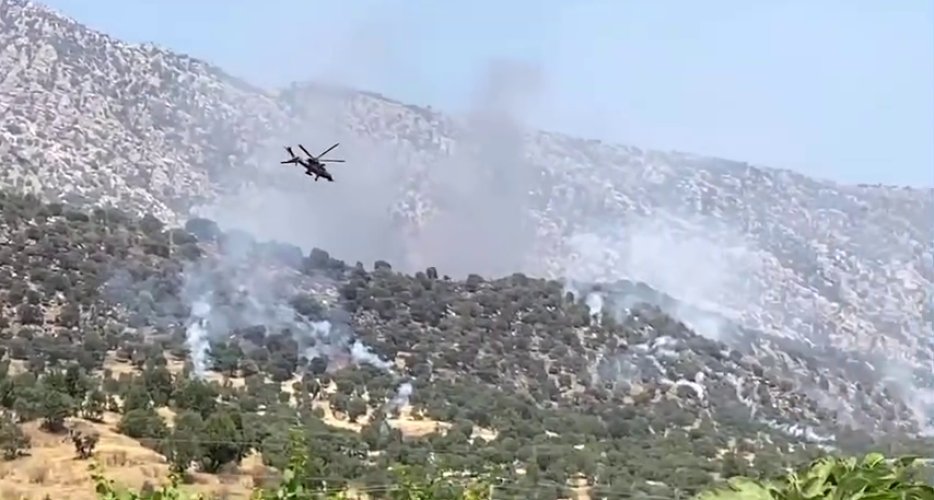
Despite nearly a month of peace negotiations in Turkey, the border areas of Kurdistan region with Turkey remain unstable. Gunfire, explosions, and airstrikes continue, forcing residents to flee their homes and keeping the region in a constant state of danger.
According to information obtained by Peregraf, the Turkish military has ramped up its airstrikes and ground operations in various border regions, particularly in Duhok province. Turkey defends these military actions as necessary measures to eliminate PKK fighters. In late February 2025, Abdullah Ocalan introduced a peace initiative that was positively received by Turkey’s ruling parties.
The PKK leadership, which had previously announced a unilateral ceasefire in accordance with Ocalan’s initiative, has recently asserted its right to respond to ongoing Turkish assaults.
On March 20, Turkish forces initiated heavy artillery and mortar strikes on Khawkurk and Duhok. In the days leading up to this, Turkish warplanes conducted over 15 bombing raids in these areas.
"The conflict in Badinan will persist until Turkey addresses its political issues," stated Babakr Zebari, military advisor to the President of the Kurdistan Region, in an interview with Peregraf.
General Zebari, a veteran military figure and former chief of staff of the Iraqi army, is optimistic that Turkey is genuinely committed to the peace process this time. "President Erdogan has made considerable efforts. If this initiative succeeds and is fully realized, it will stabilize Badinan and restore peace to the region," he remarked.
He expressed hope that the peace talks would soon yield a resolution, enabling displaced families to return to their homes.
The conflict between Turkey and the PKK has intensified in Duhok for over a year. According to the Community Peacemaker Teams (CPT), an international organization dedicated to promoting peace and reducing violence in conflict zones, the war has resulted in the displacement of 1,190 villagers throughout Kurdistan and has claimed the lives of 721 civilians.
Saleh Kamil, the headman of Dargale village in the Kani Mase district of Duhok province, informed Peregraf, “We were compelled to flee due to the ongoing conflict. Security forces have prohibited our return, citing instability and persistent threats.”
The residents of Dargale, along with those from numerous other villages, were displaced last year as Turkish forces intensified their military operations in Kurdistan, employing heavy weaponry.
In addition to the human impact, the conflict has resulted in the destruction of several historical sites in the affected regions.
"Ten homes in our village have been ruined, including those belonging to my brother and myself," stated the village headman of Dargale. "Our gardens, once thriving with nuts, apples, and strawberries, have withered due to a lack of irrigation and fires ignited by the conflict."
Kamil further noted that local authorities have not provided any assistance, with the exception of the International Red Crescent Society. "No one inquires about our circumstances. Families displaced by the war continue to face hardships, with some renting accommodations while others reside with relatives."
According to reports from CPT, since Ocalan announced the peace initiative on March 6, the Turkish military has conducted 14 attacks on Kurdistan: six involving artillery, five with warplanes, and three using helicopters. Nine of these assaults targeted Duhok, three were directed at Sulaimani, and two struck Erbil.
Peshkaft Sargali, a resident of Sargale village in Amedi, reported significant losses to his livestock farm due to Turkish bombings last December.
"The bombings have not ceased. Each day, a different site is struck. Although the frequency has slightly diminished since last summer, the overall violence persists," he conveyed to Peregraf.
Iraq shares a 362-kilometer border with Turkey, of which 300 kilometers is land, while the remainder consists of waterways. The terrain is rugged and challenging, particularly in the Iraq-Iran-Turkey border triangle.
Turkey has occupied more than 86% of its border with Iraq and operates 74 military bases within the Kurdistan region.
Sargali cautioned, "The presence of the Turkish military in Amedi will prevent any possibility of peace in this region. It is essential to take steps to de-escalate the situation so that our people are no longer caught in the crossfire of this conflict."
On March 16, the PKK reported the downing of a Turkish drone and subsequently issued a statement alleging that since the ceasefire was established, Turkey has executed "eight attacks with prohibited weapons, 93 airstrikes, and 5,520 artillery and mortar strikes."
Guharze, a village in the Deraluk district of Amedi, has been significantly impacted by these airstrikes.
Ahmad Saeed, the headman of Guharze, expressed to Peregraf, "The desire for peace is strong among the people of Amedi, as they wish to return to their agricultural and livestock activities. However, the reality remains unchanged."
He confirmed that Turkish airstrikes persist in regions where both Turkish forces and PKK fighters are active.
"Mount Gara and the nearby villages in the Deraluk district continue to experience intermittent bombings. There may be periods of a few months without attacks, but they inevitably resume," he noted.
The Turkish military's objective is to seize the Gara Mountain range to secure the border and disrupt PKK movements between the Kurdistan region and Turkey.
Gara, which rises to 2,251 meters and stretches 38.9 kilometers, links the four districts of Mergasur, Akre, Amedi, and Zakho, encompassing 94 villages.
On February 27, Ocalan urged PKK fighters to disarm and disband the organization. In response, the PKK announced a ceasefire but maintained that any final decision regarding disarmament must involve Ocalan himself.
Ocalan, who has been incarcerated in Turkey for 26 years, has previously spearheaded peace initiatives. The last ceasefire, which was declared in 2013, lasted until mid-2015 when hostilities resumed.