Medicine on Paper, Not on Shelves: Duhok’s Public Health Sector Fulfills Only 50% of Prescriptions
Peregraf - Duhok
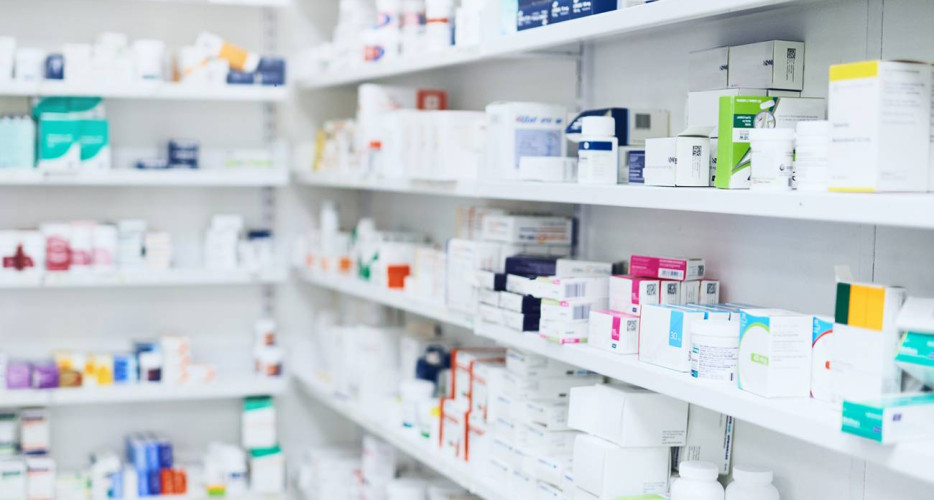
When Nawaf Mikaeel took his child to a government hospital, the physician wrote a prescription listing several medications; however, he was only able to obtain one of them from the hospital’s internal pharmacy.
In government-run hospitals and health centers across Duhok, the standard response to patients presenting prescriptions is frequently "we don’t have it"—a reality Mikaeel recently experienced firsthand.
Compounding a financial crisis and chronic salary delays that have taken a heavy toll on the public, the state health sector has become an additional burden on citizens. Many public hospitals are currently only able to provide "half" of the medications and treatments required by patients.
"My child fell ill and I took him to a government hospital. The doctor prescribed four types of medicine. I took the list to the pharmacy, but they only gave me one type. They told me the others were out of stock and that I should buy them from a private pharmacy," Mikaeel told Peregraf.
A resident of Duhok city center, Mikaeel was forced to purchase the remaining medicines for his child using his own limited funds.
Citizens in Duhok are increasingly faced with a bitter choice: forgo essential medication due to a lack of money, or turn to private pharmacies and incur high costs. This occurs as the Kurdistan Region remains mired in a decade-long financial crisis that continues to prevent the timely payment of monthly salaries.
A Widespread Crisis
Mikaeel’s experience mirrors the stories of many residents in Duhok. Peregraf’s investigation found that because of the ongoing economic hardship, more people are attempting to rely on government hospitals for care, only to be disappointed.
"It is not just me; hundreds of others have the same grievance. If I had the money, I wouldn’t step foot in a government hospital. We go there because we are broke, but we end up having to spend money anyway," Mikaeel said. He argued that the government should provide comprehensive health services to its citizens.
"What use is a headache tablet or basic medicine to me?" he asked, expressing frustration that despite years of complaints and demands for a permanent solution, the problem persists.
Although Duhok is rich in natural resources—particularly oil—and hosts a major international border crossing, its population suffers from high levels of poverty, according to statistics from both the Kurdistan Regional Government (KRG) and the Iraqi federal government.
Mikaeel noted that living conditions are increasingly difficult as salaries are delayed and income remains scarce. "How are we supposed to afford private pharmacies or surgeries in private hospitals under these conditions?"
The Price Gap
Peregraf’s investigation highlighted the significant price disparity between private and public healthcare. For instance, a childbirth surgery (C-section) in a private hospital costs between 600,000 and 1,000,000 IQD, whereas the same procedure in a government hospital costs 300,000 IQD.
Dr. Janan Nouri, a physician at the Duhok Maternity Hospital, told Peregraf: "The medicine shortage affects the maternity hospital as well. Pregnant women require a range of supplements, including Vitamin D, Calcium, Zinc, and Iron. These are often unavailable in the hospital, forcing patients to buy them externally."
She also mentioned that certain medications used to prevent miscarriages are currently out of stock in public facilities and can only be found in the private sector.
"Monthly batches of medicine reach the maternity hospital, but they are exhausted quickly. The volume of patients is immense compared to the supply. It used to be better, but recently supplies have become scarce. It is distressing for us to tell a patient to buy medicine or get a test done outside, but it is beyond our control."
The presence of thousands of internally displaced persons (IDPs) and Syrian refugees living in and around Duhok adds further strain to the local health infrastructure.
Dr. Nouri performs over 15 surgeries during her morning shifts at the government hospital every month. "I will not hide the fact that more surgeries are being performed in private hospitals," she added.
Insufficient Allocations
Previously, the medicinal and equipment budget for Duhok Province and the Zakho Administration were combined, totaling 23% of the region's allocation. Since Zakho became an independent administration, Duhok’s share has dropped to 18%.
Dr. Afrasiab Musa, the Director General of Health in Duhok, told Peregraf: "We have about 80% of essential medicines. For others, there are gaps of 15 to 20 days where they are unavailable until the next shipment arrives."
Dr. Musa explained that if a doctor prescribes six items, the hospital can typically provide half, leaving the patient to purchase the rest themselves. "Naturally, we want to provide every type of medicine to the patient, but if we do not have it, what can we do?"
Duhok Province consists of eight districts and 31 sub-districts, with a population exceeding 1,599,000 according to the Bureau of Statistics.
Regarding surgeries, the Director General stated that scheduling depends on the number of operating rooms, the availability of specialists, and the urgency of the case. Emergency cases are prioritized, while non-urgent cases typically face a wait time of no more than six months. He also noted that a "semi-private" system exists within public hospitals, where patients can pay a higher fee to receive faster treatment.