Iraq’s Prime Ministerial Deadlock: How Nouri al-Maliki, Donald Trump, and a Fragile State Collided
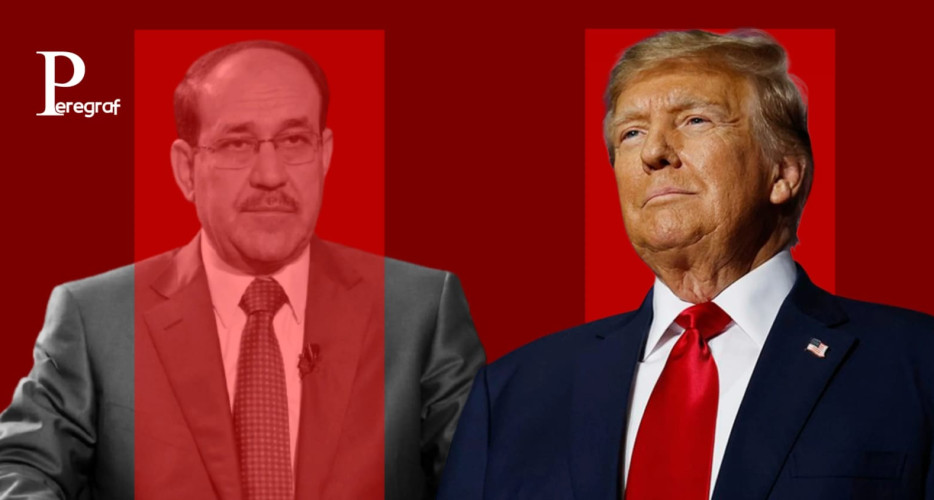
Peregraf Analysis – Baghdad’s latest political crisis did not erupt suddenly. It unfolded through a sequence of calculated withdrawals, silent rivalries, and external red lines—until a blunt warning from Washington forced Iraq’s ruling Shiite establishment into its most dangerous dilemma in years. Now, with the judiciary and the prime minister’s own political bloc weighing in, the standoff has expanded beyond factional rivalry into a test of Iraq’s constitutional order and external alignments.
At the center of the storm stands Nouri al-Maliki, the former prime minister whose long shadow still divides Iraq’s political class. His unexpected emergence as the official candidate of the Shiite Coordination Framework—after Prime Minister Mohammed Shia’ al-Sudani stepped aside—appeared at first to signal the restoration of an old order. Instead, it has exposed the limits of Iraqi sovereignty in an economy tethered to the United States and a political system fractured from within.
A Withdrawal That Changed the Balance
The rivalry between al-Sudani and al-Maliki over the Shiite nomination was intense but carefully managed. When al-Sudani abruptly withdrew, endorsing al-Maliki and clearing the path for his return, the move was widely interpreted not as defeat, but as strategy. Some analysts in Baghdad described it as a "test withdrawal," designed to measure resistance—domestic and international—before committing fully.
That resistance arrived swiftly, and decisively, from Washington.
By publicly issuing what Iraqi politicians privately described as a "red card," President Donald Trump transformed al-Maliki’s candidacy from an internal Shiite calculation into a national—and international—crisis. In doing so, he revived al-Sudani’s political relevance almost overnight. A candidacy that once seemed closed now appears viable again, not because of parliamentary arithmetic, but because of geopolitical reality.
A Candidate Without Consensus
Despite the Coordination Framework’s claim of majority approval, Nouri al-Maliki’s nomination has never reflected a genuine national or cross-sectarian consensus. According to an investigation by Peregraf, support for his return has been uneven and politically calculated, exposing fractures across Iraq’s main power blocs.
Within the Kurdish camp, the Kurdistan Democratic Party (KDP), led by Masoud Barzani, aligned itself with al-Maliki’s bid, with senior figures from the Barzani family moving quickly to congratulate him following his nomination. By contrast, the Patriotic Union of Kurdistan (PUK), led by Bafel Talabani, kept its distance. Talabani’s response—a delayed and notably restrained statement issued a day later—was widely interpreted in Baghdad as a signal of reluctance rather than endorsement.
Among Sunni Arab leaders, opposition was more explicit. Mohammed al-Halbousi, head of the Taqadum Party, made clear his rejection of al-Maliki’s return, reflecting broader Sunni unease over revisiting a period many associate with political exclusion and institutional breakdown.
Divisions were equally pronounced within the Shiite house itself. Beyond Prime Minister Mohammed Shia’ al-Sudani—al-Maliki’s direct rival—senior Shiite figure Ammar al-Hakim was also opposed to al-Maliki’s nomination, reinforcing the perception that the former prime minister lacks the internal unity traditionally required to govern.
In a political system built on balance and consensus rather than simple parliamentary arithmetic, these divisions carry decisive weight. A prime minister who enters office without broad acceptance risks paralysis from the outset—an outcome Trump’s intervention did not create, but unmistakably laid bare.
The Economy as Leverage
What elevates the crisis from political stalemate to existential threat is Iraq’s economic vulnerability. Nearly all of Iraq’s oil revenues are held in U.S. dollars under American oversight. This arrangement, long tolerated as a technical necessity, has become Washington’s most powerful lever.
The warning signs are already visible. On the Iraqi street, the dollar is trading at around 154,000 dinars per $100 note, while the Central Bank’s official rate remains at 132,000—a gap of more than 20,000 dinars. Any tightening of U.S. financial controls would almost certainly send the dinar into freefall, triggering inflation and social unrest in a country still recovering from years of crisis.
For Iraqi leaders, defying Washington is no longer a symbolic act of sovereignty; it is an economic gamble the state may not survive.
Trump, Iran, and the Iraqi Arena
The American veto of al-Maliki is widely understood in Baghdad as part of a broader U.S. strategy to curb Iranian influence in Iraq. Trump has repeatedly emphasized his intention to distance Iran’s hand from Baghdad, explicitly rejecting the participation of pro-Iranian Shiite militia groups in the next government.
Al-Maliki, whose tenure from 2006 to 2014 coincided with deepening Iranian influence and the collapse of state authority that paved the way for ISIS, embodies precisely the model Washington seeks to block. Trump’s message was unusually direct: reinstall al-Maliki, and the United States will withdraw its support.
The slogan that ended Trump’s statement—"MAKE IRAQ GREAT AGAIN!"—may have sounded theatrical, but its implications were unmistakably serious.
Al-Sudani’s Bloc Signals a Different Line
Against this backdrop, the Construction and Development Coalition—led by Prime Minister Mohammed Shia’ al-Sudani and the largest bloc within the Coordination Framework—issued a carefully worded statement that stood out as much for what it omitted as for what it said.
The coalition reaffirmed its constitutional responsibility to nominate figures capable of managing crises and confronting national challenges, while stressing that government formation must reflect the will of the people expressed through elections. Notably, the statement avoided any defense of al-Maliki following Trump’s criticism.
Instead, it emphasized the need for "positive and balanced relations" with friendly and allied countries, particularly the United States, grounded in mutual respect, constitutional pathways, and democratic outcomes. The message was widely read in Baghdad as an implicit distancing from escalation with Washington—and a signal that al-Sudani’s camp may be positioning itself as a more acceptable alternative.
The Judiciary Enters the Crisis
As political actors maneuvered, Iraq’s judiciary issued a rare and pointed warning.
On January 29, 2026, the Supreme Judicial Council convened its first session of the year, chaired by Judge Dr. Faiq Zidan, President of the Federal Court of Cassation. In its statement, the Council stressed strict adherence to constitutional deadlines for electing the President of the Republic and appointing the Prime Minister, warning that any deviation could threaten political stability and the democratic process.
The Council described timely completion of government formation as a national obligation and cautioned against actions that could undermine constitutional order or invite foreign interference. While it avoided naming political actors, its timing underscored judicial concern that the political deadlock was approaching a constitutional breaking point.
A Framework Trapped Between Two Losses
The Shiite Coordination Framework now faces two options, each politically devastating.
The first is to abandon al-Maliki and nominate an alternative candidate—an admission that external pressure can override internal decisions. The second is to defy Washington and proceed with al-Maliki’s candidacy, risking sanctions, financial isolation, and economic collapse at a moment when U.S. military deployments in the region are expanding.
Evidence of this confusion is already surfacing. Although the Shiite Coordination Framework held an extensive meeting on January 28, 2026, directly following Donald Trump’s objection to Nouri al-Maliki’s candidacy, the group broke with precedent. Unlike previous gatherings, they issued no statement regarding whether they were standing firm on al-Maliki’s nomination or withdrawing it. This unusual silence suggests that internal disagreements have emerged within the Framework regarding his candidacy.
For now, the Framework appears to be buying time. Public defiance masks private hesitation. If al-Maliki remains unmoved, his supporters may gradually withdraw into silence, allowing his candidacy to fade without an explicit reversal—unless Trump softens his stance or turns pressure into negotiation.
The deadlock has spilled into another constitutional arena: the presidency, traditionally held by a Kurd. Disputes among Kurdish parties already delayed the presidential session scheduled for January 27. With February 1 marking the final constitutional deadline, few expect the vote to proceed while the prime ministerial crisis remains unresolved.
Under Iraq’s constitution, the president must immediately task the prime minister-designate with forming a government. Without clarity on that name, the presidency itself has become collateral damage.
Defiance as Strategy—or as Endgame
Al-Maliki has chosen confrontation over retreat, framing his stance as a defense of national will and sovereignty. Yet in today’s Iraq, sovereignty is constrained not only by foreign pressure but by economic dependency, judicial deadlines, and political fragmentation.
As Baghdad approaches what should have been the final stage of government formation, Iraq finds itself suspended between past and future—between a leader who symbolizes continuity and controversy, and an alternative path that promises stability through accommodation. The outcome will determine not only who governs Iraq, but the terms under which Iraqi power is exercised in an increasingly unforgiving regional order.