Peregraf – Chamchamal
When floodwaters tore through Chamchamal on December 9, they left behind more than mud-soaked streets and shattered storefronts. They upended lives, erased livelihoods, and exposed deep gaps in preparedness that residents say had been ignored for years. Now, as compensation begins to reach some families, the relief is uneven—bringing hope to a few and frustration to many others still counting their losses.
In the Mamostayan neighborhood, Ibrahim Omer stands inside a home that still bears the marks of the flood. Furniture was ruined, appliances destroyed, and daily life abruptly disrupted. Yet Ibrahim is among the more fortunate.
"Today we were compensated with 1,500,000 dinars," he told Peregraf. "It is a good amount, and we can use it to replace some of our household items."
For Ibrahim, the payment represents a first step toward restoring normalcy, even if the damage cannot be undone overnight.
Just a few neighborhoods away, the mood is far less optimistic. In Rizgari, near Ashti Mosque, Bestun Sabah surveys the remains of his household belongings—damaged carpets, a broken refrigerator, and a ruined water pump.
"Our electrical appliances and carpets were completely destroyed," he said. "We were only allocated 1,250,000 dinars dinars, which is very little."
Bestun insists that the amount does not even come close to covering the cost of replacing the carpets. He is now calling on authorities to review the damage assessment process, arguing that compensation should reflect the real losses suffered by families.
The floods did not spare the city’s market, where water surged through shops and submerged vehicles. Ahmed Mohammed, whose car was caught in the floodwaters in the Chamchamal market area, said the disaster struck just days after he had purchased the vehicle.
"I had only bought the car three days before the flood hit," Ahmed told Peregraf. "It was completely submerged. It has been in the shop for 12 days now and is still not fixed."
His vehicle, a Kia Sportage, sustained damages he estimates at more than $5,000. While he has been told compensation will be provided, the uncertainty weighs heavily. "I don’t know how much I will receive yet, but any amount will help cover the repair costs," he said.
For shop owners, the situation is even more dire. Zana Sabah, who runs a men’s clothing store in the Chamchamal market, describes losses that go far beyond repairable damage.
"My losses exceed 70 million dinars," he said. "All my stock was destroyed. This shop was my only source of income."
Zana is still waiting for assistance and fears that without substantial compensation, he will be forced out of business entirely. He is urging authorities to speed up the distribution of aid and, crucially, to address the root cause of the disaster. "The market’s drainage system must be fixed," he said. "Otherwise, this will happen again."
Chamchamal district, along with the Shorish and Takiya sub-districts, was among the areas hardest hit by the torrential rains. Flash floods claimed the lives of at least two people, injured 12 others, and caused extensive damage to dozens of homes, shops, vehicles, and government buildings. The scale of destruction quickly overwhelmed local response mechanisms, sparking public anger and calls for accountability.
Ata Mohammed, Chief of Staff to the Kurdistan Regional Government (KRG) Deputy Prime Minister and Head of the Chamchamal Relief and Reconstruction Commission, said the funds currently available for flood victims amount to approximately 13 billion dinars. According to him, compensation ranges from a minimum of 400,000 dinars to a maximum of 4,950,000 dinars, depending on the severity of damage.
"The amount is determined by the extent of the damage suffered by the family," Ata Mohammed explained. "Some individuals have incurred losses to their homes, vehicles, and workplaces; such individuals will be eligible for all three types of compensation."
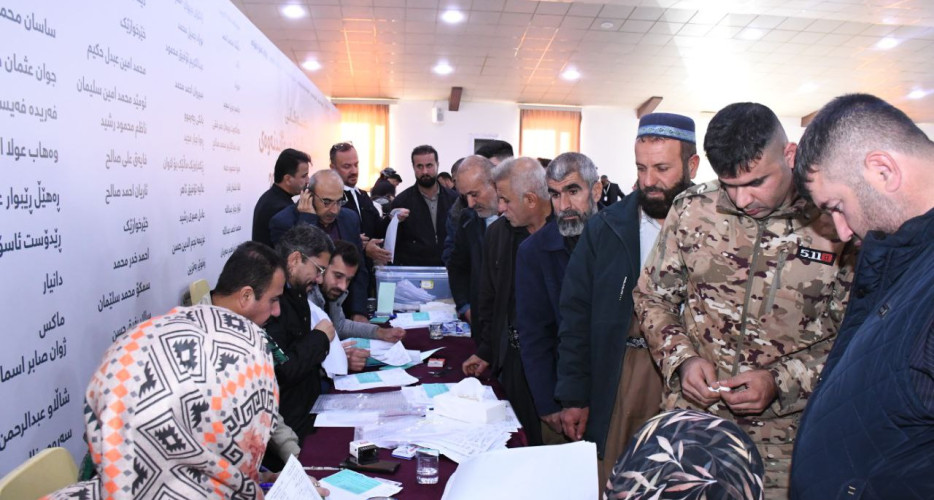
The compensation process has been divided into phases. The first phase focuses on basic household items and home repairs. On December 22, 639 families within Chamchamal city are set to receive a total of 861,345,000 dinars. On the second day, 445 families in the Shorish sub-district will receive 772,377,000 dinars, 210 families in the Takiya sub-district will receive 248,220,000 dinars, and eight families in the Aghjalar sub-district will receive 6,300,000 dinars.
A second phase, scheduled to take place before the New Year, will cover compensation for vehicles, shops, and commercial properties.
Beyond the immediate humanitarian toll, the floods triggered a political and administrative reckoning. The disaster exposed serious shortcomings in local preparedness and emergency response, prompting four senior officials to formally request relief from their duties.
Those included the Chamchamal District Governor (Qaimaqam), the Head of Chamchamal Municipality, the Director of Chamchamal Education, and the Head of the Shorish Sub-district. While the Shorish Sub-district Director declined to resign, higher authorities later relieved him of duty, temporarily assigning the Director of Sangaw Sub-district to oversee Shorish affairs.
On December 21, Aso Bakr officially assumed office as the new acting Qaimaqam of Chamchamal, replacing Ramk Ramazan, who resigned in the aftermath of the floods. In parallel, authorities announced the formation of a broad oversight and aid distribution board tasked with managing relief efforts. The board brings together local figures, civil activists, and relevant government institutions. During its inaugural meeting on December 20, Judge Ahmed Anwar, head of the Kurdistan Region’s Integrity Commission, was appointed chairman.
For residents like Ibrahim, Bestun, Ahmed, and Zana, these administrative changes and oversight mechanisms offer cautious hope. But as winter deepens and losses continue to mount, many insist that true recovery will depend not only on compensation, but on lasting reforms—ones that prevent future floods from washing away lives and livelihoods all over again.