Sulaymaniyah’s Water Shortage to Be Solved for the Next 30 Years with $423 Million Project
Peregraf– A major water project has been launched to permanently address Sulaymaniyah’s chronic water shortage, with officials saying it will secure the city’s needs for the next 30 years.
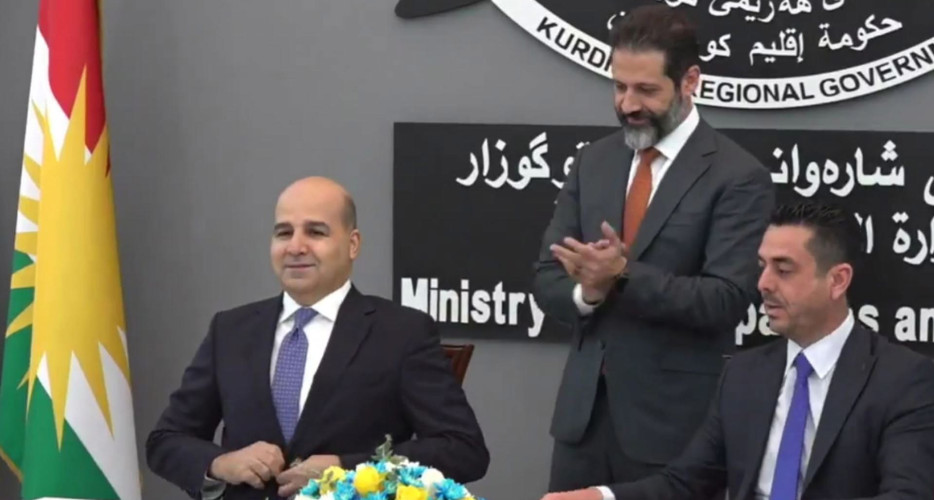
On Sunday, the Kurdistan Regional Government (KRG) signed the contract for the third water pipeline between Dukan and Sulaymaniyah. The deal was signed by Minister of Municipalities and Tourism Sasan Auni and representatives of the implementing company, in the presence of Deputy Prime Minister Qubad Talabani.
The $423 million project is described as one of the largest strategic infrastructure undertakings in Sulaymaniyah. At a press conference, Minister Auni said the initiative would finally resolve the city’s long-standing water problem: “This project is large, strategic, and long-term.”
The project consists of several key parts: water intake from the Zey Bachuk River, a treatment plant with the capacity to process 480,000 cubic meters of water daily, two major pumping stations, and two parallel transportation pipelines extending 112 kilometers from Dukan to Sulaymaniyah.
Officials emphasized that once completed, the project will guarantee a sustainable and reliable water supply for households and businesses in Sulaymaniyah for the next three decades.
However, the project comes at a time of worsening national water shortages. With 2024–2025 already declared one of the worst water years in nearly a century, the government faces mounting pressure to balance short-term crisis management with long-term resilience planning. For millions of Iraqis, particularly farmers and rural communities, the outcome of these efforts will determine not only livelihoods but also the future of food security in a country already grappling with economic and political challenges.
A Peregraf investigation revealed that the Kurdistan Region—long considered Iraq’s vital reservoir—is now facing severe mismanagement and the rapid depletion of its reserves. Despite government initiatives, mismanagement inside Iraq continues to deepen the crisis. The investigation found that more than 1,650 springs in the Kurdistan Region have dried up, groundwater in Erbil has fallen nearly 500 meters since the 1990s, and reservoirs such as Dukan and Darbandikhan are at critically low levels.
Experts warn that without decisive action, Iraq faces agricultural collapse and irreversible desertification. “If no action is taken, both surface and groundwater are at risk,” said water resources specialist Dr. Abdullah Botani. Analyst Sarmad Latif added, “Iraq now ranks among the lowest globally in water security. The future is bleak unless strategic planning begins immediately.”