Dispute Over Ministry of Interior Stalls Kurdistan Government Formation, Confirms KDP Official
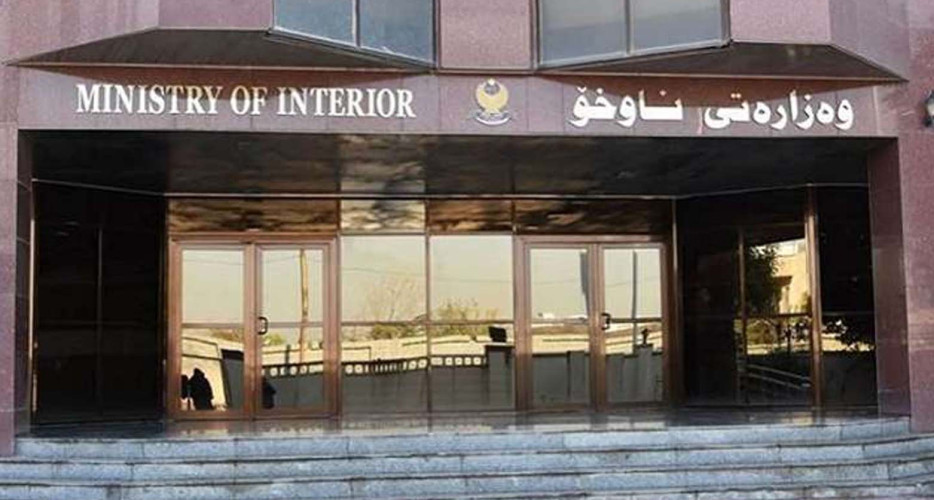
Peregraf- Nearly a year after the Kurdistan parliamentary elections, the Kurdistan Region remains without a new government as disputes between the Kurdistan Democratic Party (KDP) and the Patriotic Union of Kurdistan (PUK) over key security posts continue to stall progress.
Dilshad Shahab, a member of the KDP’s negotiating delegation, confirmed in an interview with pro-KDP Rudaw TV that the Ministry of Interior remains one of the most intractable issues preventing the formation of the new cabinet. "The Ministry of Interior is one of the intractable issues hindering the formation of the new cabinet of Kurdistan Regional Government (KRG), but we are still negotiating. We are still in the stage of exchanging views with the PUK," Shahab said. "But the official position of the KDP regarding the Ministry of Interior is that it will not give that ministry to the PUK and will not negotiate over it."
His comments validate Peregraf’s earlier reporting, published on September 15, which revealed that security posts are the main stumbling block in KDP–PUK negotiations. Despite more than ten rounds of talks, the two historic rivals have failed to agree on dividing sensitive positions, particularly those connected to security and intelligence.
According to Peregraf’s follow-up, while both parties have agreed on several ministerial positions, the deadlock persists because of disputes over the KRG Ministry of Interior and the Kurdistan Region Security Council. The KDP insists on retaining control over these posts, while the PUK demands either the Ministry of Interior or the Security Council Advisor position as well as a top executive role to ensure a balance of power.
The importance of these positions extends far beyond cabinet portfolios. In the Kurdistan Region, control of security and intelligence agencies translates into significant political influence. The Kurdistan Region Security Council, established in 2011, supervises key institutions including the Security Agency, Military Intelligence, and the party-run intelligence branches Parastin (KDP) and Zanyari (PUK). Although the law places the Council under the President’s authority, in practice it has long been dominated by the KDP especially Masrour Barzani.
Kurdistan Region President Nechirvan Barzani acknowledged the slow progress in negotiations during his speech at the Middle East Research Institute (MERI) Forum in Erbil on Wednesday (8 October, 2025). "We have passed very important stages with the PUK, but I don’t believe the Kurdistan Regional Government cabinet will be formed before the Iraqi parliamentary elections," he said. Barzani noted that while the parties have developed a joint paper outlining their political vision for managing relations with Baghdad, the allocation of posts remains unresolved.
The prolonged stalemate has paralyzed the Kurdistan parliament. The newly elected parliament, which held its first session in December 2024, has been unable to reconvene due to the lack of agreement on distributing posts and electing a speaker.
The Kurdistan Parliament elections, held on October 20, 2024, produced a fragmented assembly. The KDP won 39 seats, plus three minority seats aligned with it, totaling 42. The PUK won 23 seats, plus two minority seats, totaling 25. The New Generation Movement secured 15 seats, the Kurdistan Islamic Union 7, while other small parties collectively took 11. Five minority seats were split between the KDP and PUK.
A majority of 51 seats is required to form a novel cabinet of KRG. With neither the KDP nor the PUK able to reach that threshold alone, cooperation between them is seen as the only viable path to forming the 10th cabinet. Together they control 67 seats, more than enough for a majority coalition.
Adding to the difficulties, seven opposition parties have rejected the election results, describing the vote as fraudulent and "designed." The Kurdistan Justice Group (Komal) has even boycotted Kurdistan parliament altogether. While the Iraqi Independent High Electoral Commission dismissed fraud allegations, the controversy has further weakened trust in the legitimacy of the new parliament.
The New Generation Movement, which holds 15 seats, has previously set tough conditions for joining the government, leaving the KDP and PUK with little choice but to strike a deal between themselves if they want to move forward.