Iraq Receives Over One Million Barrels of Kurdistan Oil, First Tanker Loaded at Ceyhan
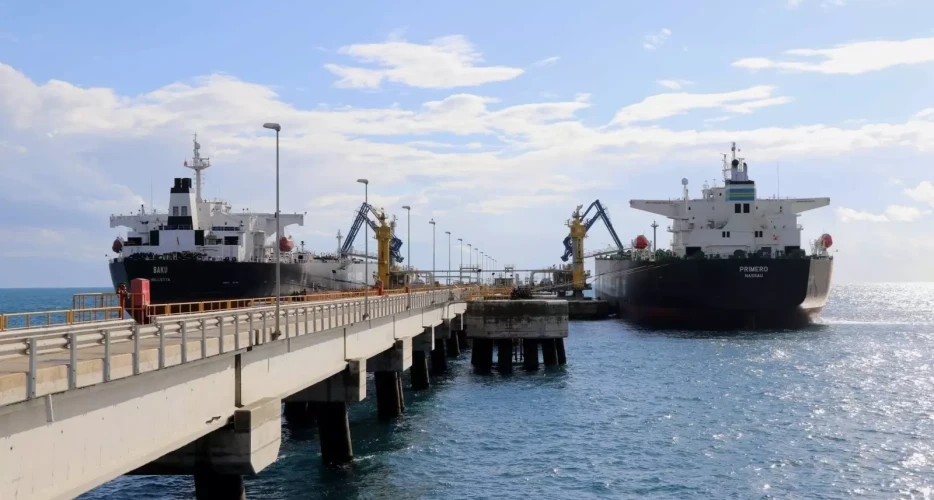
Peregraf- Iraqi Oil Minister Hayyan Abdul Ghani announced on Saturday that more than one million barrels of crude from the Kurdistan Region have been received so far, confirming that the first tanker carrying Kurdistan Region oil has been loaded at Turkey’s Ceyhan port.
Abdul Ghani told the Iraqi News Agency (INA) that oil flows from the Kurdistan Region through the Iraq-Türkiye pipeline resumed a few days ago after a suspension of more than two years. “For the first time, the federal government is receiving oil produced in the region and undertaking the process of exporting it outside Iraq,” he said.
He noted that over one million barrels have already been transferred and that the first tanker, with a capacity of 650,000 barrels, is now being loaded at Ceyhan. “Once loading is completed, the tanker will depart to its contracted destination,” Abdul Ghani added, describing the resumption as “a great achievement by the Iraqi federal government and the Kurdistan Regional Government (KRG).”
Exports from Kurdistan region restarted last Saturday under a landmark agreement between Baghdad, Erbil, and international oil companies, following two years of negotiations. The director of the State Oil Marketing Organization (SOMO), Ali Nazar al-Shatri, confirmed that revenues from Kurdistan region’s oil sales will be directed to the federal budget.
On September 27, oil from the Kurdistan Region flowed again through the pipeline to Ceyhan for the first time since March 2023, when exports were halted after an international arbitration ruling favored Baghdad against Ankara. The stoppage deprived the Kurdistan Region of vital revenues and cut roughly 230,000 barrels per day from global markets.
Under the new deal, crude from the Kurdistan Region—except volumes reserved for local use—will be handed over to SOMO at Peshkhabour and exported via Ceyhan. Revenues will be deposited directly into Iraq’s federal treasury, from which Kurdistan’s public salaries and dues will be funded.
The agreement includes provisions for cost recovery: $16 per barrel is allocated for extraction and transportation, with companies compensated in crude oil rather than cash. SOMO will also cover pipeline transit fees, while Baghdad continues negotiations with Ankara to renew the transport agreement expiring in mid-2026.
Iraqi Prime Minister Mohammed Shia’ al-Sudani hailed the breakthrough as “an achievement 18 years in the making,” saying it ensures fair distribution of wealth and strengthens Iraq’s global energy role. KRG Prime Minister Masrour Barzani called it “a historic step” that reconnects the Kurdistan Region to international oil markets and removes a major obstacle to securing financial dues.
KRG Deputy Prime Minister Qubad Talabani stressed the role of dialogue: “Through dialogue with Baghdad, we can best serve our people and our Region.”
The Iraqi federal government aims to increase Kurdistan region’s oil exports to 400,000 barrels per day in line with Iraq’s budget law. For Erbil, the deal is expected to restore financial stability and enable the timely payment of public sector salaries, while for Baghdad it consolidates state control over oil revenues and boosts investor confidence.
The restart of exports marks a new chapter in Baghdad-Erbil relations, with leaders on both sides expressing hope that it will replace years of disputes with lasting cooperation.