PM Al-Sudani Unveils Iraq Vision 2050 Focusing on Governance and Economic Diversification
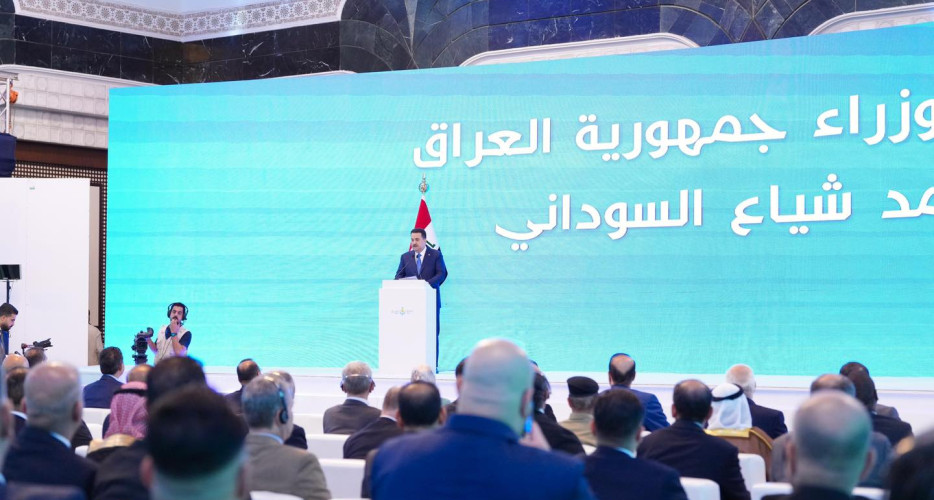
Peregraf- Prime Minister Mohammed Shia Al-Sudani attended the launch ceremony of Iraq Vision 2050 for Development and the Future today, Saturday, in the presence of senior state leaders, heads of governmental bodies, private sector representatives, ambassadors, diplomats, academics, experts, and members of the media.
According to the Media Office of the Prime Minister, during the event, Prime Minister Mohammed Shia Al-Sudani commended the National Strategy Committee for its efforts in preparing Iraq Vision 2050, noting that the government began developing its initial concepts in March 2023. He explained that the vision centers on five key national pillars: building a vibrant and productive society; establishing a sovereign, diversified, and sustainable economy; ensuring effective and accountable governance; securing a balanced regional and international position; and placing youth at the heart of Iraq’s development agenda.
The Prime Minister highlighted the role of digital monitoring mechanisms and long-term financing strategies, including public-private partnerships and international cooperation. He also noted that earlier this year, the government formed a National Team, led by the Ministry of Planning and the Advisory Commission, working with the McKinsey Global Institute to develop a comprehensive national vision. This collaboration aims to diversify Iraq’s economy, restructure it, reduce oil dependency, increase private sector contributions, and achieve sustainable growth aligned with national development priorities.
“Iraq Vision 2050 represents a unifying national orientation,” Prime Minister Al-Sudani said, “with active participation from state institutions, the private sector, universities, civil society, and youth. It sends a clear message to the world that Iraq is rising again, reclaiming its role as a productive and influential force for peace, stability, and prosperity.”
Key highlights from the Prime Minister’s remarks include:
- Iraq Vision 2050 addresses structural gaps and imbalances across state institutions while covering multiple sectors.
- The plan aims to prevent crises or reduce their impact through proactive risk management, acknowledging that international institutions alone cannot fully safeguard the nation.
- The Ministry of Planning signed a consultancy contract with KBR, a global consulting firm for mega projects, to implement transformation stages under Iraq Vision 2050.
- A comprehensive reform plan, including transformation pathways and an upcoming development roadmap, will be submitted to the Council of Ministers for approval.
- Iraq will move away from relying solely on fossil fuels amid global technological changes and the rise of artificial intelligence.
- The country aims to become a transit hub for 20% of Asia–Europe trade via the Al-Faw Grand Port and the Development Road project.
- The Development Road project is expected to create 1.5 million jobs and achieve 70% self-sufficiency in food, water, and energy through sustainable green initiatives.
- The government launched the Executive Policy Document for Strategy Governance, clarifying Iraq Vision 2050’s overall direction.
- Iraq aspires to achieve a diversified and stable economy, gradually freeing itself from oil dependency.
- Domestic and foreign policy achievements have received wide recognition and appreciation at both local and international levels.
The launch of Iraq Vision 2050 marks a pivotal step in the country’s long-term development strategy, aiming to secure sustainable growth, social prosperity, and a strengthened position on the regional and global stage.