Peregraf
Iraq’s Deputy Prime Minister and Foreign Minister Fuad Hussein held two major meetings on August 31 that highlighted Baghdad’s growing focus on tackling its deepening water crisis through both diplomacy with neighbors and internal coordination.
Hussein met with a delegation from the Turkish Ministry of Foreign Affairs, headed by Ambassador Ali Reza, Director-General of the Department of Iran and Iraq. The talks reviewed bilateral relations and explored ways to expand cooperation, particularly in water management and trade. Hussein affirmed Iraq’s commitment to building balanced ties with Ankara based on mutual respect and constructive partnership, emphasizing that securing Iraq’s water rights remains a priority. Ambassador Reza expressed Turkey’s readiness to strengthen cooperation with Baghdad across several fields, with water and economic exchange identified as key areas.
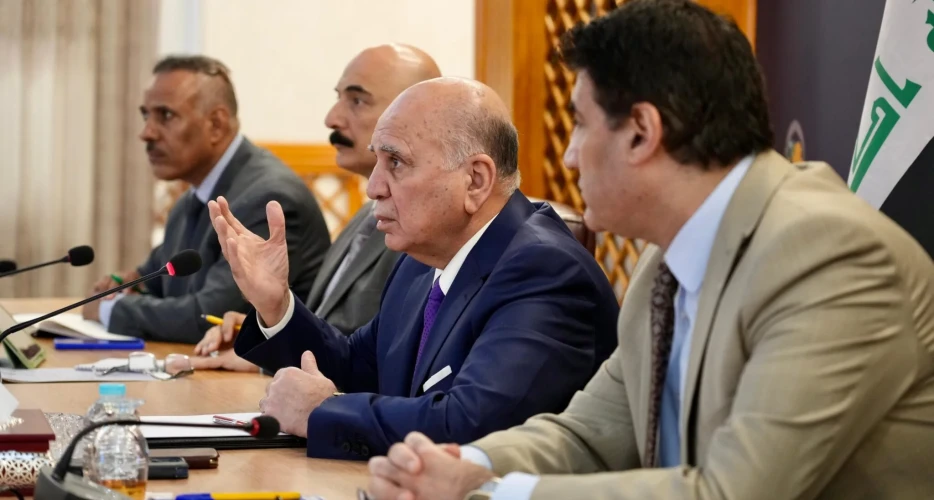
On the same day, Hussein chaired an expanded meeting at the Foreign Ministry attended by senior diplomats, advisors, and representatives from the Ministries of Water Resources, Environment, and Agriculture. The participants reviewed studies and technical papers diagnosing Iraq’s worsening water scarcity and environmental problems, including declining river flows, shrinking reservoirs, and the impact on agriculture, food security, and daily life.
"The water crisis directly affects all aspects of life," Hussein said, stressing the need to raise public awareness on water conservation while developing both immediate and long-term strategies. He added that environmental issues are now global challenges requiring integration between domestic institutions and cooperation with regional and international partners.
Hussein underlined that the Foreign Ministry has a pivotal role in activating diplomatic tracks with neighboring countries, particularly Turkey and Iran, which control much of Iraq’s water inflows from the Tigris, Euphrates, Karun, and Karkheh rivers. He also pointed to the importance of following up on international agreements to safeguard Iraq’s rights and vital interests.
The meetings came shortly after Prime Minister Mohammed Shia al-Sudani convened the Supreme Water Council on August 28, which approved urgent measures such as modernizing irrigation, shifting to low water-consuming crops, restructuring agricultural plans, and providing social support for farmers affected by drought. The Council also authorized direct negotiations with Turkey and Iran on increasing water releases.
Despite new pledges of support, including a $39 million UN-backed project with the Food and Agriculture Organization and a $10.2 million Swedish commitment for climate-smart agriculture, water management remains a pressing problem inside Iraq. A Peregraf investigation revealed that the Kurdistan Region, despite its rivers and springs, faces severe mismanagement. More than 1,650 springs have dried up, groundwater in Erbil has fallen nearly 500 meters since the 1990s, and reservoirs such as Dukan and Darbandikhan—critical for Iraq’s water supply—are at critically low levels.
Experts warn that Iraq’s future depends on decisive action. "Without strategic planning, both surface and groundwater are at risk," water resources specialist Dr. Abdullah Botani told Peregraf. Analyst Sarmad Latif added that Iraq now ranks among the lowest globally in water security. "If no action is taken, drought, desertification, and agricultural collapse are inevitable," he said.
By linking talks with Turkey to inter-ministerial coordination in Baghdad, Hussein signaled that Iraq’s water crisis will be addressed through both regional diplomacy and domestic reform. Whether these parallel efforts can deliver lasting solutions, however, remains uncertain.