Confessions of Nugra Salman’s 'Ajaj': Mass Starvation and Daily Rape Used as Weapons of Anfal
Peregraf
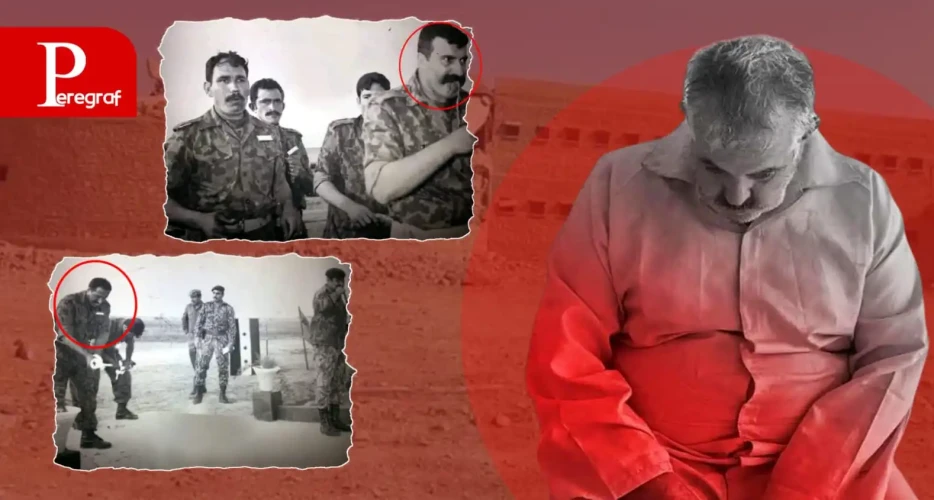
The arrest of Ajaj Ahmed Hardan Al-Obaidi, better known to survivors as “Hajjaj of Nugra Salman,” has reopened some of the darkest chapters of the Anfal genocide. His recent confessions to the Iraqi state newspaper Al-Sabah revealed chilling details of how starvation and sexual violence were deliberately used as tools of extermination against Kurdish detainees.
Ajaj, who was born in Salahaddin province and trained at the National Security College, admitted in his statement that he personally oversaw systematic torture and abuse at Nugra Salman prison. Upon taking charge in 1989, he said, the facility was emptied of around 400 Arab detainees, who were replaced with nearly 3,000 Kurdish men, women, and children transferred from Sulaymaniyah and Erbil.
In his confession, Ajaj did not deny responsibility. On the contrary, he explained the method: “We used starvation as a weapon of war, no less deadly than military bombardment. Two-thirds of the detainees died in just ten months.” He also acknowledged that rape was practiced on a daily basis, describing it as an organized policy rather than isolated acts.
For survivors, these words only confirm what they have long said. “This man had no mercy,” recalled Ali Abubakr, who was 12 years old when his family was taken to Nugra Salman. “I thought my father was dead after he was beaten, but he whispered to me, ‘I made myself dead. Go.’ Those memories never left me.”
Ajaj’s reputation for cruelty was so notorious that detainees nicknamed him “Al-Hajjaj,” comparing him to the medieval governor known for mass executions. Survivors accuse him of turning the desert prison into a death camp, where hunger, heat, and humiliation were as lethal as bullets.
After the fall of Saddam Hussein’s regime, Ajaj vanished. For years, rumors circulated — that he had fled to Syria or Saudi Arabia, that he had died of cancer, or that he was crippled by a stroke. In reality, he was hiding in Salahaddin, moving between Tikrit, Oja, and Beji, and even undergoing cosmetic procedures to alter his appearance.
His arrest was announced on July 31 by Iraq’s First Lady, Shanaz Ibrahim Ahmad, who said her office had been tracking him for eight months. The Iraqi National Security Service confirmed the operation a day later, releasing photos of Ajaj in custody.
The arrest came just days after survivors filed formal complaints in court. “Less than 48 hours after we submitted the case, security forces caught him,” said Ali Darwish, whose relatives were killed during Anfal.
Legal experts believe Ajaj’s detention could mark a turning point. “This is a critical moment,” said Dr. Hunar Amin, a genocide scholar. “Ajaj’s confessions prove that starvation and sexual violence were not incidental, but systematic. His trial can provide a foundation for renewed efforts to document and prosecute the crimes of Anfal.”
Between February and September 1988, the Ba’ath regime displaced and killed an estimated 182,000 Kurds. Thousands vanished into mass graves, and Nugra Salman became a symbol of their suffering. Now, as Ajaj faces justice, survivors hope that his words — his own admission of starvation and rape as tools of mass murder — will strengthen the demand for accountability.
“This arrest should not be the end — it should be the beginning,” Dr. Amin said. “Justice for Kurdistan has waited long enough.”