Iraq Warns of Water Crisis as Peregraf Investigation Exposes Mismanagement Behind Kurdistan’s Declining Reserves
Peregraf
The Iraqi Ministry of Agriculture announced on Sunday that the Green Climate Fund (GCF) has approved financing for a new project to address Iraq’s worsening water scarcity and climate change challenges. While officials in Baghdad pointed to declining water storage levels nationwide, a Peregraf investigation revealed that the Kurdistan Region—long considered Iraq’s vital reservoir—is now facing severe mismanagement and the rapid depletion of its reserves.
Mithaq Abdul-Hussein, technical undersecretary of the Ministry, told the Iraqi News Agency that Iraq has "moved from water scarcity to water crisis," with national water reserves dropping to less than 10 billion cubic meters. He said the Ministry’s strategy is based on two tracks: reducing consumption through modern irrigation technologies, and adapting agriculture to climate change by developing drought- and heat-resistant crop varieties.
International support is expected to play a key role. The Green Climate Fund has already approved a $39 million project, implemented by the UN Food and Agriculture Organization (FAO), to strengthen climate resilience in farming communities. Sweden has pledged $10.2 million to help Iraq shift to climate-smart agriculture and closed-system fish farming. Iraq has also launched a national afforestation drive, planting eight million trees in the past year.
Created in 2010, the GCF is a UN-backed initiative that finances climate-related projects in developing nations. In May, it approved a $1.3 billion package for Iraq covering 18 projects across the country.
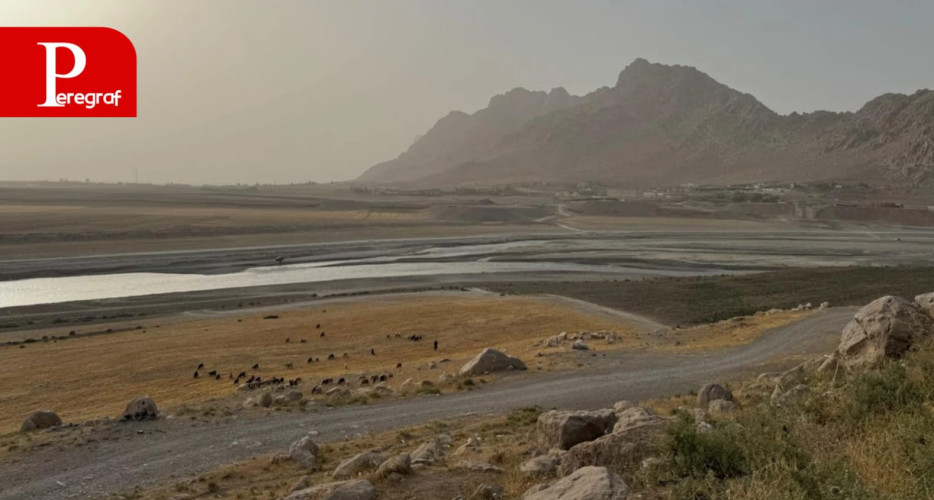
But while Baghdad highlights progress, Peregraf’s recent investigation into the water situation in the Kurdistan Region paints a starkly different picture. Despite being home to rivers, lakes, and more than 5,200 springs, the Region faces what experts describe as an "exhausted management crisis." The problem, specialists told Peregraf, is not scarcity alone, but decades of mismanagement, lack of infrastructure, and unchecked overuse of groundwater.
According to the investigation, more than 1,650 springs in the Region have dried up, and hundreds of qanats—ancient underground water channels—are no longer functioning. Official statistics show groundwater levels in Erbil have fallen by 500 meters since the 1990s. Wells that once reached water at 120 meters now must be drilled to depths of 700 meters, while illegal wells—over 28,000 across the Region—are accelerating depletion.
"The Kurdistan Region is rich in water resources, but it lacks a water policy," water security specialist Sarmad Latif told Peregraf. He warned that Iraq and the Kurdistan Region rank in the lowest global category for water security, meaning they cannot guarantee sufficient water for the next 25 years.
The investigation also found alarming drops in rainfall. Average annual precipitation in the Region fell from 800 millimeters in the late 20th century to around 500 millimeters today, with forecasts suggesting further declines. In 2021, rainfall plummeted to just 236 mm, the lowest in more than a decade.
Reservoirs in Kurdistan hold much of Iraq’s water, but even here, capacity is falling short. The Dukan and Darbandikhan dams alone account for nearly 30% of the country’s stored water, yet levels are critically low. Experts warn that without urgent investment in new dams and proper management, the Region will struggle to meet its own needs, let alone Iraq’s.
Dr. Abdullah Botani, a specialist in dams and water resources, told Peregraf that Kurdistan could secure its future—and that of Iraq—if it built long-delayed projects such as the Bekhme Dam on the Great Zab River, which could hold 18 billion cubic meters of water. "With strategic planning, the Kurdistan Region can become Iraq’s water center," he said. "But without a coherent policy, we risk losing both surface and groundwater."
The Peregraf investigation concluded that government mismanagement is worsening the crisis. Officials have focused on oil and energy for decades, while water institutions remain weak, underfunded, and led by non-specialists. Efforts to contact the Kurdistan Regional Government’s Ministry of Agriculture and Water Resources for comment on long-term plans went unanswered.
For now, experts warn that the water crisis threatens agriculture, food security, and public health across Iraq. "If no action is taken, drought, desertification, and the collapse of agriculture are inevitable," Latif said.
As Baghdad welcomes international support and new funding, Peregraf’s findings from Kurdistan suggest that money alone will not solve Iraq’s water crisis without political will, sound management, and a serious strategy for protecting the country’s most precious resource.
Thread: Kurdistan’s Water Crisis
1/ 💧#Kurdistan has rivers, lakes & springs, yet faces a worsening water crisis. The problem isn’t scarcity — it’s mismanagement, lack of policy & outdated infrastructure. #WaterCrisis #WaterScurityhttps://t.co/q4Ufcrp54S