Iraqi Court Dismisses Another 'Runaki' Case, Rejects 10 Kurdistan Lawsuits in a Month
Peregraf – Sangar Salar
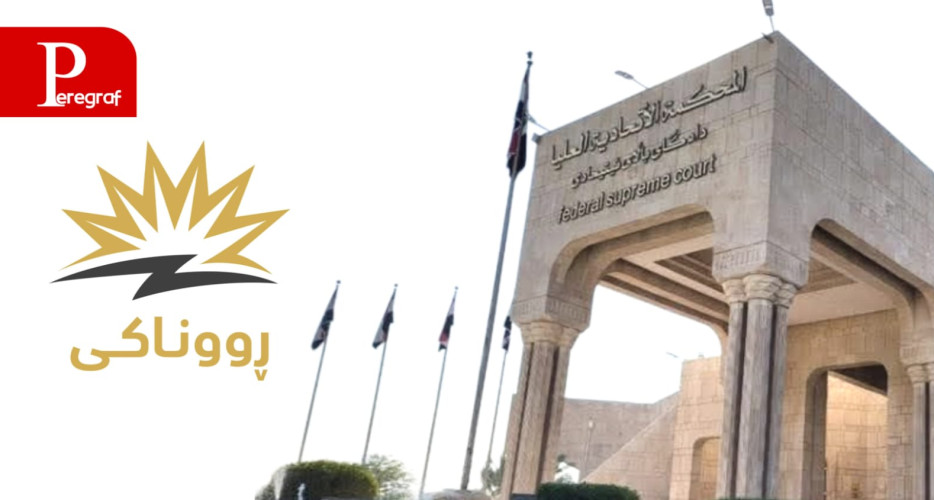
The Federal Supreme Court of Iraq has dismissed another lawsuit filed by the Kurdistan Regionopposition concerning the "Runaki" (Light) (24-hour electricity) project. Although the court accepted the case and scheduled its first hearing for today, it was ultimately rejected on the grounds that it falls "outside the jurisdiction of the Federal Court." Following a change in its presidency, the court has rejected 10 lawsuits related to the Kurdistan Region in less than a month.
The lawsuit was filed by Omar Gulpi, a former member of the Kurdistan Parliament and a senior member of Kurdistan Justice Group (Komal), against the Prime Minister of the Kurdistan Regional Government (KRG). It sought a Federal Court ruling to declare the price schedule in Resolution No. 280, issued by KRG on May 14, 2025, as unconstitutional. The suit also demanded that the respondent be obligated to provide national electricity to citizens according to the prices stipulated in Guideline No. 2 of 2021.
Speaking in front of the Federal Court after the dismissal, Omar Gulpi stated, "The court did not delve into the evidence regarding the injustice faced by the citizens of the Kurdistan Region, who have had their electricity prices increased under the pretext of it becoming a 24-hour service, while the electricity is generated from our own gas."
The former member of the Kurdistan Parliament added, "Electricity prices are being increased five and ten-fold for citizens at a time when the KRG is unable to pay the salaries of its public employees monthly, and the citizens are in a very difficult situation."
The Runaki project, aimed at providing 24-hour national electricity, was announced by Masrour Barzani, Prime Minister of the KRG, in a neighborhood of Erbil in October 2024. To date, the project has provided 24-hour electricity to 2.7 million citizens in the Kurdistan Region.
The project has been described by some parliamentarians and activists as a "burden" on the citizens of the region and the "commercialization of electricity," arguing that "the price is high and does not align with the income and living standards of the citizens." Several activities, including filing lawsuits, have been carried out to reject it, but they have been unsuccessful.
In response, the KRG claims that Runaki is a "national governmental" project owned by the Ministry of Electricity. A spokesperson for the KRG stated, "The project is progressing very well. People should not be worried because the KRG has no intention or goal of creating a burden on the people."
According to a Peregraf report, the price and method of using national electricity in the Runaki project have become a hot topic in family and social gatherings, especially in households where the project has been implemented. For citizens to pay the lowest possible amount, they must adapt to the project by using electricity as needed and switching their lights and electrical appliances to models that consume the least amount of power.
Dismissal of Kurdistan Region's Lawsuits
Judge Munzir Ibrahim, the new President of the Federal Court, took office on July 3, 2025. Starting from the 20th of the same month, he began to resolve the lawsuits related to the Kurdistan Region. In its first action, the Federal Court rejected two lawsuits concerning the $110 billion contracts between the KRG and American companies. The court deemed the first lawsuit "null" and decided to "reject" the second one.
Subsequently, on July 21, it rejected two lawsuits against the sixth term of the Kurdistan Parliament, on the grounds that they were not within the court's jurisdiction. On the 22nd of the month, it rejected two lawsuits against the provincialization of Halabja. On the 28th, it rejected two lawsuits regarding salaries and another lawsuit concerning the Runaki project.
Salary Lawsuits
The first lawsuit was filed by Ramazan Abdulrahman Mohammed and Karwan Ahmed Sleman against the Iraqi Federal Minister of Finance.
They demanded a "guarantee for the continuous and timely monthly disbursement of salaries for the Kurdistan region's employees by the Federal Ministry of Finance, regardless of the disputes between the Iraqi federal and Kurdistan regional government over the interpretation of the budget law or any other reason."
They also requested an injunction to compel the Iraqi Federal Ministry of Finance to immediately disburse the salaries of the Kurdistan region's public employees until the lawsuit is resolved.
The second lawsuit was filed by protesting teachers from the Kurdistan region (Dlawar Ali Mohammed Salih, Zryan Ali Mohammed, and Saman Ali Salih) against the KRG Prime Minister and the Minister of Finance.
The lawsuit demanded a "decision to insulate the salaries of the Kurdistan region's employees from political conflicts and actual expenditures."
Runaki Project Lawsuits
The first lawsuit was filed by Srwa Abdulwahid, head of the New Generation Movement bloc in the Iraqi Parliament, against the President and Prime Minister of the Kurdistan Region, seeking the annulment of the KRG Council of Ministers' decision regarding the Runaki project.
The Federal Court held a session on this lawsuit from the New Generation Movement on the July 20, 2025 and postponed it to the 28th of the same month. In the second session, the court rejected the lawsuit on the grounds that it was not within its jurisdiction.
The second lawsuit, filed by Omar Gulpi, a former member of the Kurdistan Parliament, against the Prime Minister of the KRG, was rejected by the court today (August 17, 2025) on the same grounds.
Lawsuits on the Provincialization of Halabja
The first lawsuit against the provincialization of Halabja was filed by five Iraqi parliamentarians (Mohammed Jasim Khafaji, Haider Mohammed Kazim, Mustafa Khalil Garaawi, Basim Khazayir Kazim, and Nifuz Hussein Musawi).
The lawsuit was filed against the Speaker of the Iraqi Parliament and his first and second deputies. It sought to declare the procedures of the parliamentary presidency for voting on the bill to create the Halabja governorate and voting on certain special grades as incorrect, alleging that the legal quorum of parliamentarians was not present during the vote.
These parliamentarians had asked the Federal Court to issue an injunction to halt the procedures for enacting the law on the creation of the Halabja governorate.
The second lawsuit against the provincialization of Halabja was filed by an Iraqi parliamentarian named Amir Kamil Ma'moori against the President of Iraq.
In the lawsuit, the parliamentarian requested the Federal Court to reject the presidential decree of April 29, 2025, regarding the "establishment of the Halabja governorate" as the nineteenth governorate of Iraq, and to issue an injunction to suspend the decree.
The Federal Court rejected both lawsuits against the provincialization of Halabja.
Kurdistan Parliament Lawsuits
The first lawsuit was filed by Omar Abdullah Gulpi, a former member of the Kurdistan Parliament from the Kurdistan Justice Group (Komal) bloc, against the President of the Kurdistan Region and the Speaker of the Kurdistan Parliament.
In his lawsuit, Omar Gulpi requested the court to dissolve the sixth term of the Kurdistan Parliament and to instruct the Iraqi High Electoral Commission to hold new parliamentary elections in the nearest possible time, on the grounds that the parliament failed to perform its duties and hold its first session and elect its presidency within the legal period.
He also demanded that all material privileges received by the parliamentarians during the past period be withdrawn, on the grounds that they have not done any work.
The second lawsuit was filed by Srwa Abdulwahid, head of the New Generation Movement bloc in the Iraqi Parliament, Kurdawan Jamal, head of the New Generation Movement bloc in the Kurdistan Parliament, and Kawa Abdulqadir, a former member of the movement in the Kurdistan Parliament, against the President of the Kurdistan Region.
In the lawsuit, the New Generation Movement accused the President of the Region of failing to dissolve the Kurdistan Parliament as required by the Presidency Law, because it could not elect the parliamentary presidency and the new government cabinet within the legal deadline, but the President of the Region was unwilling to issue a decision to dissolve the parliament.
These two lawsuits were also rejected by the Federal Supreme Court of Iraq, on the grounds that the cases are not within the court's jurisdiction and specialization.
Lawsuits on the Kurdistan Region's Oil and Gas Contracts
The first lawsuit was filed by parliamentarian Raed Hamdan Maliki, a member of the Legal Committee of the Iraqi Parliament, against the Prime Minister of the Kurdistan Region and the Minister of Natural Resources of the region.
In the lawsuit, the parliamentarian requested the court to rule on the nullity of the contracts and agreements that the Kurdistan Region concluded with the two American oil companies (Western Zagros and HKN Energy) regarding investment in the (Miran, Topkhana-Kurdamir) fields on May 19, 2025, as they violate the articles and provisions of the Iraqi constitution.
The parliamentarian also asked the Federal Court to oblige the respondents not to enter into any oil and gas contracts in the future without referring to the federal government. He also sought an injunction against the accused to stop the implementation of those contracts and agreements.
The Federal Court deemed this lawsuit "null" and terminated it.
The second lawsuit was filed by parliamentarian Basim Naghimish Gharibawi, a member of the Oil, Gas, and Natural Resources Committee of the Iraqi Parliament, against the Prime Minister and the Minister of Natural Resources of the Kurdistan Region.
In the lawsuit, he requested the court to "rule on the unconstitutionality of the contracts concluded by the Kurdistan Region with the American companies regarding investment in the (Miran and Kurdamir-Topkhana) fields."
He also requested the Federal Court to rule that "those contracts concluded on May 19, 2025, are null and void," and to "oblige the respondents not to enter into any oil and gas contracts in the future without referring to the federal government."
This lawsuit was also rejected by the Federal Supreme Court.
Why Are the Lawsuits Being Rejected?
Hawre Tofiq, a jurist and advisor to the President of Iraq, believes that after the internal situation that the Federal Court went through, which led to the retirement of the former president of the court and the appointment of Judge (Munzir Ibrahim) in his place, "a new phase has emerged in the nature and course of the court's proceedings and its decision-making approach."
Hawre Tofiq says, "Immediately after the new president of the court took office, they issued a statement in which they clearly and explicitly announced that they would see cases within the framework of their constitutional jurisdiction and would not expand the limits of their authority and jurisdiction."
According to the internal regulations of the Federal Court, the plaintiff who files a lawsuit in court must meet two main conditions: the lawsuit must be within the jurisdiction of the Federal Court and not fall within the jurisdiction of other courts, and the plaintiff must have an interest in the case.
Hawre Tofiq provided a clarification regarding the term "having an interest," saying, "In 2018, the Iraqi Parliament, to carry out its work, enacted the Council of Representatives Law No. (13) of 2018. Both Haider al-Abadi, the then Prime Minister, and a number of lawyers, challenged a large number of the law's articles in the Federal Court, including Article (6), second paragraph, which states that 'a member of parliament is considered to have an interest and the right of the people, as he represents one hundred thousand people and has the right to represent them before the courts and demand a trial on their behalf'."
In their challenge, al-Abadi and the lawyers argued that this paragraph contradicts Article (19) - second paragraph of the constitution, which states that "the right to a trial is a guaranteed right for all people," and also contradicts Article (61) of the constitution, which defines the powers and jurisdiction of the parliament as (enacting laws and monitoring their implementation), and accordingly, a member of parliament does not have the right to file a lawsuit in cases related to the people in the Federal Court because he does not have an interest and is not an agent of the people.
The advisor to the President of Iraq indicates that the challenge was accepted by the Federal Court, and by decision No. (140) consolidated 141/Federal/Announcement: 2018, it decided that Article (6) - second paragraph of the Council of Representatives Law is "unconstitutional and a parliamentarian does not have an interest and cannot file a lawsuit in court."
Hawre Tofiq says, "Now, after several years, the Federal Court has returned to this decision and says: a parliamentarian does not have an interest, and his lawsuit is rejected, which is why they are rejecting their lawsuits in droves."