Iraq, Iran Sign Security Memorandum Targeting Iranian Kurdish Opposition in Kurdistan Region
Peregraf
Iraq and Iran have signed a new security memorandum of understanding that reinforces an earlier agreement aimed at disarming and relocating Iranian Kurdish opposition groups operating in the Kurdistan Region.
The Iraqi National Security Advisory issued a statement on Wednesday clarifying the nature of the accord, following media reports describing it as a fresh security agreement. The advisory explained that the memorandum builds upon the Joint Security Agreement on Border Security signed on March 19, 2023, between the two countries. That agreement committed Baghdad to measures to “neutralize” armed Iranian Kurdish groups based in northern Iraq.
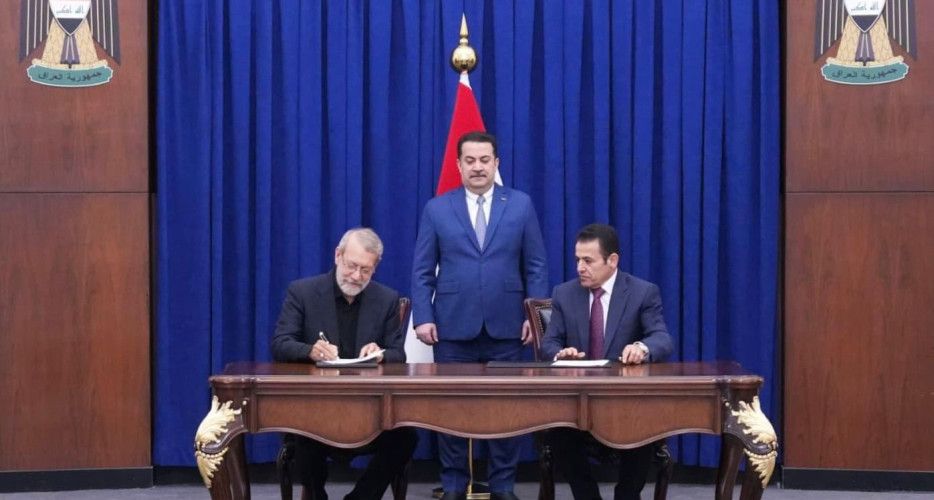
The updated memorandum, identical in content to the 2023 pact, was presented to and approved by Iraq’s Council of Ministers before being signed during the visit of Ali Larijani, the newly appointed secretary of Iran’s Supreme National Security Council, to Baghdad this week.
Prime Minister Mohammed Shia al-Sudani oversaw the signing between Iraq’s National Security Advisor Qasim al-Araji and Larijani. During their meeting, the two discussed security cooperation, border management, and broader bilateral relations. Al-Sudani reaffirmed Iraq’s commitment to strengthening ties with Iran and voiced opposition to what he described as “Zionist aggression against Iran,” while calling for dialogue between Tehran and Washington to avoid further regional escalation.
The memorandum focuses on securing the more than 1,400-kilometer-long border shared by Iraq and Iran, a sensitive issue given Tehran’s longstanding concerns about the presence of armed opposition factions in the Kurdistan Region.
Iran accuses groups such as the Kurdistan Democratic Party of Iran (KDPI), Komala, the Free Life Party of Kurdistan (PJAK), and the Kurdistan Freedom Party (PAK) of involvement in unrest during the 2022 protests in Iran and of carrying out armed activities along the border. Tehran has repeatedly threatened military action if Baghdad fails to curb their activities.
Under the 2023 agreement—implemented with the participation of the Kurdistan Regional Government’s Interior Ministry—these groups were to be disarmed and moved to designated camps away from the border. Iraqi officials say the arrangement has already been largely enforced, though Iranian authorities continue to monitor the situation closely.
Larijani, who conveyed greetings from Iranian President Masoud Pezeshkian, said Tehran seeks to expand cooperation with Baghdad beyond security matters, particularly in transport and trade. He proposed advancing a passenger railway project linking the two countries, which would connect to Iraq’s planned Development Road and other regional trade corridors.
Larijani’s visit is part of a broader regional tour that includes stops in Lebanon. It comes at a time of heightened tensions across the Middle East, with Iraq and Iran navigating complex relationships involving the United States, Gulf Arab states, and competing infrastructure initiatives.
The Iraqi National Security Advisory stressed the importance of accurate reporting, urging media outlets to rely on official sources when covering sensitive security issues.