Peregraf
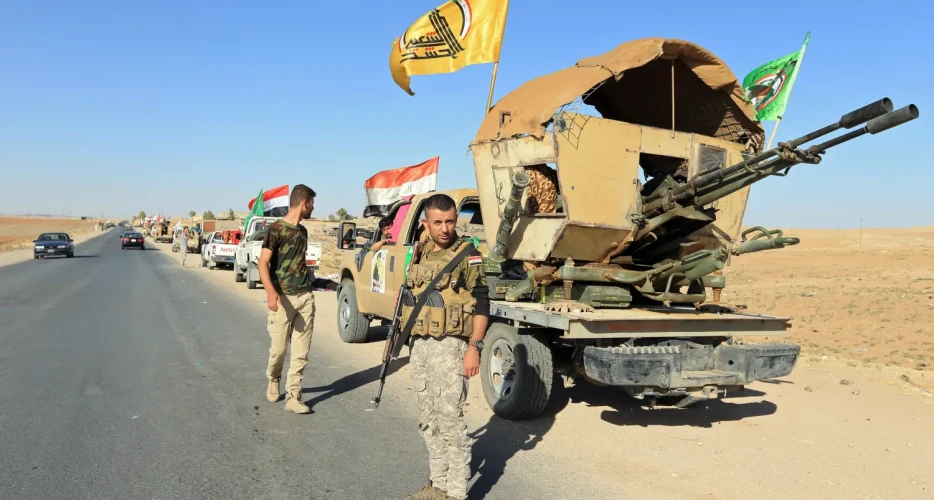
Iraq’s draft law to formalize the Popular Mobilization Forces (PMF), or Hashd al-Shaabi, is drawing sharp criticism from both domestic political leaders and international partners.
On Saturday, Shakhawan Abdullah, Deputy Speaker of the Iraqi Parliament and a senior leader of the Kurdistan Democratic Party (KDP), warned that the legislation poses a threat to Iraq’s national unity.
"There are certain rules for a certain class, but the damage is for the whole of Iraq," he told reporters. "This message is understood by both Sunnis and Shiites. Therefore, we do not think it is time for this law to be passed."
His remarks come amid growing U.S. concerns that the law would institutionalize Iranian-backed militias and erode Iraq’s sovereignty — fears Washington conveyed directly to Prime Minister Mohammed Shiaa al-Sudani in a recent phone call.
On July 29, the Iraqi Parliament’s Security and Defence Committee held a session at its headquarters to review the latest developments related to the PMF draft law.
The meeting included Lieutenant General Tahseen Abdul Matar, Secretary-General of the PMF, who briefed members on the bill’s key provisions.
At the end of the session, the Committee recommended submitting the legislation to the Speaker of Parliament and his two deputies.
The goal is to include it on the agenda of upcoming parliamentary sessions for a final vote.
The Committee said the move is intended to "complete the legal framework for the Commission’s work and strengthen its role within the national security system."
The draft law includes 18 articles and was approved by the Council of Ministers on February 25, 2025, before being submitted to Parliament.
It has already undergone both its first and second readings in previous parliamentary sessions.
The push to pass the law is largely backed by Shiite blocs in Parliament, who view the PMF as an essential part of Iraq’s defense structure.
However, many Kurdish and Sunni lawmakers see the bill as an effort to entrench the influence of Iranian-backed armed groups in Iraq.
On July 23, U.S. Secretary of State Marco Rubio raised serious concerns about the bill during a phone call with Prime Minister Sudani.
According to a statement from the U.S. State Department, Rubio warned that the law would risk "institutionalizing Iranian-backed armed groups" and undermine Iraq’s sovereignty.
Washington has repeatedly called for the full integration of PMF factions into Iraq’s regular armed forces.
U.S. officials also want the disbandment of militias designated by Washington as terrorist organizations.
The Iraqi Prime Minister has defended the legislation, framing it as part of broader efforts to reform the security sector.
In a statement from the Prime Minister’s Media Office, Sudani described the PMF as "an official military body operating under the authority of the Commander-in-Chief of the Armed Forces."
He noted that similar legal frameworks have already been established for the National Intelligence Service and the National Security Service.
Critics argue that passing the bill would empower groups loyal to Iran and weaken the central state.
Tehran, for its part, has strongly supported the PMF and its legal institutionalization.
During a meeting in Tehran on January 8, Iranian Supreme Leader Ali Khamenei told Prime Minister Sudani that the PMF was "one of the most important components of force in Iraq."
Khamenei urged Iraq to protect and further strengthen the force.
The bill is now awaiting inclusion on Parliament’s legislative agenda. Whether it is amended, delayed, or passed under political pressure remains to be seen.
What is clear is that the PMF draft law is becoming one of Iraq’s most divisive and consequential legislative battles in recent years.