Peregraf
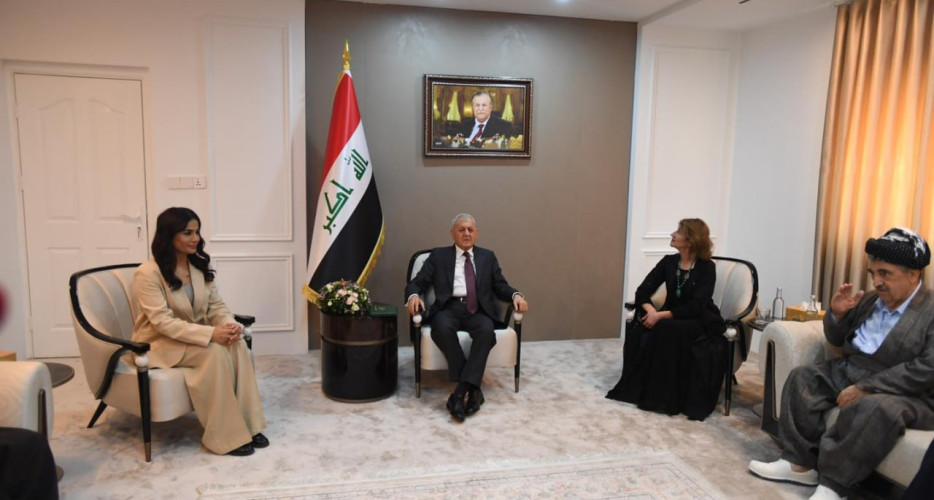
Iraqi President Dr. Abdul Latif Rashid made his first official visit to Halabja since it became Iraq’s 19th province and called for a special federal budget to address the province’s specific needs. He announced that he will submit a request for the allocation to be implemented under the direct supervision of the presidency.
During his visit, President Rashid emphasized the symbolic and historical importance of Halabja, describing it as "an example of struggle and sacrifice for all of Iraq and humanity." He stressed the responsibility of all Iraqis to care for Halabja, so that the tragedy of the 1988 chemical attack is never repeated.
The visit follows a key ruling issued yesterday by the Iraqi Federal Supreme Court, which rejected two complaints filed by six Iraqi lawmakers challenging the legal status of Halabja as a province. The complaints targeted the president and the parliament’s presidency for their roles in endorsing the province’s status. The court upheld the legitimacy of the provincial designation.
Halabja officially became a province following its publication in the official Iraqi Gazette (al-Waqi’i) on May 5, 2025. The move came after the president formally endorsed the provincialization law on April 29, which had been ratified by the Iraqi Parliament on April 14 after years of delay and political resistance. Kurdish political parties played a central role in pushing the legislation forward, including a parliamentary boycott that ultimately helped secure the bill’s passage.
Though recognized as a province by the Kurdistan Regional Government (KRG) since 2014, the new federal recognition gives Halabja full legal and administrative status under Iraqi law. The province encompasses the districts of Halabja, Khurmal, Biara, Sirwan, and Byara, and has a population of over 120,000.
Halabja holds deep symbolic weight in Iraq’s collective memory as the site of a chemical weapons massacre by Saddam Hussein’s regime in 1988, which killed over 5,000 civilians. The federal recognition and President Rashid’s pledge of support are seen as steps toward justice, development, and healing for the long-suffering community.
The province now anticipates increased public investment, stronger local governance, and broader representation at the national level.