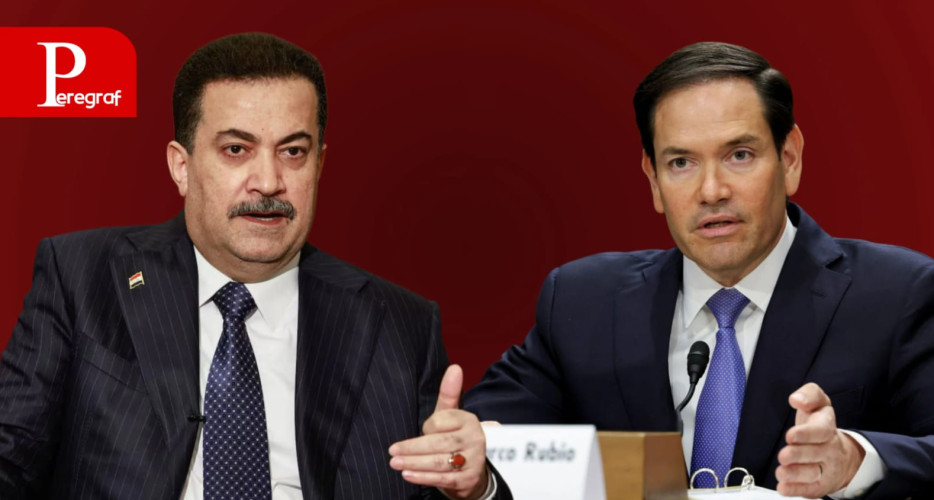
In a statement issued by the Iraqi Prime Minister’s Media Office, Prime Minister Mohammed Shiaa al-Sudani confirmed the call with Secretary Rubio and described the conversation as a review of bilateral relations and regional developments. Al-Sudani reaffirmed Iraq’s commitment to regional stability, upholding ceasefire agreements, and halting aggression.
The Prime Minister condemned the recent attacks on vital and oil-related infrastructure in the Kurdistan Region, Salah al-Din, and Kirkuk, describing them as deliberate attempts to sabotage Iraq’s economy. He noted that Iraqi security agencies, in coordination with the International Coalition, are actively monitoring the sources of these attacks.
Al-Sudani expressed surprise at the timing of the drone strikes, which coincided with the signing of a Memorandum of Principles between the Iraqi Ministry of Oil and American investment firms to develop oil fields in Kirkuk and Salah al-Din.
Regarding the PMF bill, the Prime Minister stated it is part of the government’s broader security sector reform agenda, which has already included legal frameworks for bodies like the National Intelligence Service and the National Security Service. He emphasized that the Popular Mobilization Commission is an official military institution operating under the authority of the Commander-in-Chief of the Armed Forces.
Al-Sudani also addressed the financial relationship with the Kurdistan Region, highlighting a recent Council of Ministers decision requiring the Kurdistan Regional Government to transfer oil production and non-oil revenues to the federal treasury. He said this move, based on the federal budget law and a ruling by the Federal Supreme Court, is helping resolve legal and financial disputes between Baghdad and Erbil.
The Prime Minister concluded by reaffirming Iraq’s economic vision, stressing the importance of resuming exports through the Iraq–Türkiye pipeline and ending smuggling and unlawful practices that endanger Iraq’s oil wealth.