Peregraf
Kurdistan Region Prime Minister Masrour Barzani has called for the swift formation of a new cabinet ahead of the upcoming parliamentary elections, underscoring the need for political stability and effective governance.
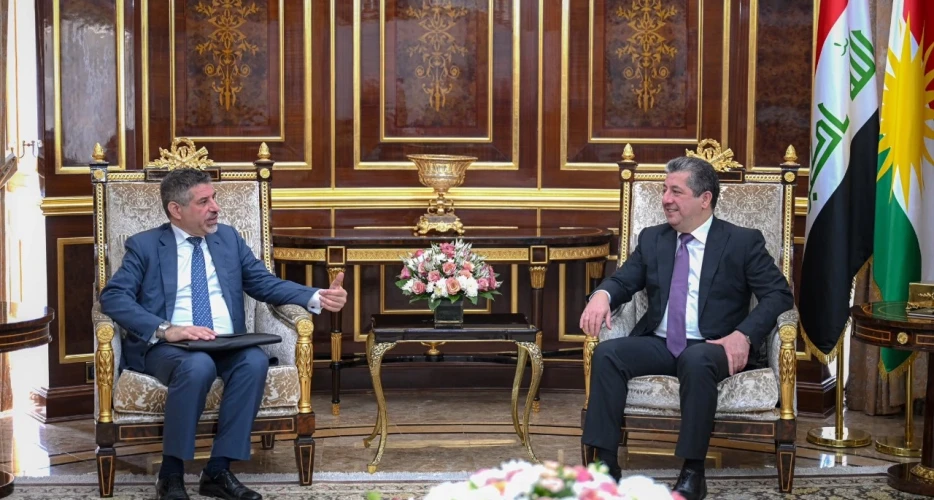
Barzani made the remarks during a meeting with U.S. Ambassador to Iraq Steven Fagin and U.S. Consul General in Erbil Steve Bitner. The leaders discussed a range of pressing issues, including Kurdistan’s financial crisis, ongoing regional instability, and bilateral ties with the United States.
In a statement following the meeting, PM Barzani confirmed that the discussions focused on "the overall situation in Iraq and the broader region," as well as strategies to enhance ties between the Kurdistan Region and the U.S. He expressed gratitude for Washington’s ongoing support, noting Ambassador Fagin’s reaffirmation of America’s commitment to a “strong, stable, and federal Kurdistan Region.”
Barzani emphasized the urgent need for Baghdad to release the Kurdistan Region’s salaries and financial entitlements, which have been delayed for months amid political and economic disputes. He also pressed for the immediate resumption of oil exports through the Turkish port of Ceyhan—a key revenue stream for the Region—suspended since March 2023.
Another key topic was the growing threat posed by drone attacks on the Region’s energy infrastructure. Barzani and the U.S. officials strongly condemned the recent wave of drone strikes that have halted production at several major oilfields and destabilized the local economy.
On internal matters, Barzani stressed the importance of moving quickly to form a new KRG cabinet to ensure a functional government is in place ahead of the parliamentary elections. The call comes amid ongoing political negotiations between major parties, with hopes that a new government can restore momentum and public confidence before voters head to the polls.
Barzani’s call for cabinet formation comes amid an ongoing political stalemate. Nine months after the Kurdistan Region’s parliamentary elections, the Patriotic Union of Kurdistan (PUK) and the Kurdistan Democratic Party (KDP) have yet to reach a deal on the distribution of government posts, stalling the formation of the tenth cabinet of the Kurdistan Regional Government (KRG).
Despite reaching consensus on the government’s program, the two major ruling parties remain divided over power-sharing arrangements. In a press conference on June 25, Masrour Barzani—KRG PM and Second Deputy Leader of the KDP—confirmed the deadlock, stating: “We have reached an agreement on the government’s agenda and we have a common view with the PUK on how to run the government. But there are different opinions on the distribution of posts.”
Barzani emphasized that the KDP is capable of forming a 'majority government', but said the party prefers a broader consensus. “We want the main parties to work together to avoid problems and tensions,” he added.
The impasse has paralyzed the Kurdistan Parliament since its first session on December 2, 2024, which failed to elect a parliamentary presidency—an essential step toward forming a new government. Lawmakers await an agreement between the KDP and PUK on the allocation of key posts before moving forward.
In the October 2024 elections, the KDP emerged as the largest party with 39 seats in the 100-member legislature. The PUK followed with 23 seats, while minority and smaller parties collectively hold 38 seats. A majority of 51 seats is required to form a government, making coalition-building essential.
The KDP maintains political dominance in Erbil and Duhok provinces, while the PUK holds sway in Sulaymaniyah and Halabja. Although the two parties have historically shared governance responsibilities in the Kurdistan Region, ongoing disagreements over key ministerial and administrative positions threaten that partnership.