Iraqi Federal Court Postpones Ruling on Kurdistan Parliament Dissolution to Next Week
Peregraf
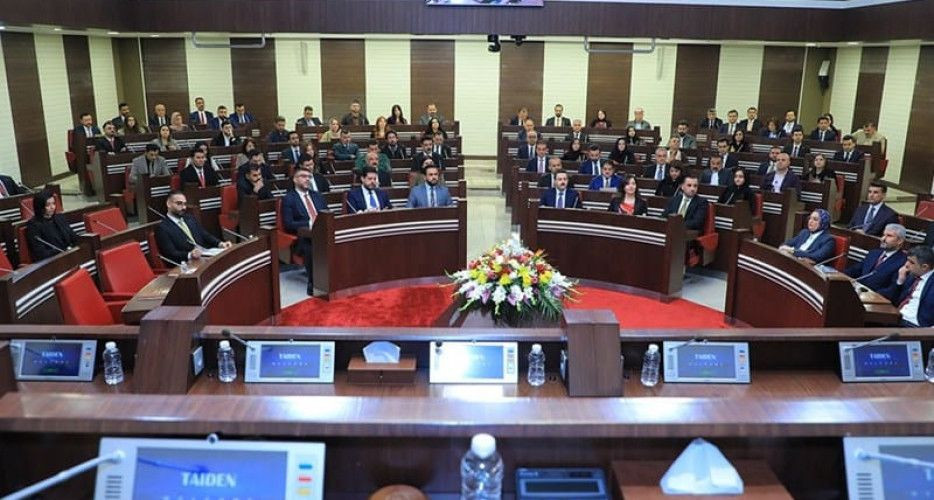
Iraq’s Federal Supreme Court has postponed its decision on a high-profile case calling for the dissolution of the Kurdistan Region’s parliament, delaying a final ruling until its next session on July 21.
The court convened today to hear two separate lawsuits filed by opposition politicians who argue that the Kurdistan Parliament, inactive for more than seven months, has effectively failed in its constitutional duties and must be dissolved. The court did not issue a verdict and adjourned the case for further deliberation.
One of the complaints was filed by Omar Gulpi, a former lawmaker from the Kurdistan Justice Group (Komal), who stated after the hearing: "After reviewing our case, the court decided to postpone the final decision to the next hearing. Our demand is for a genuine, functioning parliament—not a party office."
Gulpi emphasized that his legal action aims to restore parliamentary legitimacy in the region. His demands include:
-
An order to the electoral commission to immediately organize elections for the sixth parliamentary term.
-
The recovery of financial privileges received by 97 MPs since the only session held on December 2, 2024 — excluding the three MPs from the Justice Group who have not received any salaries or privileges due to their boycott in protest of the election results.
“We hope the court’s decision will mark a turning point for a true representative institution that holds the government accountable and puts an end to what has become a dictatorial parliament,” he said.
The second lawsuit was filed jointly by Sirwa Abdulwahid, head of the New Generation Movement (NGM) bloc in the Iraqi Parliament; Kurdawan Jamal, head of NGM in the Kurdistan Parliament; and Kawa Abdulqadir, a former NGM MP. Their complaint argues that the legislature has failed to elect a speaker, form a government, or conduct any legislative activity since elections were held on October 20, 2024.
Despite this prolonged deadlock, the Kurdistan Parliament entered its summer recess on July 1, even though it has held just one session in nearly eight months. The deadlock is rooted in unresolved disputes between the Kurdistan Democratic Party (KDP) and the Patriotic Union of Kurdistan (PUK) over power-sharing arrangements.
At a press conference on June 25, Kurdistan Region Prime Minister Masrour Barzani acknowledged the impasse, noting that while the parties agree on broad governance principles, deep disagreements persist over key cabinet positions. The KDP, which secured 39 seats in the 100-member chamber, has expressed willingness to form a majority government if consensus cannot be reached. The PUK holds 23 seats, while the rest are divided among smaller parties and minority representatives.
The court’s upcoming decision on July 21 could have significant implications for the future of governance and institutional legitimacy in the Kurdistan Region.