Iraqi PM Receives Turkish Intel Chief Ahead of Historic PKK Disarmament Ceremony in Sulaymaniyah
Peregraf
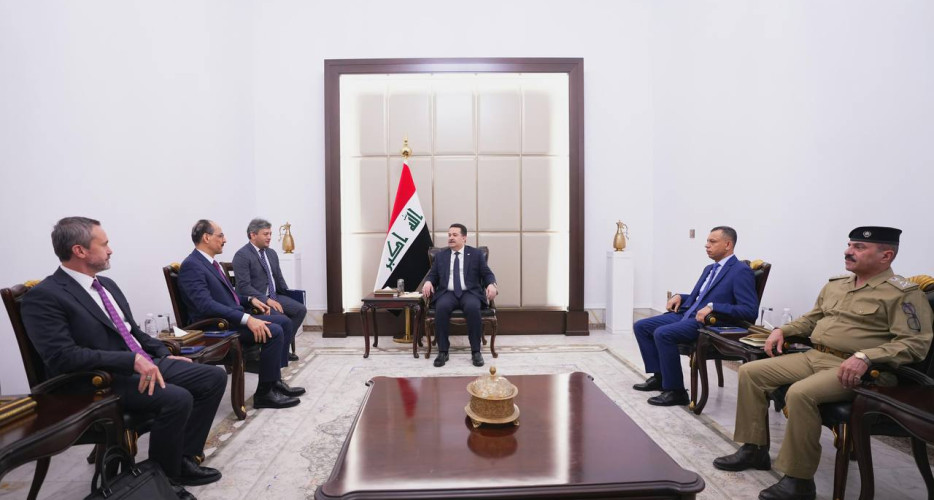
Iraqi Prime Minister Mohammed Shia’ al-Sudani received Turkish intelligence chief Ibrahim Kalin in Baghdad on Tuesday for high-level talks focused on bilateral relations and regional security — just days before a landmark ceremony in Sulaymaniyah province where the first group of Kurdistan Workers’ Party (PKK) fighters are expected to lay down their arms.
According to a statement from Sudani’s office, Kalin conveyed a message from Turkish President Recep Tayyip Erdogan, expressing Ankara’s "desire to advance bilateral relations between the two countries toward greater cooperation and enhancement, serving the interests of the two friendly nations."
The two officials also discussed “shared security issues and mutual information coordination,” particularly in the context of stability in border areas between Iraq and Turkey.
The meeting comes at a pivotal moment, ahead of a long-anticipated disarmament ceremony set for Friday, July 11, in Sulaymaniyah province. The event marks the first formal step in the disbanding of the PKK as an armed movement following its 12th Congress held in May.
Last week, Kalin also visited Erbil, where he reportedly discussed the ongoing Ankara-PKK peace process with Kurdish officials.
The Kurdistan Communities Union (KCK), a PKK-led umbrella group, confirmed the ceremony will take place but without live press coverage or media access, citing security concerns. In a press release, the KCK said: “The ceremony, which was expected to be held in Sulaimani province, was changed due to the security situation. The ceremony will be held, but will not be broadcast live and journalists will not be able to attend.”
Instead, a large screen will be installed near the event site where video footage of the ceremony will be shown afterward. The group apologized for the late change, thanking journalists and the public for their understanding.
This ceremony follows the PKK’s announcement on May 12 of its official dissolution as an armed group, calling the move a “historic shift” toward political and democratic resistance. That decision stemmed from the group’s 12th Congress held May 5–7 in the Medya Defense Zones of the Kurdistan Region of Iraq.
The congress was significantly influenced by a message from imprisoned PKK leader Abdullah Öcalan, conveyed on February 27 by a delegation from the pro-Kurdish DEM Party. In the message, Öcalan urged a transition away from armed struggle, stating: “The time has come to open a new chapter based on democratic unity and political engagement.”
Öcalan, who has been held in isolation on Turkey’s İmralı Island since 1999, has rarely made public statements in recent years. His latest message is being viewed as a turning point in the decades-long Kurdish conflict, signaling a potential path forward based on dialogue and political inclusion.