PM Barzani and Iraqi Parliament Speaker Urge Immediate Salary Solution Amid Mounting Public Anger
Peregraf
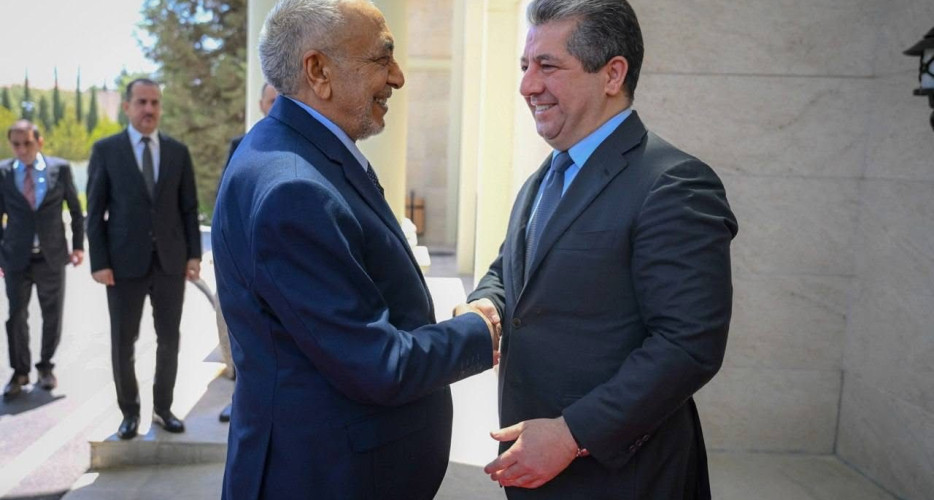
Kurdistan Region Prime Minister Masrour Barzani received Speaker of the Iraqi House of Representatives Mahmoud al-Mashhadani in Erbil on Sunday, as public anger mounts over delayed civil servant salaries and a stalled oil export deal. According KRG both sides Urge Immediate Salary Solution.
The meeting—attended by Deputy Speaker of the House Shakhawan Abdullah and Integrity Committee Chair Ziad Janabi—focused on resolving long-standing disputes between the Kurdistan Regional Government (KRG) and the federal government.
In a statement following the meeting, the KRG said both sides agreed that the issue of salaries “should not be mixed with political problems and disputes,” and that the people of the Kurdistan Region should not bear the brunt of these conflicts. They emphasized that civil servant salaries must be paid immediately and that financial entitlements owed to the region should be sent without further delay.
This comes as frustration intensifies across the Kurdistan Region, where government employees have yet to receive their May and June salaries. Baghdad has linked the disbursement of funds to KRG’s compliance with federal budget obligations, including the handover of oil revenues and a greater share of domestic income.
KRG spokesperson Peshawa Hawramany said in a televised interview on July 2 that a pending agreement between the Iraqi government and international oil companies has already been finalized and awaits the signature of Prime Minister Mohammed Shia’ al-Sudani.
“If he truly intends to send the salaries, he can sign it today and send two months’ worth of salaries—not just one,” Hawramany said. He also clarified that the deal is not directly between Baghdad and the KRG, but between the federal government and oil companies operating in the Kurdistan Region. “Federal officials told us: ‘Once the agreement is signed, the salaries will be sent,’” he added.
Hawramany stressed that oil exports will not resume until salaries are released. “This time, the resumption of exports depends on the release of salaries,” he stated.
Negotiations have progressed, according to the KRG. Federal authorities reportedly informed a KRG delegation that a deal with oil companies is nearly complete, and companies have indicated they are ready to resume exports—if they receive overdue payments and secure future guarantees.
However, a key point of contention remains unresolved: the transfer of internal revenues. Baghdad is demanding that the KRG remit around 150 billion Iraqi dinars monthly—about half of its internal income—while the KRG says it is only willing to provide 50 billion, arguing this represents 50% of federally-related revenues. “The Iraqi government is not satisfied with that,” said Hawramany.
A Protracted Dispute Over Oil and Debt
The latest standoff is rooted in a deeper oil dispute. On June 30, Peregraf reported that talks on resuming oil exports have stalled over nearly $1 billion in unpaid debts to international oil companies. The KRG has called on Baghdad to assume responsibility for the arrears, but federal authorities have declined.
Despite more than ten bilateral meetings and multiple trilateral sessions involving oil companies, no breakthrough has been reached. Negotiations have continued in both Erbil and Baghdad for five consecutive days, under increasing pressure from the public and energy companies.
Oil firms say they are ready to restart exports if back payments are addressed and future payments guaranteed. They have proposed a phased repayment schedule contingent on binding commitments from either the KRG or the federal government.
As negotiations continue, the people of the Kurdistan Region wait—many in desperation—for a resolution that will bring long-overdue salaries and economic relief.