Peregraf
In a dramatic and unprecedented reshuffling of Iraq’s highest judicial authority, Supreme Judicial Council President Faiq Zidan has successfully removed Federal Supreme Court President Jassim Mohammed Aboud, consolidating his grip over the country’s most powerful constitutional body.
What began as a quiet power struggle between two of Iraq’s top judges has culminated in a political and legal crisis, leaving the Federal Supreme Court effectively under Zidan’s control—and raising serious concerns over the independence of the judiciary ahead of national elections.
Judicial Retirements and Reversals
The crisis began on June 19, when six of the nine members of the Federal Supreme Court—along with three reserve judges—submitted their resignations in protest against Aboud’s leadership. According to sources, their goal was clear: to pressure the Court president to resign.
A senior Baghdad source told Peregraf that on June 22, those same judges met with Aboud to discuss their concerns. The meeting marked a turning point.
“The judges were concerned about the clashes between the Federal Court and the Judicial Council,” the source said. “They insisted they could not continue in such an environment. Judge Aboud, realizing the severity of the standoff, agreed to request retirement for all of them together.”
Following the meeting, all Federal Court judges submitted formal retirement requests to the Judicial Council. Importantly, the six judges who had initially resigned rescinded those resignations—since retirement, unlike resignation, entitles judges to full pension benefits.
“The president of the court and all the judges requested retirement due to health issues, and the medical committee prepared reports for them,” the source said.
But on June 29, the Supreme Judicial Council accepted only one request: that of President Jassim Aboud, officially citing “health reasons.” The rest of the judges withdrew their applications and returned to work.
“The judges of the Federal Supreme Court have withdrawn their request for retirement after the reasons for their resignation disappeared,” the Judicial Council announced, thanking them for their return.
With Aboud alone removed, the way was cleared for Zidan to reassert his authority over the court.
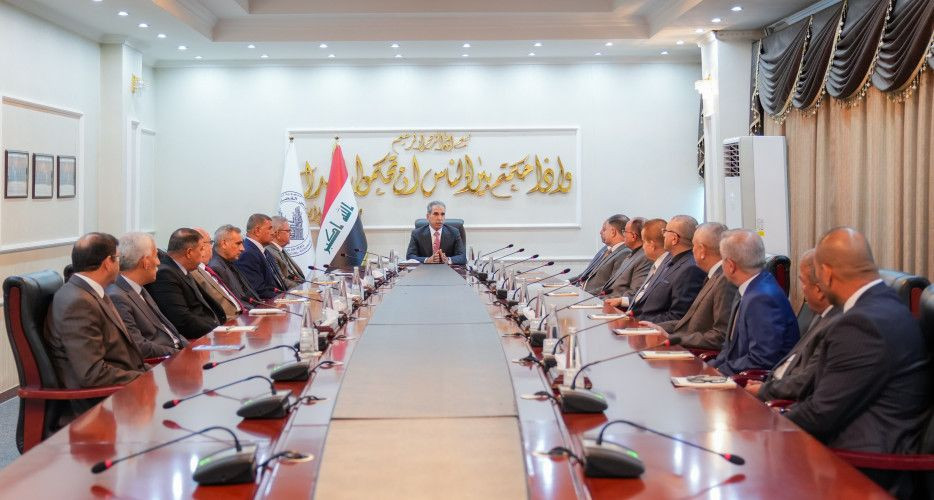
On July 1, in a symbolic demonstration of his ascendance, Faiq Zidan chaired a meeting of the reconstituted court—attended by its newly appointed president, Munzir Ibrahim, and all remaining judges.
A judicial source familiar with the matter told Peregraf: “Faiq Zidan imposed his hegemony on the Federal Court. Judge Jassim believed the court should be fully independent and that Zidan, as head of the Judicial Council, had no authority to preside over its meetings.”
The source added: “If there is a legal dispute between the Judicial Council and another party, it is the Federal Court that adjudicates. It must not be under the influence of the Judicial Council.”
Yet with Aboud removed and Zidan firmly in charge, the once-clear institutional boundary between the Federal Supreme Court (FSC) and the Supreme Judicial Council (SJC) appears to have collapsed.
The Root of the Conflict: Zidan vs. Aboud
According to Peregraf’s investigation, the crisis was neither accidental nor administrative—it was deeply personal and highly political.
The long-simmering tensions between Zidan and Aboud had paralyzed judicial coordination for months. That dysfunction drew the attention of Iraq’s dominant Shiite political factions, many of whom view the judiciary as a critical tool in managing post-election power balances.
“The Shiite parties that control the judiciary believed the feud was damaging,” a senior political figure told Peregraf. “They believed they had to choose between Zidan and Aboud. They chose Zidan—and pushed Aboud out.”
Political Pressures Behind the Crisis
While the judges’ collective action was framed as a response to internal conflict, insiders insist the maneuver was heavily political.
“The judges’ mass retirement request appeared politically motivated,” a judicial source told Peregraf.
Adding to the urgency, the Federal Supreme Court had been expected to issue a critical ruling on whether the Iraqi government must resume salary payments to public employees in the Kurdistan Region— whom still await their May wages.
Institutional Breakdown: Court vs. Council
The crisis has brought long-standing structural tensions between Iraq’s two top judicial bodies into sharp relief.
The Federal Supreme Court is tasked with interpreting the Constitution and adjudicating constitutional disputes. The Supreme Judicial Council handles administrative and operational management of the judiciary. But in recent years, the FSC has expanded its authority, issuing controversial rulings on oil, elections, and parliamentary powers—often at odds with Iraq’s federal balance.
The Federal Court’s reach was first challenged in May 2024, when the Federal Court of Cassation overturned a ruling granting Judge Ali Binyan Kahat full retirement benefits despite not qualifying under the law.
The Cassation Court ruled that the FSC had no authority to alter legislation, and, for the first time, asserted oversight over the Federal Court. Legal experts now speculate that some of the court’s past decisions—particularly those affecting Kurdish autonomy—could be revisited.
Among the most contentious FSC decisions:
• Invalidating the Kurdistan Oil and Gas Law, asserting full federal control over natural resources
• Modifying post-2021 electoral rules, seen by some as enabling “rule by the losers” after the Sadrist victory
• Revoking the parliamentary membership of Speaker Mohammed al-Halbousi, a move seen as judicial interference.
Further controversy followed an amendment to Law No. 30 of 2005 in 2021, which removed the Kurdistan Region’s right to appoint judges to the Federal Court—sparking criticism that the court had lost its federal character and become increasingly politicized.
With Iraq’s next general elections scheduled for November 11, 2025, the crisis in the judiciary could not have come at a worse time. The Federal Supreme Court is the body constitutionally mandated to ratify election results, settle disputes over parliamentary membership, and rule on the legality of government actions.