Iraqi Supreme Judicial Council Approves Retirement of Federal Supreme Court President
Peregraf
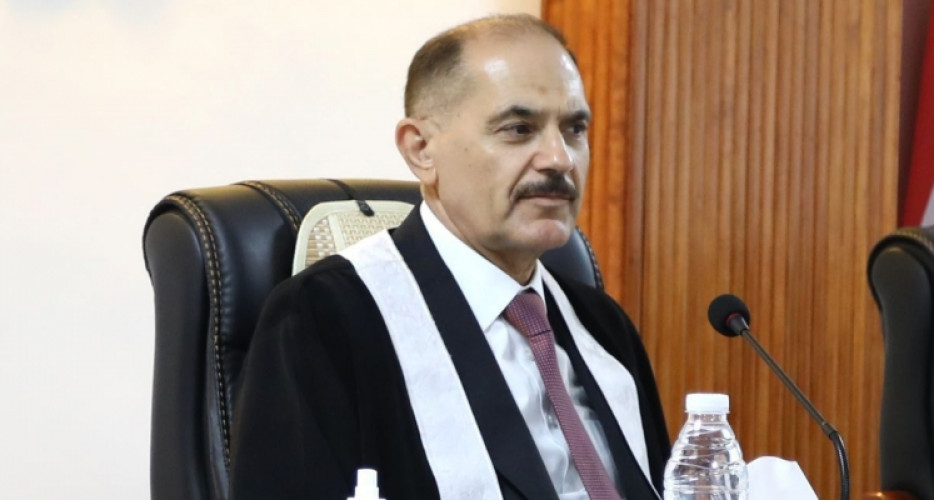
Iraq’s Supreme Judicial Council has approved the retirement of Judge Jassim Mohammed Aboud, the Chief Justice of the Federal Supreme Court, citing "health reasons". In a statement issued Saturday, the Council announced the nomination of Judge Munther Ibrahim Hussein, Vice-President of the Federal Court of Cassation, to succeed Aboud as President of the Federal Supreme Court. The Council also urged the President of the Republic to issue a presidential decree confirming the appointment.
The decision follows dramatic developments last week, first reported by Peregraf, when the President and members of the Federal Supreme Court agreed in principle to request retirement amid growing internal disputes and political pressure. However, not all judges formally submitted retirement requests, despite collectively discussing their departure. So far, only Judge Jassim Aboud’s retirement has been officially accepted.
A senior source in Baghdad told Peregraf that on Sunday, June 22, the judges of the Federal Court—including six who had previously resigned—met with Judge Aboud to express frustration over persistent tensions with the Supreme Judicial Council. The source confirmed that the judges agreed to request retirement, but only Judge Aboud followed through with a formal application.
The six previously resigned judges had withdrawn their resignations to become eligible for pension benefits, as resignation does not qualify them for retirement pay. Despite agreement among the judges to step down collectively, formal retirements have not yet materialized for the rest.
Zidan vs. Aboud: The Conflict Behind the Collapse
At the heart of this judicial breakdown is a long-running feud between Judge Faiq Zidan, President of the Supreme Judicial Council, and Judge Aboud, President of the Federal Supreme Court. Peregraf has learned that major Shiite political forces, alarmed by the damage to Iraq’s legal institutions, intervened to retain Zidan and pressured Aboud and his allies to step aside.
According to a senior political figure, these parties viewed the conflict as deeply destabilizing and believed it was time to “choose between Zidan and Aboud.” With Aboud now stepping down, the power balance shifts clearly in Zidan’s favor.
The situation is made more urgent by unresolved legal cases—including a key ruling that was expected soon on the resumption of federal salary payments to Kurdistan Regional Government (KRG) employees. As of now, public employees in the Kurdistan Region have received only four months’ salaries in 2025, fueling widespread protests and public anger.
The current crisis underscores deep constitutional ambiguities and structural conflicts between Iraq’s top judicial bodies. The Federal Supreme Court, responsible for constitutional rulings, has in recent years been accused of overreach and politicization—notably invalidating Kurdistan’s Oil and Gas Law, interfering in the 2021 post-election process, and revoking parliamentary memberships.
Further complicating matters is a 2021 legal amendment that removed the Kurdistan Region’s representation in the Federal Court, undermining the institution’s federal nature and exacerbating political divides.
In May 2024, the Federal Court of Cassation publicly challenged the FSC's authority for the first time, invalidating a ruling that unlawfully granted retirement benefits to Judge Ali Binyan Kahat. The decision asserted that the FSC had no power to amend laws or grant exceptions, marking a turning point in inter-judicial power dynamics.