Peregraf
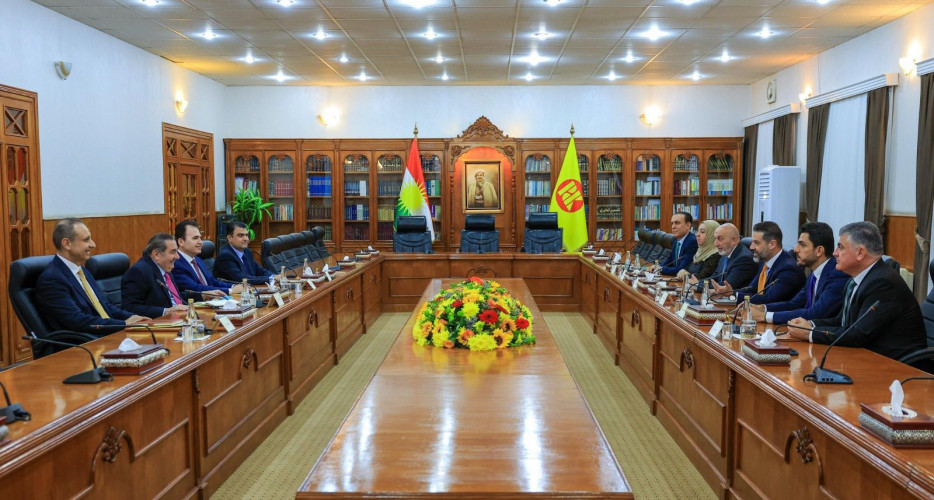
Eight months after the Kurdistan Region’s parliamentary elections, the Patriotic Union of Kurdistan (PUK) and the Kurdistan Democratic Party (KDP) have yet to reach a deal on the distribution of government posts, stalling the formation of the tenth cabinet of the Kurdistan Regional Government (KRG).
Despite reaching consensus on the government’s program, the two major ruling parties remain divided over power-sharing arrangements. In a press conference on Wednesday, Masrour Barzani—KRG Prime Minister and Second Deputy Leader of the KDP—confirmed the deadlock, stating: “We have reached an agreement on the government’s agenda and we have a common view with the PUK on how to run the government. But there are different opinions on the distribution of posts.”
Barzani emphasized that the KDP is capable of forming a 'majority government', but said the party prefers a broader consensus. “We want the main parties to work together to avoid problems and tensions,” he added.
The impasse has paralyzed the Kurdistan Parliament since its first session on December 2, 2024, which failed to elect a parliamentary presidency—an essential step toward forming a new government. Lawmakers await an agreement between the KDP and PUK on the allocation of key posts before moving forward.
In the October 2024 elections, the KDP emerged as the largest party with 39 seats in the 100-member legislature. The PUK followed with 23 seats, while minority and smaller parties collectively hold 38 seats. A majority of 51 seats is required to form a government, making coalition-building essential.
The KDP maintains political dominance in Erbil and Duhok provinces, while the PUK holds sway in Sulaymaniyah and Halabja. Although the two parties have historically shared governance responsibilities in the Kurdistan Region, ongoing disagreements over key ministerial and administrative positions threaten that partnership.