Sulaymaniyah Asayish Arrest Representatives of Protesting Teachers and Civil Servants Ahead of Planned Demonstration
Peregraf
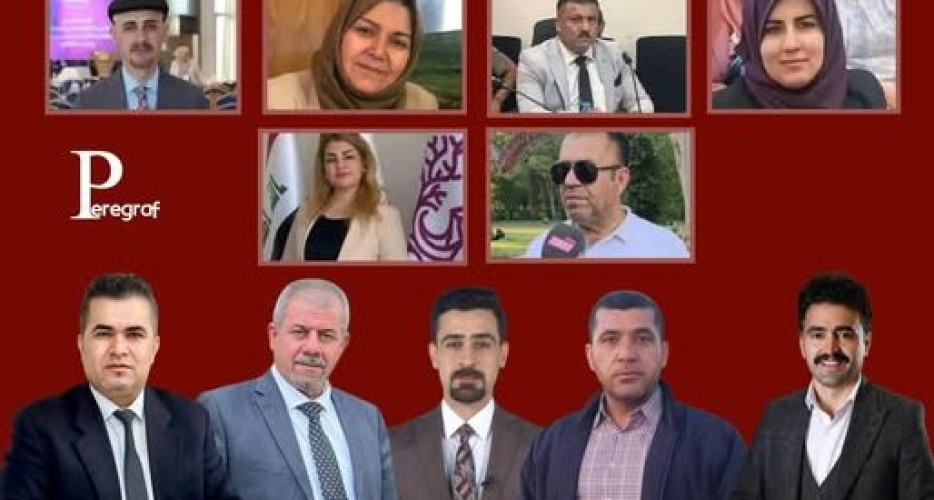
Security forces in Sulaymaniyah arrested a large number of representatives of protesting teachers and civil servants on Wednesday, just one day before a planned mass demonstration against the deepening salary crisis in the Kurdistan Region.
The detainees, many of whom played key roles in organizing Thursday’s protest, were apprehended by the Sulaymaniyah Asayish (security) forces, according to statements by their colleagues and eyewitnesses. The arrests began late Tuesday night and continued into Wednesday.
Earlier today, several representatives planned to hold a press conference to reaffirm their determination to proceed with the demonstration despite increasing pressure from authorities. Shortly after the event, many of them were also arrested.
The arrests came five days after public sector workers issued a renewed call to protest the continued delay in salary payments. The demonstrators had designated Thursday, June 26, as a day of action across the Kurdistan Region, calling on teachers, civil servants, workers in various sectors, and political opposition groups to join.
On Tuesday, the Sulaymaniyah Governorate Security Committee called on organizers to postpone the protest, citing the “sensitive situation” in the region and warning that such gatherings were inappropriate at this time.
Despite this, protest organizers insisted on moving forward with the demonstration, arguing that the continued silence and inaction of the Kurdistan Regional Government (KRG) have left them with no choice but to escalate their civil disobedience campaign.
Background: Deepening Salary Crisis
Public employees in the Kurdistan Region have yet to receive their May salaries, with June now drawing to a close. The delay, which comes on top of a similar failure to pay April wages on time, has sparked growing anger among civil servants and increased public pressure on the KRG.
The crisis stems from the suspension of the KRG’s share of the federal budget by the Iraqi Ministry of Finance in late May. Baghdad accused the KRG of depleting its annual 12.67% allocation and failing to remit oil and non-oil revenues as per previous agreements—allegations the KRG has rejected as politically motivated.
Despite repeated public appeals, no resolution has been reached. On Wednesday, KRG Prime Minister Masrour Barzani said that federal Iraqi officials are preparing to send a delegation to Erbil for what he called “real talks” aimed at resolving the crisis.
“We cannot provide salaries alone due to the immense pressure on the Kurdistan Region,” Barzani said during a press conference following a cabinet meeting. “If our domestic revenues were sufficient, we would not have waited for Baghdad.”
Barzani reiterated his government’s commitment to avoiding further hardship for the public. “If we cannot reach an agreement, we will not allow people’s lives to be further disrupted — instead, we will reduce expenditures,” he said. “If we are unable to pay full salaries, we will distribute what we can based on our financial ability.”
Legal Uncertainty Compounds Crisis
A parallel legal effort to restore funding has also stalled. A lawsuit filed by public employees at Iraq’s Federal Supreme Court seeks to compel Baghdad to resume salary transfers. However, the court’s functioning has been disrupted following the mass retirement of its president and several members, effectively delaying any ruling.
Earlier this month, KRG officials, including Minister Sheikh Janab, stated that the government would rely on internal revenues and oil income to continue operations. “We will not surrender,” Janab said.
Yet with no salaries for two consecutive months, economic strain is growing. Public discontent has reached new heights, and Thursday’s planned protest was intended as a major show of force by frustrated workers. The mass arrests now cast uncertainty over whether the demonstration will proceed.
The outcome of the upcoming talks between Erbil and Baghdad is increasingly seen as a make-or-break moment for the KRG’s ability to restore financial stability and regain public trust.