Peregraf
Jailed Kurdistan Workers’ Party (PKK) leader Abdullah Ocalan was granted a rare family visit on Saturday during the Muslim holiday of Eid al-Adha, his legal team announced.
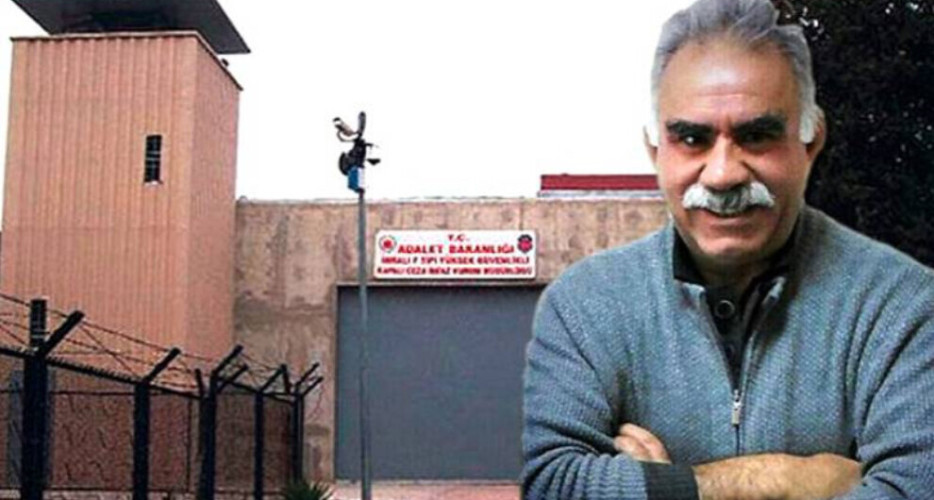
According to a statement from the Asrin Law Office, Ocalan received his nephews, Omer and Ali Ocalan, along with their two children, at the high-security prison on Imrali Island, where he has been held since 1999.
Omer Ocalan, a member of Turkey’s pro-Kurdish DEM Party, quoted his uncle as sending Eid greetings to “our people,” adding that he marked the occasion “without offerings”—a subtle reference to prison conditions that prevent participation in traditional rituals.
The visit comes amid renewed efforts to revive a political solution to the decades-long conflict between the Turkish state and the PKK, which has claimed over 40,000 lives since 1984.
In February, Ocalan called on the PKK to convene a congress to consider disbanding and shifting to a political strategy. The group held its congress in May and responded positively to his appeal, describing it as a step toward a peaceful resolution.
Following the congress, Ocalan emphasized the need for a “new covenant based on the law of brotherhood,” urging a redefinition of Turkish-Kurdish relations. “What has been damaged is the relationship between brothers,” he said.
While Ankara welcomed the PKK’s move, it has insisted on full disarmament as a condition for any further talks. The PKK has urged the government to halt military operations and implement legal reforms to support the peace process.
Despite these gestures, violence on the ground has escalated. A recent report by the U.S.-based Community Peacemaker Teams (CPT) noted a 143 percent increase in Turkish attacks in Iraq’s Kurdistan Region in May, all concentrated in Duhok province’s Amedi district. The group recorded 510 attacks, including artillery strikes, airstrikes, and helicopter operations.
Saturday’s visit was the second time this year Ocalan has seen family members. He was previously visited during the Newroz and Eid al-Fitr holidays in April.
Founded in 1978, the PKK originally sought Kurdish independence but later shifted its focus to broader cultural and political rights. The group is listed as a terrorist organization by Turkey, the U.S., and the European Union.