KRG Denounces Federal Salary Suspension as 'Collective Punishment' Amid Mounting Political Crisis
Peregraf
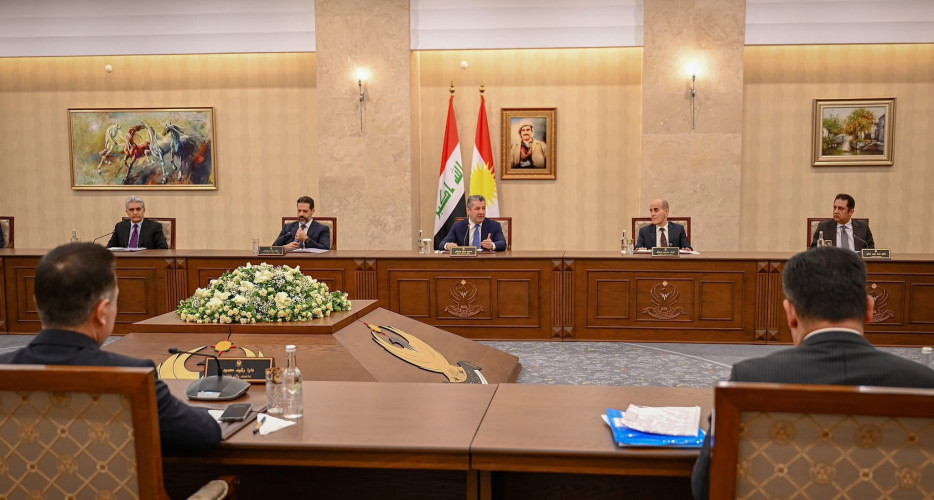
The Council of Ministers of the Kurdistan Regional Government (KRG), chaired by Prime Minister Masrour Barzani, convened today in an emergency meeting following what it described as a “political decision” by Baghdad to halt salary payments to the Region, escalating tensions between Erbil and the federal government.
In a statement following the meeting, the KRG accused the Iraqi federal government of imposing sanctions on the Kurdistan Region through the suspension of public sector salaries. “The federal government has imposed sanctions on the Kurdistan Region and its decision is to punish the Kurdish people collectively,” the statement read.
The KRG urged the Federal Council of Ministers to reconsider the move taken by the Federal Ministry of Finance, calling for a resolution based on the latest joint agreement between the two finance ministries and in accordance with the Federal Supreme Court’s recent ruling. The KRG also announced that it would send an official letter to the international community and foreign diplomatic missions, outlining the legal, constitutional, and financial ramifications of the decision and seeking support to resolve the standoff.
Meanwhile, Iraqi Prime Minister Mohammed Shia’ al-Sudani has reiterated Baghdad’s readiness to directly deposit salaries to KRG employees—provided that the KRG submits full payroll data to the federal Ministry of Finance. However, he clarified that broader financial transfers remain on hold pending a final ruling from the Federal Supreme Court.
The crisis deepened after a meeting between Sudani and representatives of the Kurdistan Islamic Union (KIU), during which the Iraqi premier expressed concerns over the KRG’s compliance with legal and financial obligations. He claimed that salaries for May are unlikely to be disbursed before the upcoming Eid al-Adha holiday, citing the KRG’s failure to hand over oil and customs revenues and the continued operation of 22 unauthorized border crossings.
On May 28, the Iraqi Ministry of Finance declared that the Kurdistan Region had exceeded its allocated 12.67% share of the federal budget and would no longer receive transfers unless it fully adopts the federal “Tawtin” electronic payroll system. Kurdish leaders have condemned the condition, viewing it as politically driven and a threat to the Region’s constitutional autonomy.
In a show of unity, 43 Kurdish political parties held an emergency summit on May 31, denouncing the federal government’s actions as politically motivated and warning that continued pressure could lead to further instability in the Region.
Complicating the situation, new KRG oil contracts with U.S.-based companies have drawn sharp criticism from powerful Shiite political and militia leaders in Baghdad. Qais al-Khazali, head of Asaib Ahl al-Haq, accused the KRG of pursuing separatist ambitions and engaging in illegal oil exports, adding fuel to an already volatile political atmosphere.
As the impasse deepens, ordinary citizens and salaried workers across the Kurdistan Region are left bearing the brunt of a financial and political standoff that shows no signs of resolution.