Al-Sudani Sets Conditions for Kurdistan Salaries: 'Bring Salary Lists, We’ll Pay Directly'
Peregraf
Iraqi Prime Minister Mohammed Shia’ al-Sudani has stated that his government is ready to directly deposit salaries into employees’ bank accounts—if ministries within the Kurdistan Regional Government (KRG) submit their payrolls to the federal Ministry of Finance. His remarks come amid a mounting salary crisis that has left over a million Kurdish public servants without their May salaries.
"Any ministry in the Kurdistan Region that brings the list of salaries to the Iraqi Ministry of Finance, we will deposit their salaries directly into the bank accounts of the employees," Sudani said.
However, the prime minister made it clear that a broader salary resolution hinges on a decision from the Federal Supreme Court.
"I have requested clarification from the Federal Court and cannot authorize salary payments without its decision," he told lawmakers.
Sudani also expressed concern over the KRG’s financial management, accusing it of failing to hand over oil and non-oil revenues and citing the existence of 22 unauthorized border crossings in the region. He said these violations complicate the trust and legality required to process regular budget allocations.
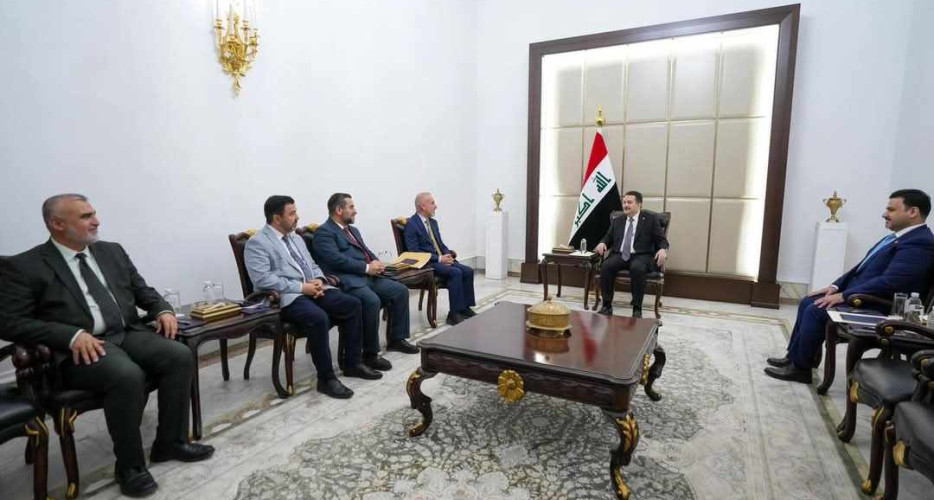
KIU Faction Meets with Prime Minister
The Kurdistan Islamic Union (KIU) faction in the Iraqi Parliament met with Sudani in Baghdad to discuss the salary deadlock. Following the one-hour meeting, KIU MP Musanna Amin briefed the media, emphasizing the Prime Minister’s legal constraints and his dissatisfaction with the KRG’s compliance.
"The Prime Minister told us he cannot guarantee the disbursement of May salaries before Eid al-Adha," Amin said.
"He also stressed that the KRG has not fulfilled its obligations to turn over revenues, and highlighted the payroll problems and illegal border crossings as major concerns."
Background: A Crisis Grows
The crisis escalated after the Iraqi Ministry of Finance announced on May 28 that the KRG had exceeded its 12.67% share of the federal budget and must now fully adopt the federal "Tawtin" electronic payroll system for any further transfers. Kurdish leaders argue that the requirement is politically motivated and undermines regional autonomy.
The deadlock has sparked public outrage across Kurdistan, leaving nearly 1.2 million civil servants unpaid. The ruling Kurdistan Democratic Party (KDP) has warned of potential political retaliation if salaries are not issued before the upcoming holiday.
In an emergency summit on May 31, 43 Kurdish parties—excluding several opposition groups—gathered in Pirmam and issued a joint statement condemning the salary suspension.
"Withholding salaries is an act of political pressure against the Kurdish people and a threat to the region’s stability," the statement read.
The crisis comes on the heels of multibillion-dollar oil deals signed between the KRG and U.S. firms, drawing sharp condemnation from Shiite factions in Baghdad. Militia leader Qais al-Khazali accused the KRG of separatist ambitions and illegal oil exports.
Deputy Speaker of the Iraqi Parliament and KDP official Shakhawan Abdullah warned that Kurdish withdrawal from Baghdad’s institutions remains on the table.
"If the decision is made, I will execute it within an hour," he declared.
Meanwhile, opposition groups in the Kurdistan Region urged the ruling parties not to bypass the Kurdistan Parliament, warning that institutional channels must remain the primary path for resolution.