KDP Sees Signs of Progress in Salary Crisis, Urges Baghdad to Uphold Constitutional Obligations
Peregraf
The Kurdistan Democratic Party (KDP) expressed cautious optimism on Monday regarding a potential resolution to the salary crisis that has left nearly 1.2 million public sector employees in the Kurdistan Region unpaid for May.
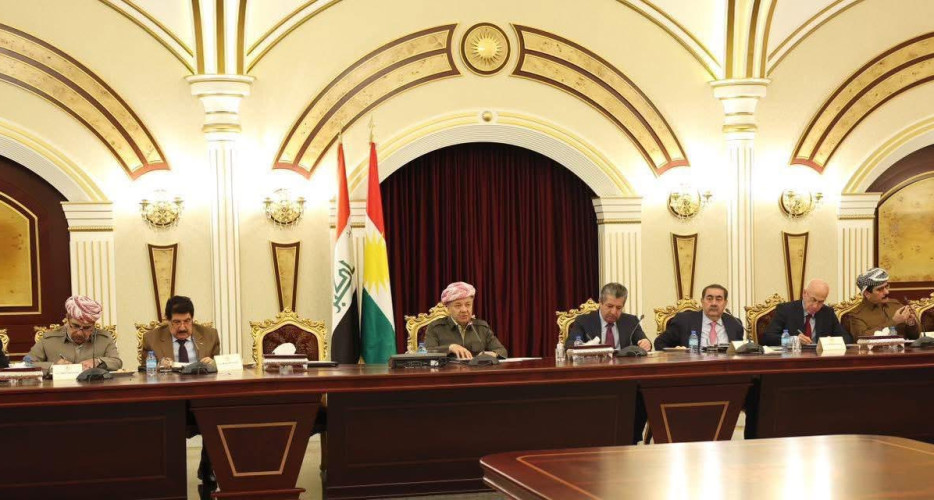
Following an expanded meeting of the party’s Central Committee today, chaired by KDP President Masoud Barzani, the party issued a statement reaffirming its commitment to defending the rights of Kurdish civil servants and resolving the ongoing dispute with Iraq’s federal government.
“Following positive indications from the federal government and relevant institutions regarding a potential solution, we continue advocating for the rights of employees and an end to the unjust handling of their livelihoods,” the KDP stated.
The meeting addressed a range of urgent issues, but the salary delays—linked to Baghdad’s withholding of the Kurdistan Region’s budget share—topped the agenda.
The KDP stressed that the federal government must adhere to constitutional agreements and ensure the regular, timely disbursement of public salaries in the Kurdistan Region. It warned that failure to do so violates the federal structure of Iraq and weakens the principles of partnership and balance enshrined after the fall of Saddam Hussein.
“We call for the implementation of the Constitution, not selective interpretation,” the party added, urging Baghdad to refrain from turning salaries into political leverage.
KDP Political Bureau Issues Strong Warning
In a related development, the Political Bureau of the Kurdistan Democratic Party (KDP) had earlier issued a strong warning to the federal government of Iraq, declaring that it will take a “serious position” if the financial entitlements of the Kurdistan Region are not disbursed before the upcoming Eid al-Adha holiday.
In a sharply worded statement, the KDP accused Baghdad of continuing to violate the constitutional rights of the Kurdistani people.
“We warn the Iraqi and Kurdistan public opinion that the federal government continues to violate the constitutional rights of the Kurdistan Region,” the statement read. “The latest violation is yesterday’s letter from the Ministry of Finance, which contradicts the constitution and the principles of the government formation agreement.”
The KDP further condemned what it called the “politicization of people’s livelihoods,” referencing the delays in transferring the Region’s budget shares.
“If the rights and financial entitlements of the people of the Kurdistan Region are not sent before the holy Eid al-Adha, we will take a serious position,” the Political Bureau emphasized.
Centralization Criticized, Unity Encouraged
The KDP’s broader statement also criticized Baghdad’s “centralization efforts,” particularly the recent push to compel the Kurdistan Regional Government (KRG) to fully adopt the federal “Tawtin” electronic salary system. While Baghdad claims the KRG has exceeded its 12.67% share of the federal budget, Kurdish officials argue the move is politically motivated and infringes on regional autonomy.
In response, the KDP renewed its call for unity among Kurdish political factions.
“We urge all Kurdish political parties to engage in constructive dialogue to address shared challenges, especially in relation to budget disputes and electoral preparations,” the statement read.
Escalating Tensions and Potential Repercussions
The crisis escalated after Iraq’s Ministry of Finance halted transfers to the KRG on May 28. The KDP has maintained that the financial blockade amounts to collective punishment.
“We are being punished economically for political reasons. This is unacceptable,” the party said in a separate statement.
In a display of rare consensus, 43 Kurdish political parties gathered in Pirmam on May 31 for an emergency summit organized by the KDP. Their joint declaration condemned the federal government’s decision as unconstitutional and destabilizing.
“Withholding salaries is an act of political pressure against the Kurdish people and a threat to the region’s stability,” the parties stated.
The salary crisis comes amid rising friction between Erbil and Baghdad, further fueled by the KRG’s multibillion-dollar oil contracts with American firms—deals that have drawn the ire of powerful Shiite factions in Baghdad. Militia leader Qais al-Khazali accused the KRG of harboring separatist ambitions and engaging in unauthorized oil exports.
Deputy Speaker of the Iraqi Parliament and senior KDP figure Shakhawan Abdullah signaled that Kurdish withdrawal from federal institutions could be imminent.
“If the decision is made, I will execute it within an hour,” he said.
Meanwhile, some opposition parties within the Kurdistan Region have urged restraint, warning against bypassing parliamentary procedures.
“Parliament remains the only legitimate venue for resolving disputes,” they stated.
With Eid al-Adha fast approaching and no funds yet transferred, the situation remains precarious. While the KDP sees positive signals from Baghdad, its warnings—and those of other Kurdish parties—leave no doubt that the issue has now become a critical test of Iraq’s federal order.