Peregraf
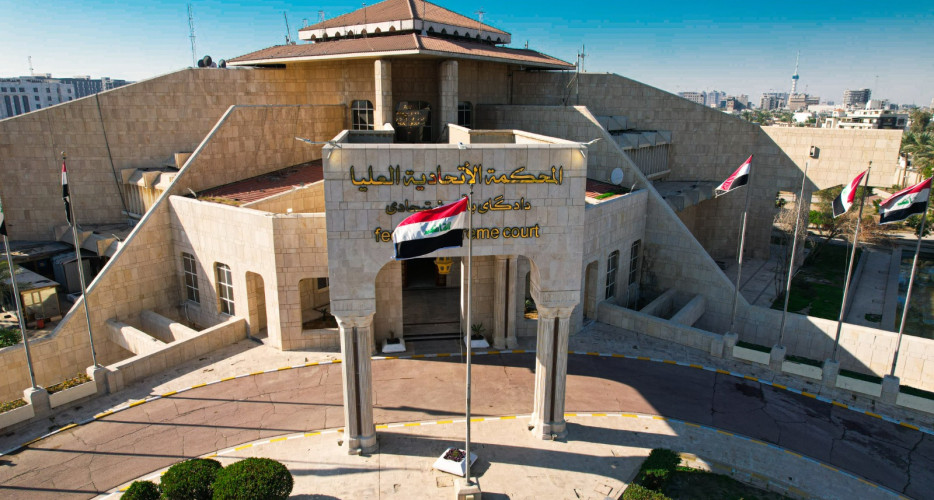
The Federal Supreme Court of Iraq has announced that it is reviewing a new lawsuit filed by employees from the Kurdistan Region seeking the continued and timely disbursement of their salaries. The Court confirmed that a decision on the request for a provisional order will be issued soon.
The plaintiffs are urging the Court to issue a provisional order compelling the Federal Ministry of Finance to comply with the Court’s earlier judgment — specifically Decision No. 224 and Unified Decision No. 269/Federal/2023, issued on February 21, 2024 — which mandates the implementation of the Tawteen (salary localization) system for public sector salaries in the Kurdistan Region.
The case has been formally registered under No. 104/Federal/2025, with the Court confirming that all procedural and financial requirements for the lawsuit have been fulfilled.
In a brief statement, the Court said it is actively reviewing the request for a provisional order and is expected to deliver a decision in the near future, raising the stakes in the ongoing salary dispute between Baghdad and Erbil.
Tensions escalated on May 28 when the Iraqi Ministry of Finance declared that the KRG had exceeded its allocated 12.67% share of the federal budget. The ministry also conditioned any future transfers on the full implementation of the federal “Tawtin” (electronic salary distribution) system within the Kurdistan Region.
Kurdish officials, however, interpreted the move as a political maneuver rather than a financial regulation. The suspension of salary payments has left nearly 1.2 million Kurdish civil servants without their May salaries, sparking public outrage throughout the region.
In a strongly worded statement, the Kurdistan Democratic Party (KDP) accused the federal government of “economic punishment for political reasons” and warned of significant political consequences if salaries are not disbursed before Eid al-Adha.
On May 31, 43 Kurdish political parties—excluding a few opposition groups—convened for an emergency summit in Pirmam, called by the KDP. In a joint declaration, they condemned the federal government’s action as “unconstitutional and politically motivated.”
“This decision is a clear violation of the Constitution, Federal Court rulings, and existing agreements,” the statement read.
“Withholding salaries is an act of political pressure against the Kurdish people and a threat to the region’s stability.”
The crisis has intensified already strained relations between Erbil and Baghdad. Tensions were further inflamed after the KRG recently signed multi-billion-dollar oil contracts with U.S. companies—agreements that have drawn harsh criticism from Shiite factions in Baghdad.
Prominent militia leader Qais al-Khazali accused the KRG of using oil revenue to pursue separatist ambitions, a charge strongly denied by Kurdish leaders.
Deputy Speaker of the Iraqi Parliament and senior KDP figure Shakhawan Abdullah hinted at potential Kurdish withdrawal from federal institutions if the issue remains unresolved.
“If the decision is made, I will execute it within an hour,” he said.
Despite the unity shown by many Kurdish parties, some opposition groups have expressed concern over bypassing the Kurdistan Parliament. In their own statement, they stressed the importance of institutional mechanisms:
“Parliament remains the only legitimate venue for resolving disputes.”
As the Eid holiday approaches, anxiety is growing that the crisis could lead to long-term economic hardship and deepen political divisions, raising serious questions about the viability of Iraq’s federal framework.