Iraqi President and PM Urge Radical Solution to KRG Salary Crisis Amid Growing Tensions
Peregraf
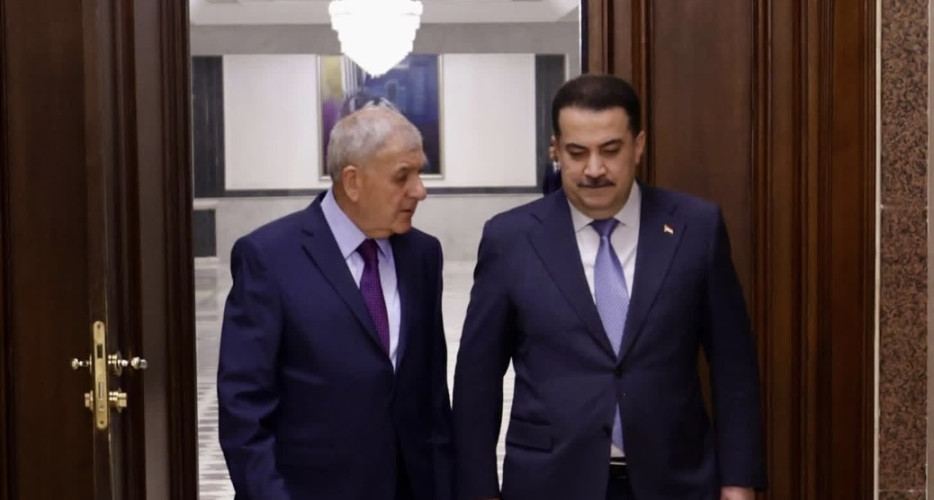
Iraqi President Latif Rashid and Prime Minister Mohammed Shia’ al-Sudani met today in Baghdad to address the deepening financial crisis between the federal government and the Kurdistan Regional Government (KRG), emphasizing the urgent need for a “radical solution” within the constitutional and legal framework.
According to a statement from the Iraqi Presidency, the two leaders discussed the national political and economic situation, implementation of government programs, and pressing issues related to federal-Kurdistan relations. Central to the discussion was the ongoing dispute over public sector salary payments in the Kurdistan Region.
The meeting underlined the importance of resolving financial obligations between Baghdad and Erbil as outlined in the Iraqi Constitution and the federal budget law. Both leaders also stressed the necessity of passing the long-delayed oil and gas law to provide a legal foundation for resource management and revenue sharing.
The high-level meeting came just hours after 43 political parties in the Kurdistan Region—excluding key opposition groups—released a unified statement from Pirmam, following an emergency summit convened by the Kurdistan Democratic Party (KDP). The parties strongly condemned the federal government’s recent decision to freeze public salaries in the Kurdistan Region, calling it unconstitutional and politically driven.
“This decision is a clear violation of the Constitution, Federal Court rulings, and existing agreements,” the joint statement read. “Withholding salaries is an act of political pressure against the Kurdish people and a threat to the region’s stability.”
The Ministry of Finance recently claimed the KRG had exceeded its 12.67% share of the federal budget and must now fully implement the federal “Tawtin” electronic salary system to receive further payments. Kurdish officials argue this is an overreach and an attempt to exert control through economic means.
Public anger is intensifying as nearly 1.2 million Kurdish civil servants await their May salaries. The KDP has hinted at significant political actions if the payments are not resumed before Eid al-Adha. “We are being punished economically for political reasons. This is unacceptable,” the party stated separately.
Tensions have also been fueled by recent multibillion-dollar oil deals signed between the KRG and American firms—agreements that have drawn fierce criticism from Shiite factions in Baghdad. Militia leader Qais al-Khazali accused the KRG of separatist ambitions and illegal oil exports.
Adding to the pressure, Deputy Speaker of the Iraqi Parliament and KDP senior figure Shakhawan Abdullah warned of a possible Kurdish withdrawal from Baghdad’s political institutions. “If the decision is made, I will execute it within an hour,” he said.
Despite the unified stance by ruling Kurdish parties, opposition groups cautioned against bypassing the Kurdistan Parliament, calling for institutional solutions rather than partisan crisis management. “Parliament remains the only legitimate venue for resolving disputes,” their statement read.
As Eid al-Adha approaches, the lack of resolution has deepened fears of long-term economic damage and political fragmentation in the Kurdistan Region, with the crisis now testing the very foundations of the federal relationship between Erbil and Baghdad.