Khazali Slams Barzani’s Washington Visit, Accuses KRG of Separatist Agenda as Budget Crisis Escalates
Peregraf
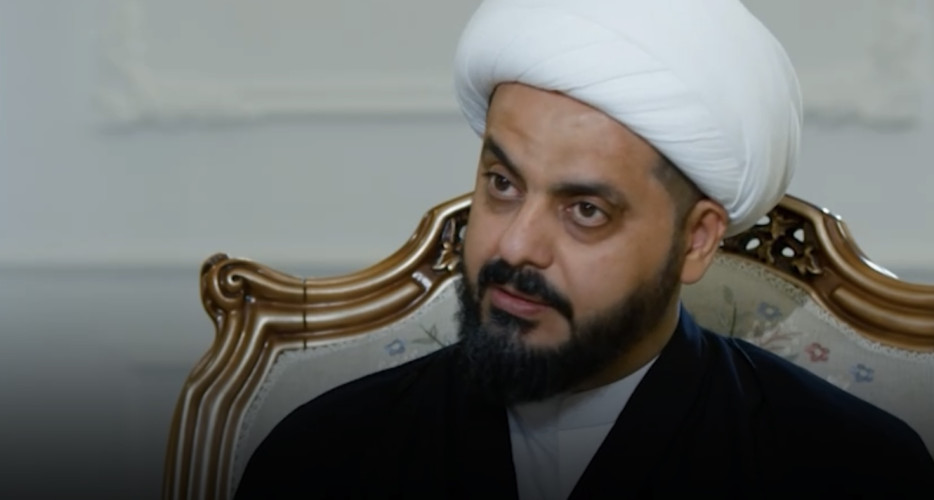
Powerful Shiite militia leader Qais al-Khazali has accused the Kurdistan Regional Government (KRG) of pursuing a separatist agenda following a series of high-profile oil deals with U.S. companies during Prime Minister Masrour Barzani’s recent visit to Washington. Ten days after Barzani’s trip, Baghdad raised the alarm over cutting the Kurdistan Region’s salaries. Al-Khazali’s remarks, made amid an escalating financial and constitutional standoff between Erbil and Baghdad, have further intensified political tensions across Iraq.
In a televised statement, al-Khazali—head of the Iran-aligned Asaib Ahl al-Haq militia and a key figure in Iraq’s ruling Coordination Framework—denounced KRG Prime Minister Masrour Barzani’s recent visit to Washington, where the Region signed $110 billion in energy agreements with American firms. He described the trip as “a clear reflection of the Kurdistan Region’s secessionist ambitions,” arguing that Barzani’s diplomacy signals a continuation of the Kurdish aspiration to break away from Iraq, rooted in broader regional developments, especially in Syria.
“This separatist approach has not changed,” Khazali said. “It threatens the stability of the Kurdistan Region and undermines Iraq’s sovereignty.”
Al-Khazali also accused the KRG of failing to meet its constitutional obligations to the federal government, particularly in handing over oil and non-oil revenues. He alleged that large-scale oil smuggling operations are occurring openly from the Region to countries such as Afghanistan and Pakistan, costing Iraq over $2 billion annually.
“Everyone knows about this—OPEC, the Iraqi government, and the major powers,” he said, adding that the KRG’s continued refusal to export oil via Iraq’s state-owned SOMO company constitutes a deliberate act of defiance.
Budget Freeze Deepens Crisis
Khazali’s remarks come as the KRG grapples with a financial shock: Baghdad has announced that the Kurdistan Region has exhausted its 12.67% share of the 2025 federal budget. In a formal letter to Erbil, Finance Minister Taif Sami stated that the Region had already received more than its legal entitlement based on transfers and revenue over the past three years.
Sami argued that continuing transfers would breach the federal budget law and violate rulings by the Federal Supreme Court. She also criticized the KRG’s failure to implement the Tawtin electronic banking system for public sector salaries—an ongoing point of contention between both governments.
The announcement has sparked widespread anger in Kurdistan, where 1.2 million public employees are still waiting for their May salaries, with uncertainty looming over wages for the rest of the year. Kurdish leaders described the move as political punishment—especially in light of the landmark energy deals recently signed in Washington with U.S.-based HKN/Onex Group and Western Zagros.
Kurdistan’s Oil Ambitions Raise Eyebrows
The energy contracts, brokered under Barzani’s leadership, aim to develop the Miran and Topkhana oil and gas fields. The projects are expected to produce up to 70 million cubic feet of gas per day within 20 months and significantly enhance electricity supply in the Region, with the potential to export power to other parts of Iraq.
“These agreements represent peace, development, and energy security,” Barzani declared at the signing ceremony in Washington.
But Baghdad views the deals as a direct challenge to federal authority. Structured under a profit-sharing model long rejected by the Iraqi Oil Ministry, the contracts bypass central oversight and have further inflamed an already volatile political climate.
Kurdish Response: Withdrawal on the Table
In response to the crisis, senior Kurdish officials are openly considering a withdrawal from Iraq’s federal political process. Deputy Speaker of Parliament Shakhawan Abdullah issued a stark warning:
“It is time to withdraw. If a decision is made, I will implement it within an hour.”
The Kurdistan Democratic Party (KDP), the dominant faction in the KRG, has issued an ultimatum to Baghdad: release public salaries before Eid al-Adha or face a “serious political response.” The party accused the federal government of violating the agreements that underpin Iraq’s current political framework.
“We are being punished economically for political reasons,” a KDP statement said. “This is unacceptable.”
Competing Claims, Rising Tensions
While Baghdad asserts that the KRG has already received more than its share—13.5 trillion Iraqi dinars—Erbil maintains it is still owed over 9.11 trillion dinars for 2025. Kurdish MPs in Baghdad have denounced the government’s stance as a “policy of starvation,” accusing it of leveraging public salaries to weaken the Region politically.
As the dispute deepens and with Eid approaching, the fate of hundreds of thousands of public workers hangs in the balance. The financial and political standoff is now entering one of its most dangerous phases—raising critical questions about the sustainability of Iraq’s federal structure and the future of the Kurdistan Region within it.