Peregraf
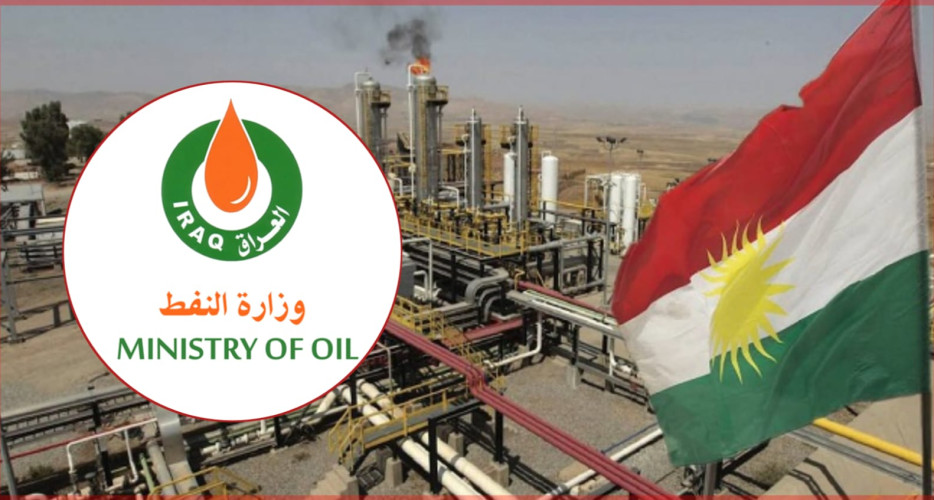
Iraq’s Ministry of Oil has issued a firm statement clarifying its stance on recent energy agreements signed between American companies and the Kurdistan Regional Government (KRG), warning that any engagement conducted independently of Baghdad violates the Iraqi Constitution and federal law.
In an official press release, the Ministry emphasized it “welcomes and consistently seeks to collaborate with American companies in the development of oil and gas fields through direct relationships and contracts,” provided that such cooperation is conducted through federal channels and in accordance with constitutional and judicial rulings.
The statement, issued on May 23, comes just days after the KRG finalized two major oil and gas contracts with U.S. energy firms HKN/Onex Group (operating as Miran Energy) and Western Zagros. The deals, worth an estimated $100 billion, were signed in Washington on May 19 and aim to develop the Miran and Topkhana-Kurdemir fields in Sulaymaniyah province—fields believed to contain 13 trillion cubic feet of natural gas and 9 million barrels of oil.
While the U.S. State Department welcomed the agreements as a boost to American commercial interests and energy cooperation with the Kurdistan Region, Baghdad has rejected them outright.
“These procedures violate the decisions issued by the Federal Court of Cassation,” the Ministry of Oil said, referring to Federal Supreme Court rulings 59/Federal/2012 and 110/Federal/2019, which affirm the federal government's sole authority over oil and gas contracts.
The Ministry reaffirmed its active and ongoing partnerships with American companies in various sectors, including well drilling, oilfield services, and consultancy. However, it warned that any direct contractual engagement with the KRG, bypassing Baghdad, is unconstitutional and legally invalid.
“The Ministry has no objection or reservation regarding engagement with these companies, provided that such engagement is not conducted directly with the Kurdistan Regional Government in isolation from the Federal Government and its official channels,” the statement declared.
The controversy underscores the widening rift between Erbil and Baghdad over control of natural resources and energy policy. The KRG has defended its actions, with its Acting Minister of Natural Resources Kamal Mohammed stating that the regional government did not consult Baghdad and had no intention of doing so.
“This billion-dollar agreement proves the Kurdistan Region’s commitment to peace and development,” said KRG Prime Minister Masrour Barzani, who presided over the Washington signing ceremony. He pledged that the deals would ensure 24-hour electricity across the region and allow for surplus power to be shared with the rest of Iraq.
Meanwhile, U.S. Energy Secretary Christopher Wright voiced strong support for the KRG’s efforts during a Washington energy summit on May 22, stating that electricity is essential for development and quality of life.
Despite the international endorsements, the Federal Oil Ministry reiterated that Iraq’s oil wealth belongs to all Iraqis and must be managed under a unified legal and constitutional framework.
As Erbil continues to seek greater energy independence through international partnerships, Baghdad is increasingly assertive in defending its constitutional authority—setting the stage for renewed legal and political battles over the future of Iraq’s energy sector.