KRG: Only Half the Gas Needed for Power Generation Available — Calls on Baghdad to End Pressure on U.S. Deals
Peregraf
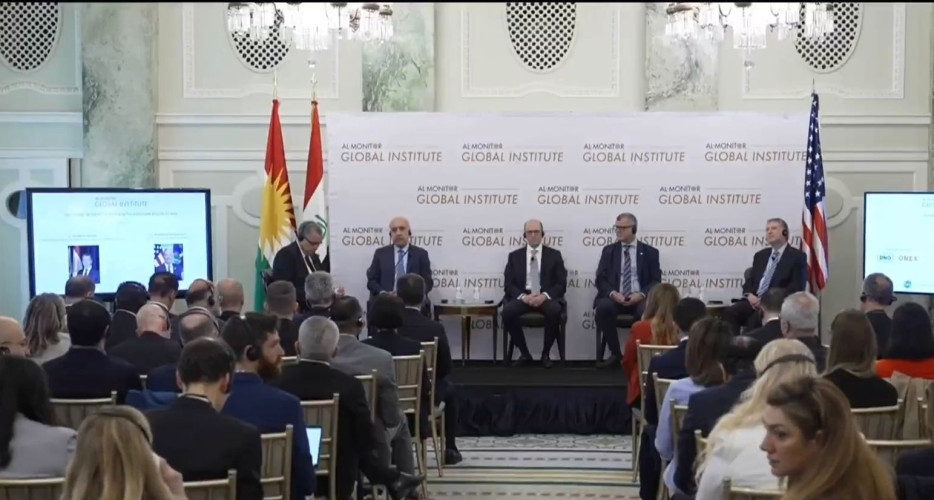
At a high-level energy conference in Washington, D.C., the Acting Minister of Natural Resources for the Kurdistan Regional Government (KRG) issued a stark warning about the region’s growing energy crisis, revealing that the Kurdistan Region of Iraq currently has access to only 50% of the gas it needs to meet electricity generation demands.
"We have 650 million cubic feet of gas available to generate electricity in the Kurdistan Region, but we need 1,100 million cubic feet," the minister stated. "Only half of that is currently accessible for power generation."
He highlighted the vital role U.S. energy firms play in the region, noting that 64% of the Kurdistan Region’s electricity — over 5,250 megawatts out of more than 8,000 — is generated by General Electric (GE). "GE’s contribution is critical. Their operations alone power the majority of Kurdistan’s electricity supply," he said.
The minister criticized the Iraqi federal government's opposition to the KRG’s energy deals, calling on Baghdad to cease pressure on American firms and regional authorities. "Iraq has very little gas. Kurdistan's gas is a key source for Iraq, especially for electricity," he stressed. "These contracts are not against anyone; they aim to support development and benefit all Iraqis."
The comments came days after the KRG signed two multi-billion-dollar contracts with U.S. energy firms HKN/Onex Group (operating as Miran Energy) and Western Zagros. The $100 billion agreements were finalized in Washington on May 19, targeting the development of the Miran and Topkhana-Kurdemir gas and oil fields in Sulaimani province—believed to hold 13 trillion cubic feet of gas and 9 million barrels of oil.
The signing ceremony was attended by KRG Prime Minister Masrour Barzani, who called the deals a milestone for peace and economic stability. "This billion-dollar agreement proves the Kurdistan Region’s commitment to peace and development. Our aim is 24-hour electricity in Kurdistan — and to share surplus power with the rest of Iraq," Barzani said.
However, the Iraqi Ministry of Oil swiftly condemned the deals, declaring them "legally invalid and unconstitutional." The Ministry issued a formal rejection on May 19, citing the federal government’s exclusive authority over oil and gas contracts.
In a related development, General Electric signed a major agreement with Taurus Energy on April 27, 2024, to expand electricity generation at the Bazian station in Sulaymaniyah. The project is set to add 1,250 MW to the national grid by early 2026.
As tensions rise between Erbil and Baghdad over energy control, the KRG continues to push forward with international partnerships aimed at securing energy independence and boosting the regional economy.