Peregraf
The U.S. State Department has expressed support for the Kurdistan Regional Government’s (KRG) newly signed $100 billion energy agreements with American companies, even as Baghdad denounced the deals as unconstitutional.
“We are pleased to see the commercial relationship between the United States and Iraqi Kurdistan Region expand with the signing of agreements with U.S. companies,” the State Department’s Bureau of Near Eastern Affairs stated on X. “These types of partnerships will strengthen gas production in Iraq and benefit both of our peoples.”
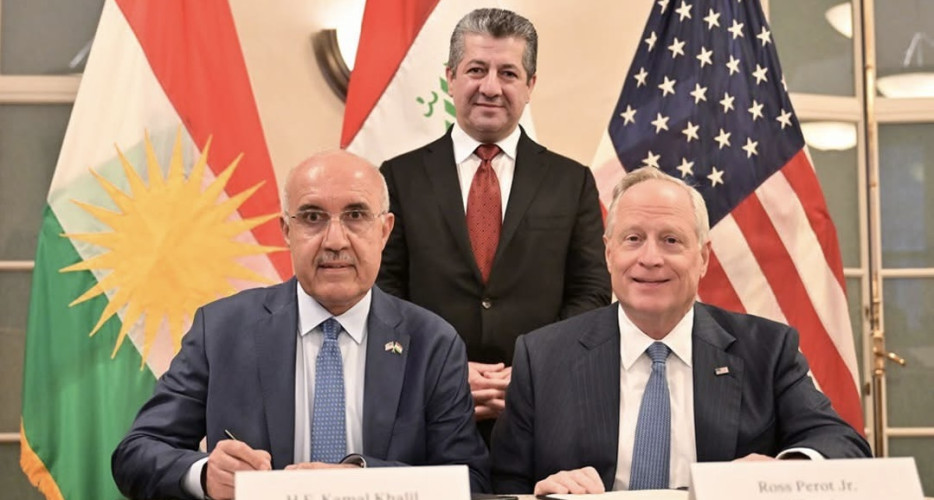
The KRG finalized two major oil and gas contracts on May 19 in Washington with U.S. energy firms HKN/Onex Group—operating under the name Miran Energy—and Western Zagros. The agreements aim to develop the Miran and Topkhana-Kurdemir fields in Sulaimani province, which reportedly contain around 13 trillion cubic feet of natural gas and 9 million barrels of oil.
KRG Prime Minister Masrour Barzani, who oversaw the signing ceremony, hailed the deals as transformative. “This billion-dollar agreement proves the Kurdistan Region’s commitment to peace and economic growth,” he said. Barzani pledged that the projects would enable 24-hour electricity across the region and generate surplus power to be shared with the rest of Iraq.
However, the deals have sparked immediate backlash from Iraq’s Federal Oil Ministry. In an official statement, the ministry rejected what it described as “unilateral procedures” by the KRG’s Ministry of Natural Resources, citing decisions from the Federal Supreme Court—including rulings 59/Federal 2012 and 110/Federal 2019—that invalidate such contracts.
“These procedures violate the decisions issued by the Federal Court of Cassation,” the ministry stated. “Oil resources belong to all Iraqis, and any investment in these resources must be undertaken through the federal government.”
While the federal government acknowledged Iraq’s pressing need to boost domestic gas production to support the electricity grid, it condemned the KRG’s actions as a “clear violation of Iraqi law.” The Oil Ministry concluded its statement by declaring the contracts “null and void” under the Iraqi Constitution and binding legal decisions.
In response, the KRG’s Ministry of Natural Resources dismissed Baghdad’s legal objections. “The two agreements signed by the Iraqi Oil Ministry with the U.S. companies are not new, but they existed many years ago, and the Iraqi courts have recognized them as legal and there are no legal problems,” the ministry said.
KRG officials also defended their approach to the Washington negotiations. Acting Minister of Natural Resources Kamal Mohammed confirmed that Erbil did not consult Baghdad during the process. “We have not consulted the Iraqi Oil Ministry and we are not waiting for Baghdad to agree or not,” he said.
The deals underscore the growing rift between the Kurdish region and the federal government, reigniting long-standing disputes over oil policy, constitutional authority, and the limits of regional autonomy.
While Washington celebrated the commercial boost, the agreements may further complicate Iraq’s internal political landscape—particularly as Baghdad seeks to assert greater control over natural resource management nationwide.