Peregraf
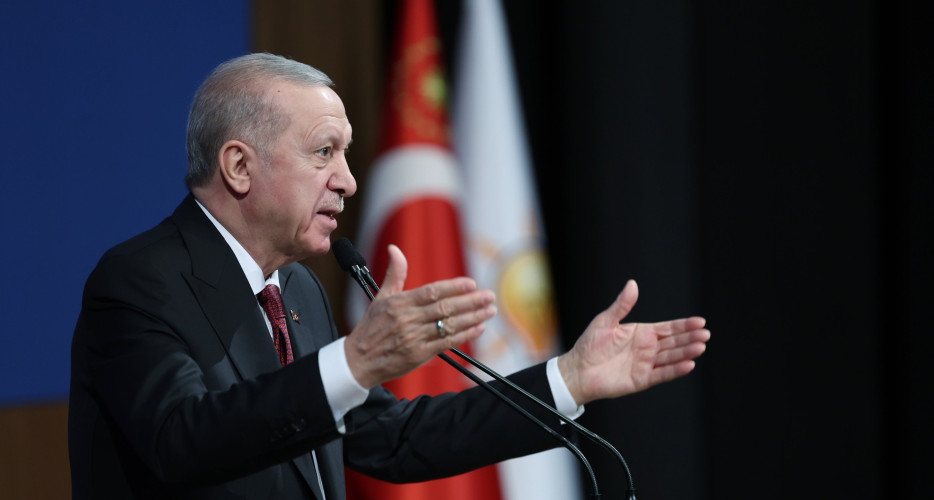
Turkish President Recep Tayyip Erdoğan has confirmed that Ankara is engaged in discussions with both Baghdad and Erbil on how to proceed with the disarmament of the Kurdistan Workers’ Party (PKK) following the group’s recent announcement to end its armed struggle.
"Talks are being held with our neighboring countries on how the weapons of terrorists outside our borders will be handed over," Erdoğan said during a briefing with journalists on his return from Albania. "There are plans regarding how the Baghdad and Erbil administrations will take part in this process."
"Our goal is a Turkey free of terrorism. The weapons must be buried, and the terrorist organization must disarm and carry out its decision to dissolve," Erdoğan said.
Erdoğan's comments come just days after the PKK, during its 12th Congress on May 12, declared a historic resolution to transition from armed struggle to political resistance. The move was initially perceived by some regional observers as a potential opening for renewed peace efforts. However, the situation on the ground and statements from PKK-linked authorities suggest otherwise.
On May 17, the Kurdistan Communities Union (KCK), the umbrella organization aligned with the PKK, firmly denied that any negotiations over disarmament or a formal peace process are underway.
"The PKK’s decision to end armed struggle has been misinterpreted—it does not mean laying down arms or vacating territories," said Zagros Hiwa, the KCK’s foreign relations spokesperson, in an interview with Sterk TV.
Hiwa emphasized that Turkey’s ongoing military operations make disarmament unrealistic, citing engagement distances between Turkish forces and PKK fighters as close as 100 meters. "How can one discuss disarmament when Turkish soldiers are positioned barely 100 meters from our fighters?" he asked.
The KCK accused Ankara of manipulating the narrative and dismissed claims of any progress toward peace. "Neither side has agreed on a framework for negotiations," Hiwa stated. "The Turkish state still labels this process as terrorism—how can peace be discussed while one side criminalizes the other?"
The KCK reiterated a longstanding demand: the release of PKK founder Abdullah Öcalan, who remains imprisoned on İmralı Island. According to Hiwa, Öcalan and the PKK have issued three goodwill gestures since February 27, but Ankara has not reciprocated.
"For any meaningful peace process to begin, Turkey must abandon its security-centric approach and recognize Kurds as equal citizens, not as terrorists," Hiwa said, adding that disarmament discussions cannot proceed while Turkish troops remain in Kurdish territories.
The stark contrast between Erdoğan’s remarks and the KCK’s response underscores the fragile and volatile nature of the situation. While the PKK’s shift in rhetoric may mark a strategic turn, deep mistrust and ongoing military engagements continue to obstruct any real pathway to peace.