Peregraf
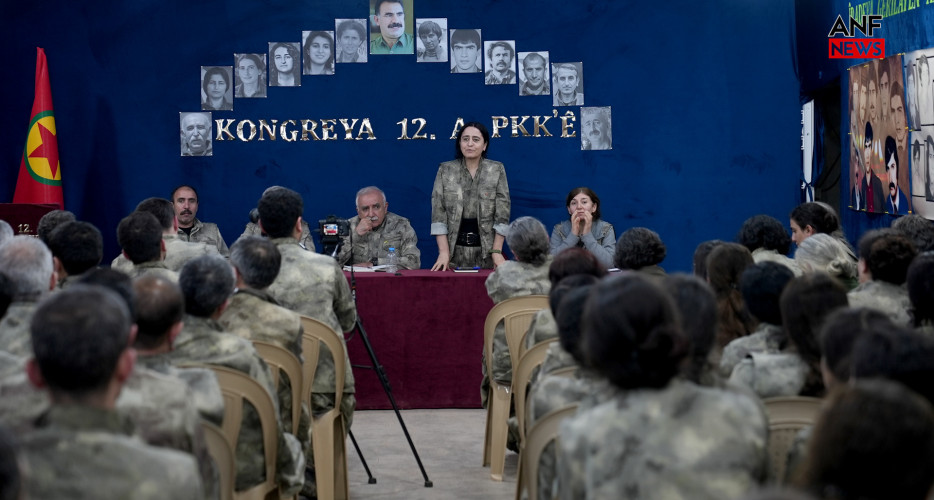
The Kurdistan Workers’ Party (PKK) has formally declared the termination of all activities conducted under its name, following decisions made during its 12th Congress. The congress, held under what it described as "challenging security conditions," resolved to "dissolve the PKK’s organizational framework" and end its "armed struggle," marking what it called a "historic shift" in the Kurdish "freedom movement." The statement also confirmed the "martyrdom" of senior PKK figures Ali Haydar Kaytan and Rıza Altun.
The congress and its decisions were based on a historic message from the PKK’s imprisoned leader, Abdullah Öcalan. In his message, Öcalan called on the PKK to end its armed struggle, disband the organization, and fully embrace a peaceful, democratic path. Öcalan, who has been imprisoned on İmralı Island since 1999, delivered the message on February 27, 2025, through a delegation from the pro-Kurdish DEM Party.
Congress Held Amid "Ongoing Conflict" and "Embargo"
The PKK’s 12th Congress convened from May 5-7, despite what it referred to as "ongoing military operations," "aerial bombardments," and an "embargo imposed by the KDP." Due to what it termed "security concerns," the congress was held simultaneously across two separate locations, with the participation of 232 delegates.
Key discussions centered on:
- "Leadership and Martyrdom"
- The PKK’s "Organizational Existence"
- The Future of "Armed Struggle"
- "Democratic Society Construction"
The congress concluded with resolutions that it said would transition the PKK into a "new phase of political struggle," emphasizing "democratic solutions" over military confrontation.
PKK Declares End to "Armed Struggle" and "Organizational Dissolution"
The Extraordinary 12th Congress assessed that the PKK had fulfilled its "historical mission" by:
- "Shattering policies of denial and annihilation against the Kurdish people"
- "Elevating the Kurdish question to a matter of democratic resolution"
Consequently, the congress resolved:
- To "dissolve the PKK’s organizational structure"
- To "terminate armed struggle as a method of resistance"
- To transfer the "implementation process" to the leadership of Abdullah Öcalan ("Apo")
From "Armed Resistance" to "Democratic Struggle"
Founded in 1978, the PKK framed its emergence as a response to what it called the "denial and assimilation policies" imposed on Kurds following the Treaty of Lausanne (1923) and the 1924 Turkish Constitution. The party adopted "armed struggle" as what it deemed a "legitimate means of resistance" under the principle of "self-determination."
Despite initial ideological alignment with "real socialism," the PKK evolved into what it called a "symbol of Kurdish resistance," achieving what it described as "significant political and cultural recognition" for the Kurdish people. The 1990s saw attempts at a political resolution, including President Turgut Özal’s efforts and the 1993 ceasefire declaration by Öcalan. However, the PKK’s statement accused the "deep state" of suppressing reformists and escalating conflict, leading to what it termed "mass displacement, village burnings, and extrajudicial killings."
Post-1999: Öcalan’s Imprisonment and the Shift to "Democratic Paradigms"
Following what the PKK called the "international conspiracy" leading to Öcalan’s capture on February 15, 1999, the PKK leader continued advocating for a "peaceful resolution" from İmralı Prison. Despite 27 years of what it labeled "isolation," Öcalan developed the "Democratic Confederalism" model, promoting:
- "Democratic autonomy"
- "Ecological sustainability"
- "Women’s liberation"
The congress emphasized that Kurdish-Turkish relations must be redefined on the basis of:
- "Shared Homeland" (Ortak Vatan)
- "Equal Citizenship"
- "Democratic Republic of Turkey"
Call for "Democratic Mobilization"
The PKK urged the Kurdish people to:
- "Establish self-organized democratic structures"
- "Strengthen linguistic and cultural autonomy"
- "Defend against attacks through civil resistance"
It also called upon:
- Kurdish political parties to advance "democratic nation-building"
- Turkish Parliament to recognize "democratic political rights"
- Civil society, intellectuals, and media to support what it termed the "peace process"
International Appeal
The declaration invited global democratic forces to:
- Support "Kurdish-Turkish reconciliation"
- Reject what it called "genocidal policies against Kurds"
- Strengthen "international solidarity"
"Martyrdom" Announcements
The congress officially recognized the "martyrdom" of:
- Ali Haydar Kaytan (Fuat) – "Symbol of Loyalty to Leadership and Sacred Struggle" (Martyred July 3, 2018)
- Rıza Altun – "Symbol of Comradeship in Freedom" (Martyred September 25, 2019)
The PKK dedicated its decisions to these figures and all "fallen militants," vowing to realize their vision of "peace and democracy."
A "New Era of Democratic Struggle"
The PKK framed its dissolution as a "strategic pivot" from "armed resistance" to "political and social mobilization." The movement now calls for:
- A "democratic, ecological, and gender-liberated society"
- "Unity among oppressed peoples"
- A "just global order"