Peregraf
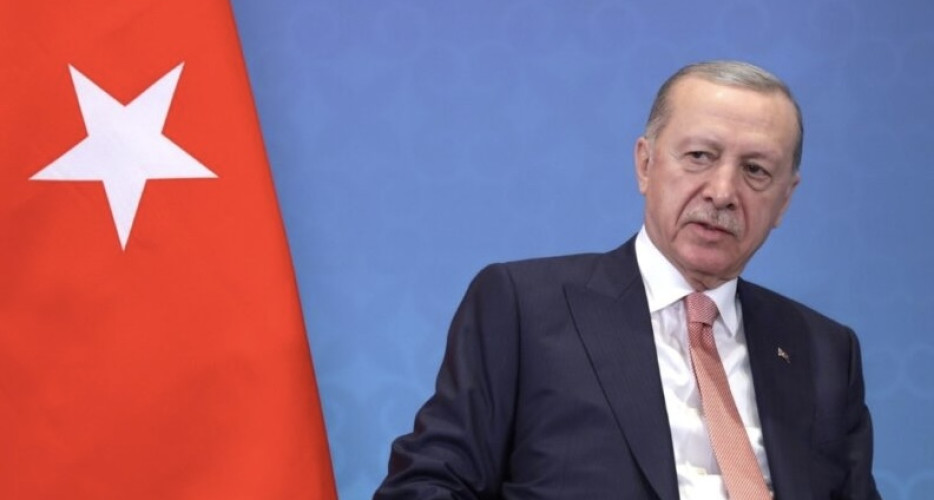
Turkish President Recep Tayyip Erdogan announced today that the Kurdistan Workers’ Party (PKK) will lay down its arms and dissolve “today or tomorrow,” marking what he described as the start of a “new era.”
“We have overcome all obstacles. The PKK will lay down its arms today and tomorrow and the organization will be dissolved. Then a new era will begin for all of us,” Erdogan said during a closed meeting with AKP ministers and MPs, in remarks later shared with the media.
The announcement comes amid heightened political speculation in Turkey and the Kurdish regions about the potential disarmament and self-dissolution of the PKK, which has waged an armed insurgency against the Turkish state since 1984.
However, the PKK has yet to officially confirm or deny Erdogan’s statement. In contrast, Kurdish leaders close to the group expressed strong reservations, questioning the sincerity of the Turkish government and emphasizing the central role of imprisoned PKK leader Abdullah Ocalan in any final peace process.
Hozat: No Disarmament Without Ocalan
On March 25, 2025, Bese Hozat, co-chair of the Kurdistan Communities Union (KCK), which includes the PKK, said the group would neither disarm nor dissolve without direct participation and oversight from Ocalan. Speaking to media outlets close to the PKK, Hozat criticized Ankara for ignoring Ocalan’s recent appeal and failing to take practical steps.
“If you are serious and sincere, you will change the legislation,” Hozat said, referring to Turkey’s refusal to enact the so-called “Right to Hope” that would allow Ocalan more access and possibly parole. She condemned the Turkish Justice Minister’s dismissive stance, asking, “Is this legislation a verse from the Qur’an?”
Hozat stressed that the PKK insists on Ocalan delivering a public video message and directly managing any disarmament or dissolution congress. “How can a resolution be reached while avoiding a video message from Leader Apo [Ocalan]?” she asked.
Ocalan’s Historic Message
Ocalan, who has been imprisoned on Imrali Island since 1999, issued a landmark call on February 27, 2025, urging the PKK to end its armed struggle and embrace a peaceful, democratic path. His message, delivered via a delegation from the pro-Kurdish DEM Party, emphasized democracy as the only viable route forward.
“The second century of the Republic can only be crowned with democracy. There is no alternative,” Ocalan stated. He urged the PKK to voluntarily disband, framing the move as essential for long-term peace.
Following Ocalan’s appeal, the PKK declared a unilateral ceasefire on March 1, pledging to halt military actions unless attacked. However, it made clear that full disarmament requires Ocalan’s leadership and a conducive political environment.
“The issue of disarmament can only be achieved under the practical leadership of Ocalan,” the group said in a statement, also calling for legal reforms and political guarantees.
Despite the ceasefire, the Turkish military has continued its air and ground operations against PKK fighters in the Kurdistan Region of Iraq over the past week, according to the Community Peacemaker Teams (CPT).
Political Ripple Effects
Ocalan’s message has ignited political controversy in Turkey. In a surprising move, Nationalist Movement Party (MHP) leader Devlet Bahceli suggested that Ocalan should be allowed to address the Turkish parliament to formally declare the PKK’s dissolution—a remarkable shift from the hardline position usually adopted by Turkey’s far-right.
Founded in 1978, the PKK initially fought for Kurdish independence but later shifted its demands to autonomy within Turkey. It remains listed as a terrorist organization by Turkey, the EU, and the United States.
The DEM Party, successor to the banned HDP, has welcomed Ocalan’s call and continues to push for a peaceful resolution to the Kurdish issue. However, the party has also echoed the PKK’s insistence that real change requires direct participation from Ocalan and systemic democratic reforms.