KRG Deputy Prime Minister Said, Press Freedom Must Be Society’s Red Line as Watchdog Warns of ‘Dangerous Stage’
Peregraf
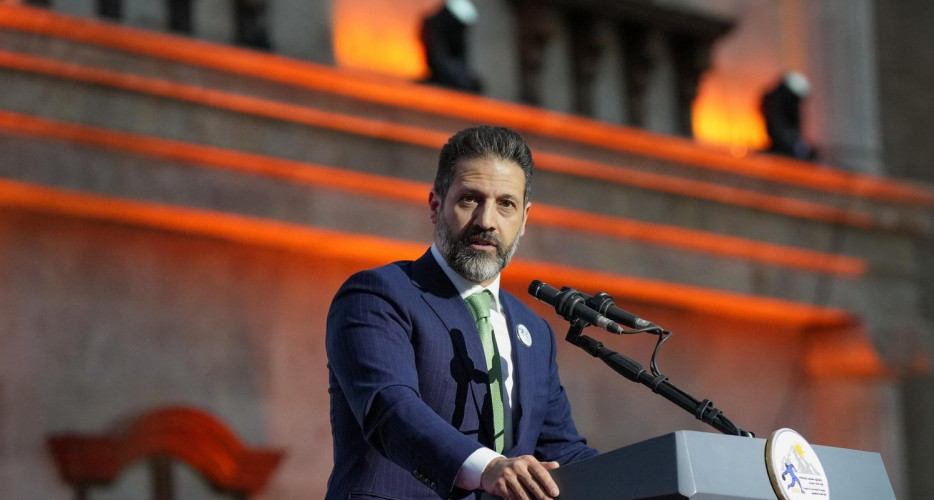
Kurdistan Regional Government (KRG) Deputy Prime Minister Qubad Talabani marked World Press Freedom Day with a strong defense of journalistic rights, emphasizing the importance of freedom of expression and calling for it to be enshrined as a "red line" that no authority or force should dare to cross. His remarks come amid growing concerns from media watchdogs regarding escalating violations against journalists and media institutions in the region.
In a statement released on Saturday, Talabani urged society and leadership to firmly uphold press freedom as a core societal value, stressing that the right to report and express must be protected as a "strong social tradition."
"Let us never grow weary of advocating for it, stressing its importance on every occasion, until it becomes deeply ingrained in the minds and hearts of every member of our society," he said. "So that no force, individual, or party dares to infringe upon the freedom of the press and expression."
Talabani also paid tribute to journalists who have lost their lives in the line of duty, referring to them as the "Guardians of Truth." He expressed hope that no more names would be added to the "Guardians of Truth" monument in Sulaymaniyah’s Azadi Park, which was inaugurated in September 2024 and commemorates 551 slain journalists in Iraq and the Kurdistan Region since 2003.
According to the monument’s records, 2006 was the deadliest year for journalists, with 114 fatalities, followed by 95 in 2021. Baghdad recorded the highest toll with 286 journalist deaths, while Kirkuk topped the Kurdish areas with 23. Sulaymaniyah recorded five.
Watchdog Warns: ‘Dangerous Stage’ for Journalism
Despite Talabani’s strong defense of press freedom, the Erbil-based Reporters Organization for Rights and Development (RORD) painted a concerning picture of the state of journalism in the Kurdistan Region.
In a statement issued for Press Freedom Day, RORD warned that journalism in the region has entered a "dangerous stage," accusing the Kurdistan Regional Government (KRG) of failing to adequately enforce laws meant to protect press freedom. The watchdog reported 45 violations against journalists and media outlets from January to April 2025 alone.
Key Violations Reported (Jan–Apr 2025):
• 14 media outlets targeted
• 31 journalists subjected to violations
• 9 hospitalized due to tear gas
• 6 journalists arrested
• 4 media teams barred at Digala checkpoint
• 1 raid on a media outlet
• 11 instances of media obstruction
"These violations are not isolated incidents. They point to a systematic trend of repression," RORD stated, attributing the majority of abuses to the region’s security forces and government departments.
The group also highlighted severe restrictions in the Soran Autonomous Administration, where journalists are reportedly blocked from accessing public information. RORD accused a so-called "deep government" operating behind the KRG’s institutions of undermining legal protections and independent journalism.
"The judiciary is not fully independent. Journalists are facing a situation that no one should have to endure. The solution requires a long-term civil struggle," the statement concluded.
Press Freedom and Transparency Challenges in the Kurdistan Region
The Kurdistan Regional Government (KRG) has consistently emphasized its commitment to democracy, press freedom, and transparency. However, recent legal battles involving the independent media outlet Peregraf have raised questions about the KRG’s adherence to these principles.
In 2022, Peregraf filed lawsuits under the Kurdistan Region’s Right to Obtain Information Act (2013), seeking budget and expenditure details from the offices of KRG President Nechirvan Barzani, Prime Minister Masrour Barzani, and Parliament Speaker Rewaz Fayaq. The outlet argued that such disclosures were essential for public accountability, particularly since the KRG has operated without a formal budget for nearly a decade, raising concerns over financial opacity.
While Peregraf won an initial case against the parliament speaker in Sulaymaniyah Court—a landmark ruling that ordered Fayaq’s office to disclose the requested information—the cases against Nechirvan Barzani and Masrour Barzani were dismissed by an Erbil court on procedural grounds. Critics, including Peregraf’s legal team, argued that the dismissals were based on weak technicalities, such as unclear "warning conditions" and alleged delays in filing, rather than substantive legal reasoning.
Meanwhile, the case against the parliament speaker has been indefinitely postponed until a new speaker is elected—a delay that could extend indefinitely, as the new parliament remains inactive. Six months after the October 2024 elections, political factions have failed to convene the legislature or elect a speaker, leaving transparency laws unimplemented.
These legal setbacks coincide with public statements from KRG leaders, including Prime Minister Barzani, reaffirming their support for press freedom on Kurdish Journalism Day. However, journalists and media watchdogs argue that the government’s actions—such as withholding information and resisting transparency lawsuits—undermine these pledges.
The ongoing legal battles highlight a broader struggle for accountability in the Kurdistan Region, where journalists frequently face obstacles in accessing government data. Despite the KRG’s claims of progress in transparency and human rights, cases like Peregraf’s suggest that systemic barriers to press freedom and open governance remain unresolved.