KRG Leaders Pledge Press Freedom on Kurdish Journalism Day Amid Transparency Disputes
Peregraf
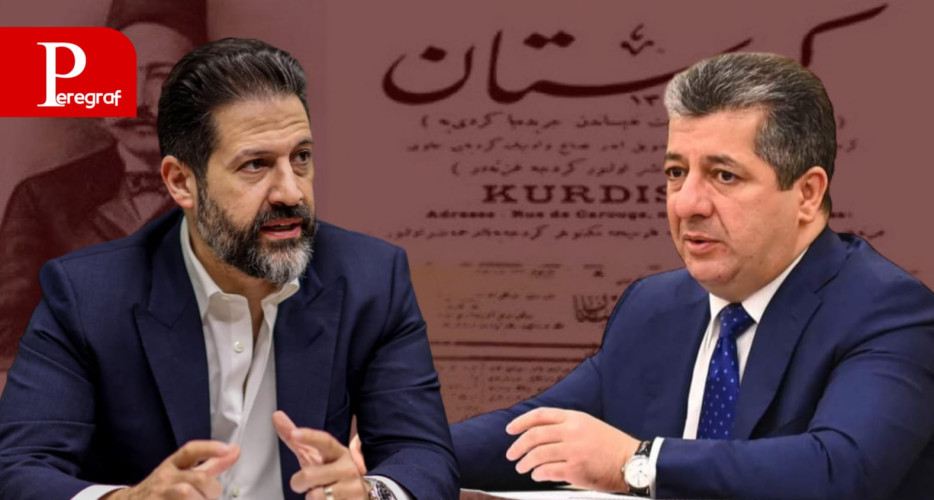
On the 127th anniversary of Kurdish Journalism Day, Kurdistan Regional Government (KRG) Prime Minister Masrour Barzani and Deputy Prime Minister Qubad Talabani reaffirmed their government’s commitment to upholding freedom of expression and creating an enabling environment for press freedom in the Kurdistan Region.
Prime Minister Barzani emphasized the KRG's continued support for the media, noting that "freedom of expression, freedom of the media, and journalism are fundamental pillars of our democracy." He expressed hope that Kurdish journalists would rise to the significance of their profession by raising public awareness, delivering accurate information, and cooperating with the government to support reform and correct shortcomings.
Deputy Prime Minister Talabani echoed this message, stating that the government and institutions have a duty to uphold the law and ensure a favorable environment for journalism to thrive. “At the same time,” he added, “media outlets and journalists must uphold ethical standards and strive for greater professionalism in their work.”
The statements come as part of the annual celebration honoring the legacy and role of journalism in Kurdish society.
Press Freedom and Transparency Challenges in the Kurdistan Region
The Kurdistan Regional Government (KRG) has long emphasized its commitment to democracy, press freedom, and government transparency. However, recent legal battles involving the independent media outlet Peregraf have raised questions about the KRG’s adherence to these principles.
In 2022, Peregraf filed lawsuits under the Kurdistan Region’s Right to Obtain Information Act (2013), seeking budget and expenditure details from the offices of KRG President Nechirvan Barzani, Prime Minister Masrour Barzani, and Parliament Speaker Rewaz Fayaq. The outlet argued that such disclosures were crucial for public accountability, particularly as the KRG has operated without a formal budget for nearly a decade, leading to concerns over financial opacity.
While Peregraf won an initial case against the parliament speaker in Sulaymaniyah Court—a landmark ruling that ordered Fayaq’s office to disclose the requested information—the cases against Nechirvan Barzani and Masrour Barzani were dismissed by an Erbil court on procedural grounds. Critics, including Peregraf’s legal team, argued that the dismissals were based on weak technicalities, such as unclear "warning conditions" and alleged delays in filing, rather than substantive legal reasoning.
Meanwhile, the case against the parliament speaker has been indefinitely postponed until a new speaker is elected—a delay that could extend indefinitely, as the new parliament remains inactive. Six months after the October 2024 elections, political factions have failed to convene the legislature or elect a speaker, leaving transparency laws unimplemented.
These legal setbacks coincide with public statements from KRG leaders, including Prime Minister Barzani, reaffirming their support for press freedom on Kurdish Journalism Day. However, journalists and media watchdogs argue that the government’s actions—such as withholding information and resisting transparency lawsuits—contradict these pledges.
The ongoing legal battles highlight a broader struggle for accountability in the Kurdistan Region, where journalists frequently face obstacles in accessing government data. Despite the KRG’s claims of progress in transparency and human rights, cases like Peregraf’s suggest that systemic barriers to press freedom and open governance remain unresolved.