President Latif Rashid Urges Sadr to Join Elections, But Shiite Leader Reiterates Boycott
Peregraf
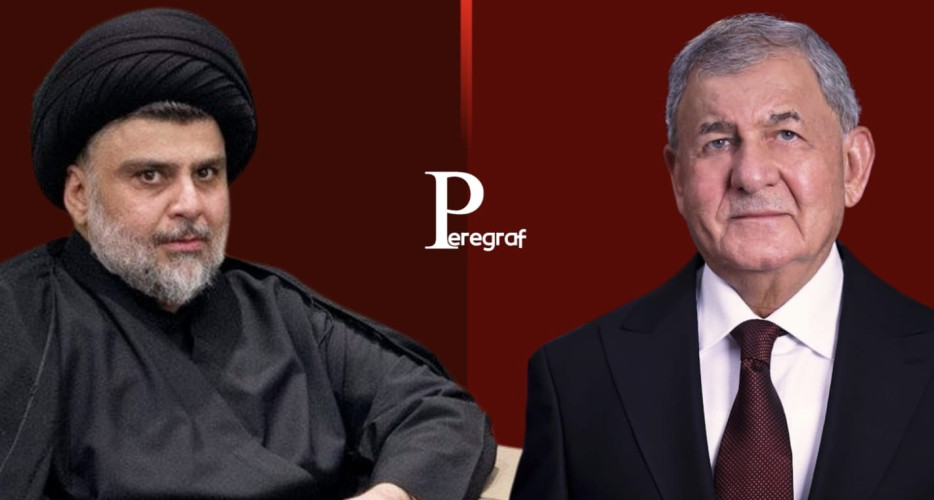
Iraqi President Latif Rashid has called on Shiite National Movement leader Muqtada al-Sadr to reconsider his decision to boycott Iraq’s upcoming parliamentary elections, emphasizing the importance of his movement’s role in the political process. However, Sadr swiftly rejected the invitation, reaffirming that he will not participate in the vote due to ongoing corruption and political dysfunction.
In a letter dated April 16, President Rashid appealed to Sadr to participate in the elections scheduled for November 11, stating, “It is time for the Shiite National Movement to return to its political role. The House of Representatives is the real field to correct mistakes.”
“The political process is incomplete without the participation of the Shiite National Movement. You have started the process and there is no choice but to complete it. Your participation in the upcoming elections is more necessary than ever,” the president added.
However, Sadr reiterated his decision not to participate, citing widespread corruption and the mismanagement of public wealth.
“I will not participate in the elections, which does not mean that I am calling for the postponement or cancellation of the elections,” Sadr said in response. “I am sad that a great people participate in the elections of corrupt and those who steal public wealth,” he added, while affirming his continued commitment to defending Iraq against future challenges.
This latest exchange follows Sadr’s earlier letter from mid-February in which he firmly rejected any involvement in the elections, stating, “Let it be known that I will not engage in the upcoming elections as long as corruption prevails, with no regard for anything other than sectarian, ethnic, and party interests, while being detached from the people’s concerns and the calamities affecting the region.”
Sadr’s withdrawal casts further uncertainty over Iraq’s political future, as the country heads toward its sixth parliamentary elections since 2005.
Meanwhile, political parties and coalitions are ramping up their campaigns, with the Independent High Electoral Commission (IHEC) confirming its full readiness to hold the elections on schedule. Registration for parties, coalitions, and independent candidates remains open until May 4.
Observers note that the absence of Sadr’s movement could significantly alter the political landscape, affecting both voter turnout and the distribution of power in the next parliament.