Peregraf
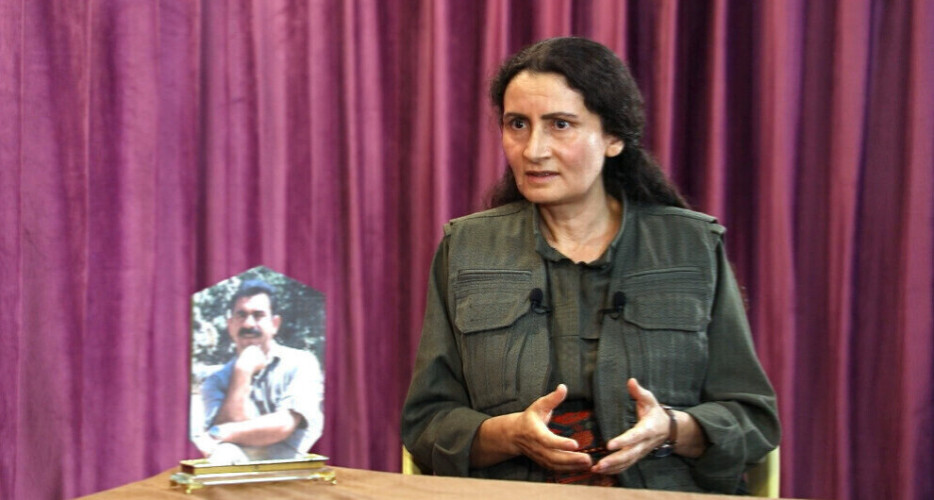
Bese Hozat, the co-chair of the Kurdistan Communities Union (KCK), has declared that the Kurdistan Workers’ Party (PKK) will not lay down its arms or hold a self-dissolution congress without the direct participation of Abdullah Ocalan. Speaking to media close to the PKK, Hozat criticized the Turkish government for not taking Ocalan's recent message seriously or taking any substantive action.
Hozat emphasized that Ocalan’s appeal should have been met with immediate steps towards securing his physical freedom and direct involvement in the disarmament process. Describing the statements made by the Turkish Minister of Justice regarding the Right to Hope as "irresponsible," Besê Hozat stated, "The Minister of Justice comes out and says; the Right to Hope does not exist in the legislation. Is this legislation a verse from the Qur'an? You are initiating such a serious process; of course, you will change the legislation. If you are serious and sincere, you will change that legislation".
The "Right to Hope" (or Umut Hakkı in Turkish) is a concept often associated with the Kurdish political movement, particularly within the context of Turkey's Kurdish issue. In the context of Abdullah Öcalan, the "Right to Hope" (Umut Hakkı) represents the Kurdish people's aspiration for peace, justice, and political recognition. It emphasizes their right to live free from violence and oppression, advocating for a peaceful resolution to the long-standing conflict between the Kurdish movement and the Turkish state. Öcalan calls for a future where Kurds can express their cultural and political identity without fear, seeking greater autonomy and a fairer society.
The "Right to Hope" also calls for legal and constitutional reforms to address Kurdish rights and dismantle oppressive structures. Öcalan links this hope to political changes that would ensure freedom, equality, and democracy for all, highlighting the need for systemic change to create a more just and peaceful future for both Kurds and Turks.
She further insisted that Ocalan should have direct communication with PKK leaders and personally oversee the self-dissolution congress. “Holding the congress, determining its time and date, and conducting the process should have been led by Leader Apo [Ocalan] in direct coordination with PKK leadership,” Hozat asserted.
Additionally, Hozat stressed the PKK's insistence on a video message from Ocalan. “A historic process is being launched; a serious effort is being made to solve a 100-year-old problem. How can a resolution be reached while avoiding a video message from Leader Apo?” she questioned.
Ocalan’s Historic Call for Disarmament
On February 27, 2025, Abdullah Ocalan, imprisoned on Imrali Island since 1999, made a landmark appeal for the PKK to end its armed struggle and transition into a peaceful political movement. His message, delivered through a delegation from the pro-Kurdish Peoples’ Equality and Democracy Party (DEM), framed the appeal within the historical context of Turkish-Kurdish relations.
“The second century of the Republic can achieve and assure permanent and fraternal continuity only if it is crowned with democracy. There is no alternative to democracy in the pursuit and realization of a political system,” Ocalan stated. He called on the PKK to voluntarily dissolve itself, emphasizing that a democratic resolution was the only viable path forward.
PKK Declares Ceasefire
In response, the PKK announced a ceasefire on March 1, 2025, committing to implementing Ocalan’s message. The group stated that its fighters would not engage in armed activities unless attacked and demanded that Ocalan be released to personally oversee the disarmament process.
“Of course, making such a call was important; successful implementation of its content is even more crucial. As the PKK, we will directly participate in fulfilling this call and act according to its requirements,” the PKK declared in an official statement.
The statement emphasized that the success of the disarmament process depends on a democratic political environment and an appropriate legal framework. “The issue of disarmament can only be achieved under the practical leadership of Ocalan,” it continued, reiterating that a congress to dissolve the PKK could only take place under Ocalan’s leadership.
Despite the ceasefire, the Turkish military has launched 14 attacks on PKK fighters in the Kurdistan Region of Iraq over the past seven days, according to a report by the Community Peacemaker Teams (CPT).
Ocalan’s message has sparked political debate in Turkey. In an unexpected move, Nationalist Movement Party (MHP) leader Devlet Bahceli suggested that Ocalan be allowed to address the Turkish parliament to formally declare the PKK’s dissolution—an unprecedented shift from the Turkish government's hardline stance.
Founded in 1978 with the goal of Kurdish independence, the PKK later shifted its demands to autonomy within Turkey. However, it remains designated as a terrorist organization by Turkey, the United States, and the European Union.
The DEM Party, which succeeded the Peoples’ Democratic Party (HDP), has long advocated for peace. As Ocalan’s message reaches both PKK leadership and Turkish authorities, the question remains whether this could lead to a lasting resolution or another failed peace attempt.