Bafel Talabani and Masrour Barzani to Meet in Erbil to Discuss Government Formation
Peregraf
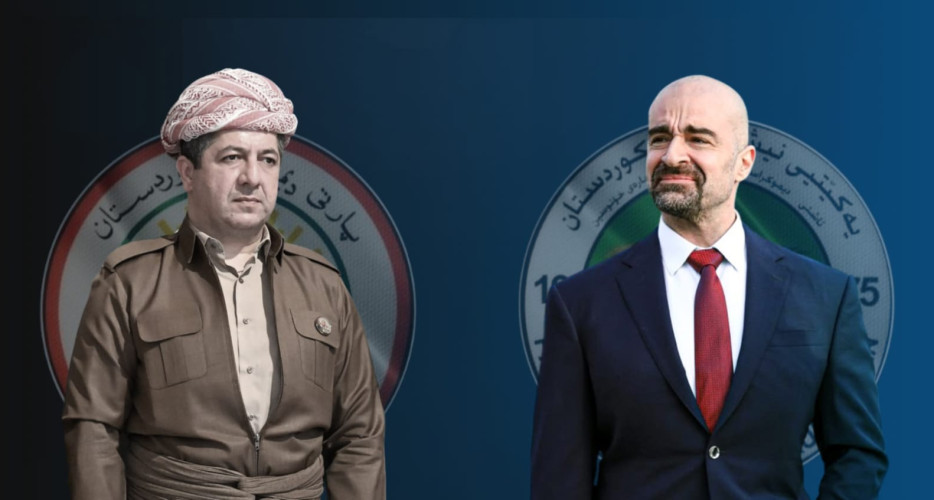
Bafel Talabani, the leader of the Patriotic Union of Kurdistan (PUK), and Masrour Barzani, the Prime Minister of the Kurdistan Regional Government (KRG) and a senior leader of the Kurdistan Democratic Party (KDP), are set to meet in Erbil tomorrow to discuss the formation of the new KRG cabinet.
According to Talabani’s press office, the meeting will cover the political situation in Kurdistan, Iraq, and the wider region, along with its consequences. Discussions will also focus on preparing for upcoming political developments, the Kurdistan Region’s position, and finalizing the government formation process.
With negotiations ongoing, both the KDP and PUK face increasing pressure to finalize an agreement and accelerate the formation of the new cabinet. Their primary objective is to ensure political stability and create a governance framework that prevents unilateral decision-making.
A joint committee tasked with designing an effective governance structure has been working to bridge political differences between the two parties. Once their proposed strategy is finalized, it will be presented to the High Negotiating Committee for approval, paving the way for the cabinet’s formation.
The KDP and PUK, the two dominant political forces in Kurdistan, have been engaged in negotiations since the Kurdistan Parliament’s first session on December 2. The latest parliamentary elections saw the KDP secure 39 seats, making it the largest party, while the PUK won 23 seats. Minority representatives and smaller parties collectively hold 38 seats, making coalition-building essential to reaching the 51-seat majority required to form a government.
The KDP remains dominant in Erbil and Duhok, while the PUK holds significant influence in Sulaymaniyah and Halabja. Their cooperation has historically been crucial for maintaining political stability in the region.
As leadership delegations gear up for further discussions, the outcome of these negotiations will play a decisive role in shaping Kurdistan’s political and administrative future.