Peregraf
U.S. President Donald Trump has emphasized the role of the Kurdish Regional Government (KRG) in a recent high-profile operation that killed a top ISIS leader in Iraq, a statement that comes amid tensions between Erbil and Baghdad over recognition of Kurdish contributions to counterterrorism efforts.
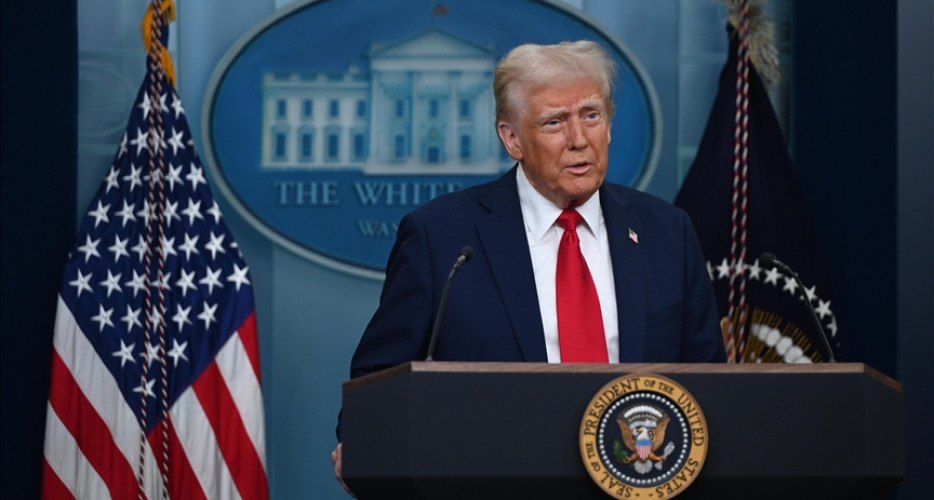
In a post on X, Trump announced: "Today the fugitive leader of ISIS in Iraq was killed. He was relentlessly hunted down by our intrepid warfighters. His miserable life was terminated, along with another member of ISIS, in coordination with the Iraqi Government and the Kurdish Regional Government. PEACE THROUGH STRENGTH!”
His remarks align with official statements from U.S. Central Command (CENTCOM), which confirmed that the operation on March 13 successfully eliminated Abdallah Makki Muslih al-Rifai, known as Abu Khadijah, who was ISIS’ 2 leader and Chief of Global Operations. The strike, carried out in Al Anbar Province, Iraq, was conducted with intelligence support from both Iraqi and Kurdish security forces.
Kurdish Criticism Over Baghdad’s Omission
While the U.S. has publicly credited the KRG’s role in the operation, the Kurdistan Region Security Council (KRSC) has strongly criticized Iraqi Prime Minister Mohammed Shia’ al-Sudani for failing to acknowledge Kurdish intelligence contributions.
In a statement, the KRSC highlighted that the operation was the result of years of intelligence gathering, with crucial information provided by Kurdish security forces. However, in his announcement of Abu Khadijah’s death, Sudani only credited Iraqi intelligence and the U.S.-led coalition, omitting any mention of Kurdish involvement.
The KRSC warned that ignoring Kurdish contributions could strain future security cooperation between Erbil and Baghdad, stressing that “this oversight is not a positive sign for the future of cooperation between regional and federal institutions.”
Despite the territorial defeat of ISIS in 2017, the group remains active in Iraq, particularly in disputed territories such as Diyala, Kirkuk, Salahaddin, and Nineveh. Kurdish and Iraqi forces have collaborated on counterterrorism operations in the past, but political tensions and jurisdictional disputes continue to create friction.