Peregraf
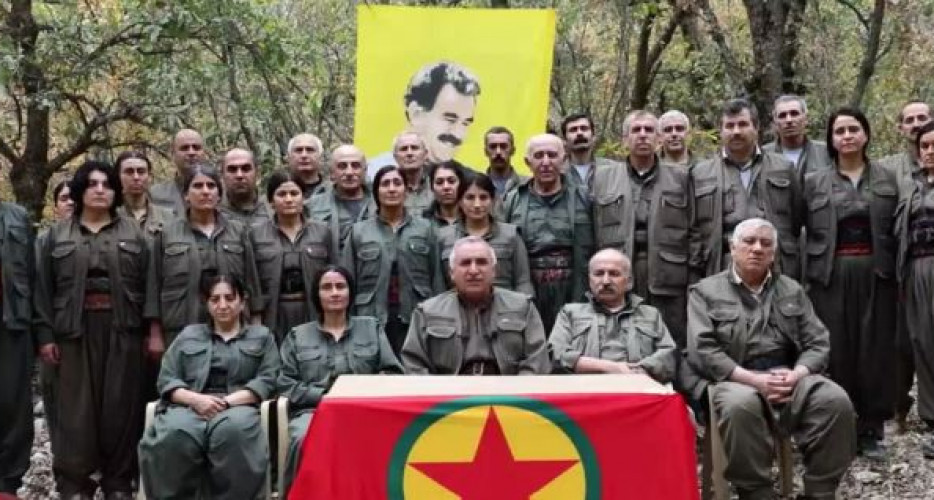
The Kurdistan Workers’ Party (PKK) has announced its commitment to implementing Abdullah Ocalan’s message, calling for the disarmament and dissolution of the organization. As a first step, the PKK declared a unilateral ceasefire and demanded that Ocalan be released to personally oversee the disarmament and dissolution congress.
PKK’s Official Statement
“Of course, making such a call was important; successful implementation of its content is even more crucial. As the PKK, we will directly participate in fulfilling this call and act according to its requirements,” the group stated.
However, the PKK emphasized that success would require a democratic political environment and an appropriate legal framework.
“In this context, we declare a ceasefire from today onwards in order to fulfill Leader Apo’s call for peace and a democratic society. None of our forces will carry out armed activities unless attacked by the enemy. The issue of disarmament can only be achieved under the practical leadership of Leader Apo,” the statement continued.
The group also asserted its readiness to convene a party congress per Ocalan’s request but stipulated that Ocalan himself must lead the congress for it to be successful.
“So far, our leadership has fought despite all our mistakes and shortcomings; but only Leader Apo can lead the era of peace and democratic society,” the PKK added, demanding that Ocalan’s physical freedom and working conditions be ensured.
Ocalan’s Historic Call
In a groundbreaking move, Abdullah Ocalan, the imprisoned leader of the PKK, called on PKK militants to lay down their arms and embrace a political resolution to the Kurdish issue in Turkey. His message, delivered on February 27, 2025, through a pro-Kurdish Peoples’ Equality and Democracy Party (DEM) delegation visiting him on Imrali Island, urged the PKK to end its armed struggle and transition into a peaceful political movement.
Excerpts from Ocalan’s Statement
Ocalan framed his appeal within the broader historical context of Turkish-Kurdish relations and the evolving political landscape. He noted that the PKK emerged in response to the denial of Kurdish identity and the suppression of democratic expression but argued that the time had come to transition from armed resistance to political engagement.
“The second century of the Republic can achieve and assure permanent and fraternal continuity only if it is crowned with democracy,” Ocalan stated. “There is no alternative to democracy in the pursuit and realization of a political system. Democratic consensus is the fundamental way.”
Ocalan acknowledged the response from Turkish political figures, including Nationalist Movement Party (MHP) leader Devlet Bahceli and President Recep Tayyip Erdogan, and expressed his willingness to take responsibility for ensuring a peaceful transition.
“As in the case of any modern political movement whose existence has not been abolished by force, the PKK should voluntarily convene its congress, decide to lay down arms, and dissolve itself,” he declared.
Renewed Hopes for a Peace Process
Ocalan’s message marks the first direct engagement with pro-Kurdish lawmakers since the collapse of the 2014 peace process. DEM officials Pervin Buldan and Ozturk Turkdogan relayed his emphasis on Turkish-Kurdish unity, democratic reforms, and an inclusive political approach.
Ocalan also warned that ongoing conflicts in the Middle East, particularly in Gaza and Syria, were exacerbating the Kurdish issue and called for immediate steps toward peace. He suggested that both Erdogan and Bahceli could play decisive roles in shaping a new peace framework.
“The strengthening of Turkish-Kurdish brotherhood is not only a historical responsibility but a decisive necessity for all nations,” Ocalan asserted.
Government’s Response and Political Shift
In a surprising development, the Turkish government appears to be softening its stance on Ocalan. MHP leader Devlet Bahceli recently proposed allowing Ocalan to address the Turkish parliament to formally declare the PKK’s dissolution—an unprecedented move seen by some analysts as a potential turning point in Turkish-PKK relations.
Founded in 1978 with aspirations for Kurdish independence, the PKK has since adjusted its objectives toward autonomy within Turkey. Despite this shift, it remains designated as a terrorist organization by Turkey, the United States, and the European Union.
The DEM Party, which succeeded the Peoples’ Democratic Party (HDP), has long played a role in peace efforts. As Ocalan’s message reaches PKK leadership and Turkish political figures, it remains to be seen whether this moment will lead to a lasting resolution or another stalled attempt at peace.