KRI President Calls Development Road Project a 'Historic Step' and Pledges Full Support
Peregraf
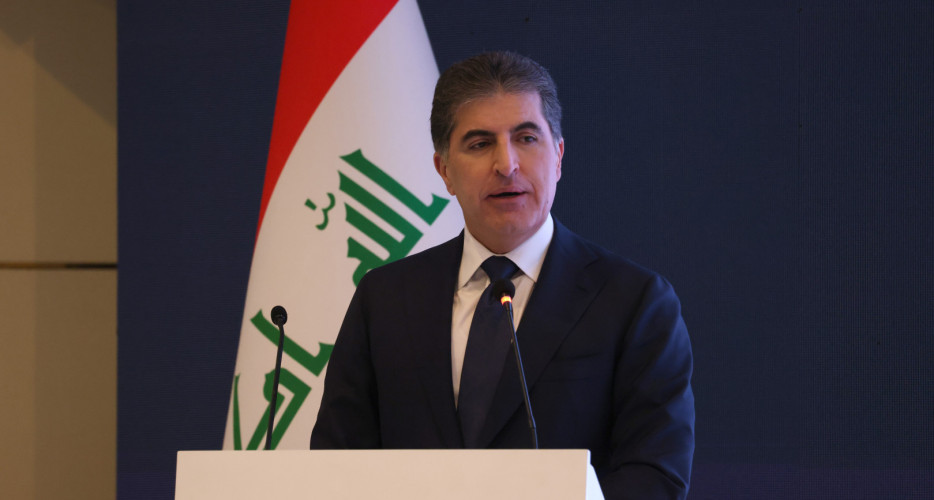
Kurdistan Region President Nechirvan Barzani has hailed the Development Road Project as a "historic step" toward building a more stable and prosperous Iraq. He emphasized that the initiative promotes a diversified economy, regional openness, and stronger economic ties with neighboring countries.
"In this regard, we reiterate our full support for this great project and are eager for it to become an example of constructive cooperation between all regions and communities of the country, as well as Iraq and its regional and international partners," Barzani stated during his speech at the Baghdad International Dialogue today.
He highlighted key principles necessary for the project's success, including a robust legal and economic framework to attract investment, responsible political dialogue for national unity, and a strong security strategy to ensure stability. Additionally, he stressed that the project must be inclusive, connecting all Iraqi regions and communities without discrimination.
"The diversity of Iraqi society is a strength and wealth. Iraq can make this project an opportunity to overcome all ethnic, religious, and sectarian differences, becoming a great force for the whole country," Barzani added.
Kurdistan Region's Concerns Over Exclusion
On February 12, 2025, Prime Minister Masrour Barzani met with Turkish Finance Minister Mohammed Şimşek to discuss Iraq’s ambitious $17 billion Development Road Project, which aims to connect the Gulf to Europe via Turkey. The meeting highlighted the Kurdistan Region’s concerns regarding its exclusion from the project and the broader implications for regional trade and cooperation.
"We discussed the importance of the Development Road Project and connecting the Gulf countries, Iraq, and the Kurdistan Region with Turkey and European countries by rail and agreed on the need for the Kurdistan Region's active participation in this important project," PM Barzani stated.
However, KRG Minister of Reconstruction and Housing Dana Abdulkarim has voiced skepticism about the region’s involvement. On January 18, he described the project as "the most important strategic initiative since Iraq’s establishment" but criticized the lack of consultation with Kurdish authorities. "The Kurdistan Region will certainly not benefit from this path," Abdulkarim said, calling Baghdad’s decision to bypass Kurdish territory a continuation of "centralized thinking."
Project Details and Ongoing Controversy
Dubbed "Iraq’s Silk Road," the Development Road aims to enhance trade between Asia and Europe by linking the Grand Faw Port in southern Iraq with Turkey through a network of railways and highways. The current route primarily passes through Nineveh governorate, skirting the Kurdistan Region, with only a small portion crossing into Duhok governorate near the Turkish border.
The KRG has urged Baghdad to reconsider the route to include more Kurdish territory, arguing that the region’s economic and strategic position would enhance the project’s success. However, federal authorities have rejected these proposals. The KRG’s alternative route suggestions—including one passing through Kirkuk and Erbil or another following the east side of the Tigris River—were dismissed by Baghdad.
Economic Stakes and Federal Rejection
If the Kurdistan Region remains excluded, it stands to lose significant economic benefits. The Development Road is expected to generate $4 billion annually, primarily from trade and logistics. Minister Abdulkarim emphasized that integrating the Kurdistan Region into the project would not only boost the local economy but also promote stronger social ties between Iraq and the Kurdistan Region.
The Development Road Project is set to be completed by 2050, featuring a $5 billion expansion of the Grand Faw Port and the construction of railways and highways in three phases. Trains on the new railway are expected to reach speeds of up to 300 kilometers per hour, cutting transport times between Europe and the Gulf from 33 days to just 15 days.
Despite its transformative potential, the project’s exclusion of major Kurdish cities has heightened tensions between Erbil and Baghdad. Barzani and Şimşek also discussed ongoing disputes between Erbil and Baghdad, including the urgent need to resume oil exports from the Kurdistan Region.
As discussions continue, the KRG remains committed to securing a greater role in the Development Road Project, emphasizing that economic integration is key to Iraq’s long-term success.