KRG Spokesman Criticizes Teachers on Strike Amid Escalating Protests in Sulaymaniyah
Peregraf
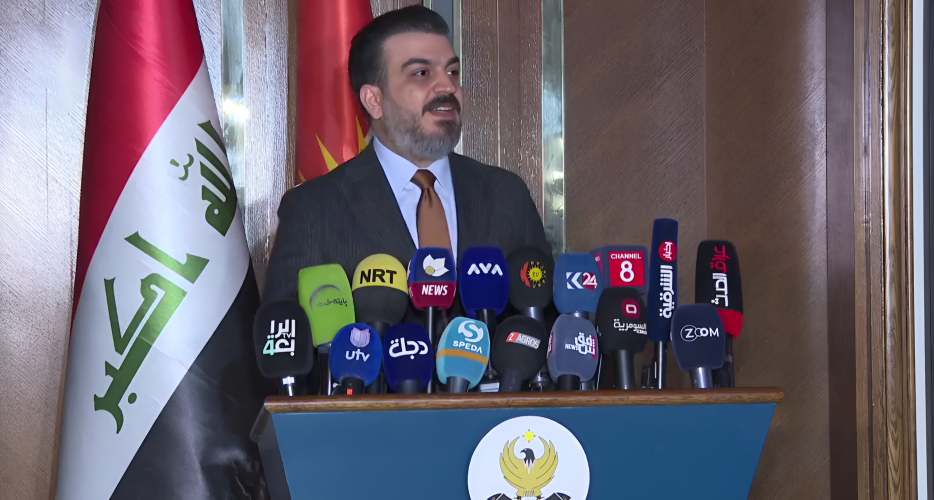
Peshawa Hawramani, the spokesperson for the Kurdistan Regional Government (KRG), has issued a strong denunciation of teachers who are currently on strike, including those who have engaged in a hunger strike for six days to protest the ongoing delays in salary payments.
During a press conference, Hawramani alleged that certain demonstrators possess political ties that are detrimental to Kurdish interests. He remarked, “Some individuals have aligned themselves with some of the most reprehensible leaders of Iraqi militias.” He further asserted that some of the striking educators represent anti-Kurdish factions.
Additionally, he claimed that some protesters had previously obstructed roads to compel the KRG to engage in negotiations with Baghdad regarding salary disbursements. “Some of them are overtly on strike and make their presence known. We have witnessed similar situations in the past—some individuals seek public office to benefit themselves at the expense of their community,” he stated.
Health of Hunger Strikers Declines
These comments come as the condition of several teachers involved in the hunger strike has worsened, necessitating their hospitalization. The educators, along with other public sector workers, are advocating for a sustainable resolution to the persistent salary crisis in the Kurdistan Region.
The protesters are calling for their salaries to be processed through Iraq’s Tawteen banking system rather than the KRG-controlled Hazhmari Mn system, contending that this change would facilitate more dependable payments. They are also demanding the resolution of all outstanding salaries, including unpaid wages from December 2024, as well as the reinstatement of job promotions that have been on hold since 2014 due to the Erbil-Baghdad conflict.
Call for International Intervention
For the past six days, educators and staff have been conducting a sit-in outside the United Nations office in Sulaymaniyah, urging international organizations to exert pressure on authorities to fulfill their demands. Twelve individuals among the protesters have initiated a hunger strike, pledging to persist until definitive action is taken.
A spokesperson for the hunger strikers, addressing the crowd beneath the protest tents, called for widespread public support for their initiative. “The health of the hunger strikers is deteriorating with each passing day,” he cautioned. Medical teams are closely monitoring their well-being, as the strikers are subsisting solely on water, tea, and coffee.
Escalating Protests and Political Reactions
The movement, ignited by ongoing salary delays, has resulted in a significant school boycott throughout Sulaymaniyah, with an increasing number of public employees participating in the demonstrations. The protests have garnered symbolic backing from Members of Parliament across all political factions in the Kurdistan Region, with the exception of the Kurdistan Democratic Party (KDP).
Ari Harsin, the head of the KDP’s fourth branch in Sulaymaniyah, asserted today that the responsibility for the salary crisis lies with Baghdad, not the KRG. “The entity responsible for the suspension of salaries is not the Kurdistan Regional Government; it is the government in Baghdad,” he remarked, redirecting blame towards Iraq’s federal authorities.
Nevertheless, the protesters refute this assertion, maintaining that the KRG is hindering solutions from Baghdad and must be held accountable for the ongoing crisis. Demonstrators have committed to continuing their protests until a viable resolution is achieved.
As tensions rise, attention is focused on the KRG and Baghdad to determine how they will address the mounting pressure from educators and public sector employees.