Hadi al-Amiri Rejects KRG’s Joint Management of Kirkuk Oil; 'Let them forget about it'
Peregraf
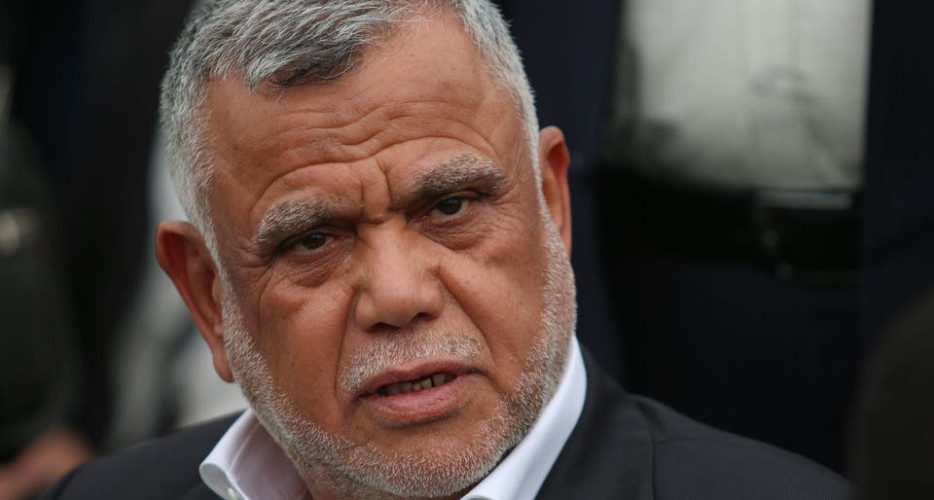
Iraqi Shiite leader Hadi al-Amiri, Secretary General of the Badr Organization, has firmly rejected the Kurdistan Regional Government’s (KRG) demand for joint management of Kirkuk’s oil. Amiri, speaking after a meeting with Kurdistan Region President Nechirvan Barzani in Baghdad last night, asserted that Kirkuk’s oil is exclusively under the federal government’s authority.
“According to the budget law, the Kurdistan Region must export 400,000 barrels of oil per day through the Iraqi Oil Marketing Company (SOMO) and return the revenue to the Iraqi federal government,” Amiri said. Responding to questions on the KRG’s call for joint management of Kirkuk’s oil fields which currently some of them is under KRG’s control, he declared, “Let them forget about it. It will certainly not be allowed. We will participate with them if we want to, but we will not allow it.”
Meanwhile, the KRG issued a statement renewing its call for the federal government to fulfill its constitutional obligation to implement Article 140 of the 2005 Iraqi Constitution, which mandates a referendum in Kirkuk and other disputed territories. The KRG accused Baghdad of violating constitutional provisions and taking unilateral control of oil and gas resources in the disputed areas.
KRG’s Position on Oil Management
The KRG cited Articles 110, 112, and 115 of the Iraqi Constitution to emphasize its rights over oil and gas resource management:
• Article 110 excludes energy management from the federal government’s exclusive powers.
• Article 115 prioritizes regional laws in areas not explicitly under federal jurisdiction, granting the KRG authority over newly discovered oil and gas fields.
• Article 112 requires joint management of older oil fields, including those in Kirkuk, with equitable revenue sharing.
The KRG criticized Baghdad for breaching Article 112 by signing unilateral oil contracts and failing to coordinate resource management with Erbil.
“The Kurdistan Regional Government considers it its constitutional right to defend its rights by all available means and to implement laws to protect the constitutional rights of the people of Kurdistan and Kirkuk,” the KRG stated.
Historical Context of Article 140
Kirkuk, a multiethnic province 238 kilometers north of Baghdad, remains a central issue in the Erbil-Baghdad dispute. Article 140 of the Iraqi Constitution outlines a three-step process to resolve the status of disputed territories:
1. Normalization: Reversing demographic changes imposed during the Ba’ath regime.
2. Census: Conducting a population count.
3. Referendum: Allowing residents to decide the administrative alignment of their territories.
The constitutional deadline for implementing Article 140 passed in 2007, but the process remains incomplete. In 2019, Iraq’s Federal Supreme Court ruled that Article 140 remains active until fully implemented.
Tensions Escalate Over Resource Management
The dispute over Kirkuk’s oil resurfaces amid strained relations over budget allocations and unresolved salary crises in the Kurdistan Region. The KRG claims the federal government’s unilateral actions in resource management further undermine trust and constitutional rights.
This ongoing conflict underscores the deepening political and administrative divide between Erbil and Baghdad, with both sides showing no signs of compromise.