Peregraf
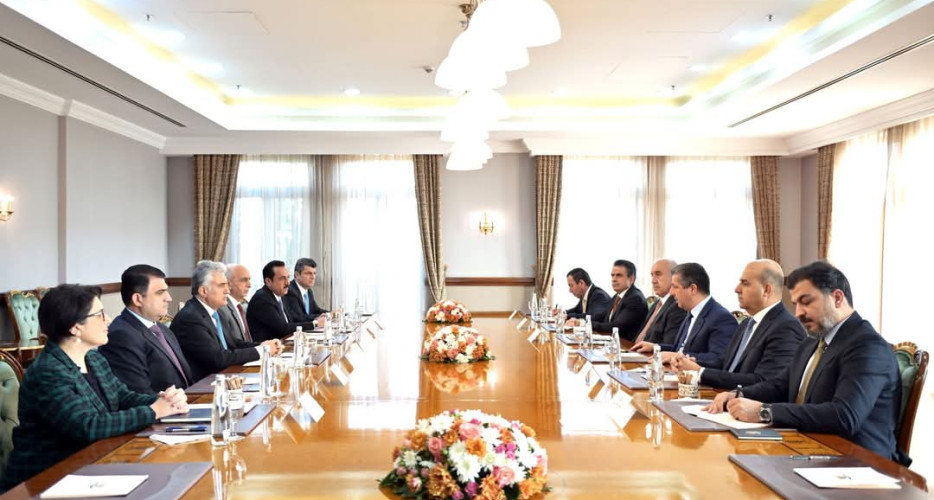
The Kurdistan Regional Government (KRG) announced a series of strict measures to address air pollution in Erbil and Duhok, with enforcement set to begin within 24 hours. Prime Minister Masrour Barzani chaired a high-level meeting attended by the Ministers of Interior and Municipalities, the head of the Environment Board, and the governors of Erbil and Duhok.
Peshawa Hawramani, KRG spokesman, stated, “Decisions have been made to protect the environment and penalize violators. These measures will be implemented immediately, and no delays will be tolerated.”
Key decisions include:
Crackdown on Agricultural Pollution
Authorities will take action against individuals or businesses that irrigate crops with contaminated water, particularly sewage. The use of dirty water for farming is now strictly prohibited.
Industrial Compliance
Factories must adhere to international environmental standards. Non-compliant facilities will face penalties.
Vehicle Emissions
Vehicles that fail to meet environmental standards will be targeted. Special attention will be given to individuals who illegally remove catalytic converters, increasing pollution levels. Severe penalties will be imposed on offenders.
Generator and Fuel Inspection
A new committee will inspect household, market, and company generators to ensure they meet environmental requirements. Gasoline quality will also be closely monitored.
Prime Minister Barzani emphasized his personal commitment to environmental protection, stating, “Having lived in an environment-conscious area, I will not tolerate actions that harm our surroundings.”
The measures represent a robust effort by the KRG to tackle escalating pollution levels and safeguard public health.
Erbil and Duhok, two major cities in the Kurdistan Region, have been grappling with significant air pollution issues. The rapid industrialization, urban development, and increasing number of vehicles have contributed to deteriorating air quality1. Key pollutants include particulate matter (PM2.5 and PM10), nitrogen dioxide (NO2), and sulfur dioxide (SO2), which pose serious health risks to residents, especially those with chronic respiratory conditions.
Illegal refineries in Erbil and Duhok have been a significant source of air pollution in the region. These unauthorized facilities often use low-quality fuel additives and produce toxic emissions, including high concentrations of lead, which pose serious health risks to residents1. The Kurdistan Regional Government (KRG) has been actively working to shut down these illegal refineries and enforce environmental regulations.
In recent efforts, the KRG has ordered the closure of numerous illegal refineries and imposed severe penalties on their operators. Despite these measures, some refineries continue to operate, contributing to ongoing air pollution issues.
Air pollution in Erbil and Duhok has been linked to an increase in cancer cases. Studies have shown that the presence of illegal refineries and factories emitting toxic substances, such as heavy metals and carcinogenic chemicals, significantly contributes to the rising incidence of cancer in these regions2. Residents living near these industrial sites are particularly at risk, with reports indicating higher rates of lung, skin, gastrointestinal, and renal cancers.